
Dust mites are microscopic arachnids that live in soft furnishings, bedding, and carpet. They feed on shed human skin cells (dander) and thrive in warm, humid environments. In Australian conditions (particularly in coastal areas like Sutherland Shire where humidity is higher) carpet can support significant dust mite populations year-round. The health concern is not the mites themselves but their faecal particles, which are a major trigger for asthma, allergic rhinitis, and eczema.
What Cleaning Methods Actually Reduce Dust Mites
- HEPA vacuuming: a vacuum cleaner with a true HEPA filter captures dust mite faecal particles from the carpet surface rather than recirculating them into the air. Standard vacuum cleaners without HEPA filtration can actually worsen airborne allergen levels during vacuuming. Regular HEPA vacuuming (two to three times per week in allergen-sensitive households) is the primary maintenance measure.
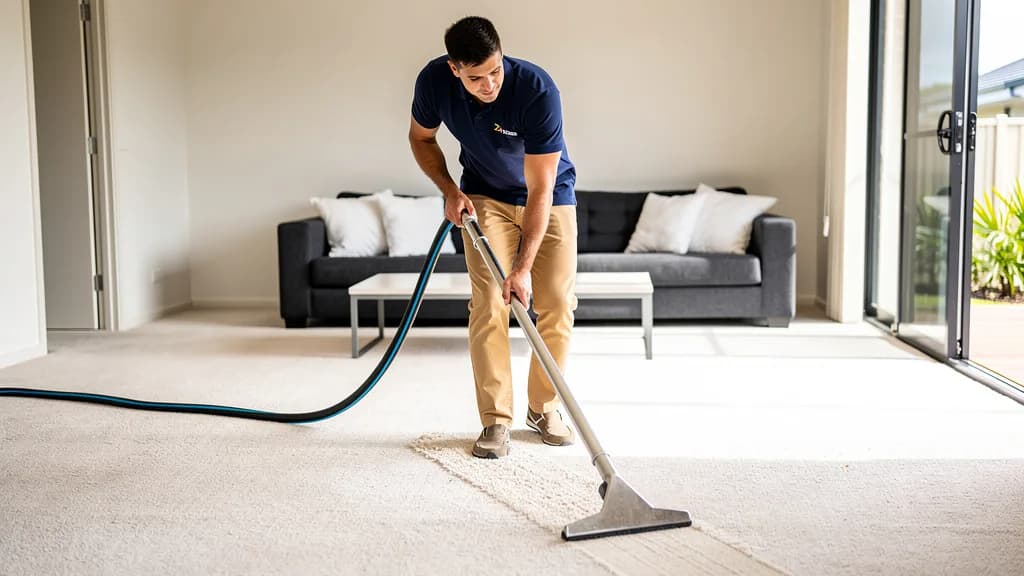
- Hot-water extraction (steam cleaning): professional hot-water extraction is the most effective carpet cleaning method for dust mite allergen reduction. The hot water kills mites on contact, and the extraction removes the mite bodies and faecal particles from the pile. Allergen levels can drop substantially immediately after professional extraction. The effect is most durable when combined with regular HEPA vacuuming between professional cleans.
- Steam cleaning at high temperature: genuine steam cleaning (super-heated steam at high temperature) kills dust mites effectively. Domestic steam mops used on carpet are not the same. They typically do not reach sufficient temperature throughout the pile depth and leave the carpet wet for too long, potentially increasing humidity that supports mite recovery.
What Does Not Significantly Reduce Dust Mites
- Standard dry vacuuming without HEPA filtration: removes surface debris but does not capture fine allergen particles effectively and can aerosolise them.
- Carpet powder deodorisers: have no effect on mite populations and can leave residue that attracts soil.
- Air purifiers alone: purifiers are useful for airborne particles but do not address mites living in the carpet pile.
- Cold water cleaning: does not kill mites. They survive cold and warm water; it is heat above 60°C that kills them reliably.
Humidity control is as important as cleaning
Dust mites cannot survive in environments where relative humidity stays below 50%. In coastal areas, this is difficult to achieve continuously, but running air conditioning on cooling mode reduces indoor humidity and significantly slows mite reproduction. Combining HEPA vacuuming, regular professional extraction, and humidity control through air conditioning is the most effective comprehensive approach.
How Often to Clean for Dust Mite Management
For households with allergic or asthmatic family members, professional hot-water extraction every three to six months is the clinical recommendation for meaningful sustained allergen reduction. Annual cleaning has a shorter window of effect. Between professional cleans, HEPA vacuuming two to three times per week maintains the surface allergen load at a lower level.
Find a local cleaner in the Sutherland Shire
In the Sutherland Shire? We know your time matters. Leave your enquiry with us and we'll make it our priority to get you a quote from a local cleaner.
Get a MatchThis site matches enquiries with independent local carpet cleaners. We do not employ cleaners directly.
Get a Shire quote
In the Sutherland Shire? We help you get a quote from a local cleaner. They quote you directly.
Frequently asked
My child has been diagnosed with a dust mite allergy. The carpet is new. Do new carpets have dust mites?
New carpet does not contain established dust mite populations: mite colonies take weeks to months to establish in a new environment. However, if the room has previously had carpet, the subfloor and skirting boards may harbour mite populations. The more important consideration for a newly diagnosed dust mite allergy is ongoing management: establish HEPA vacuuming and plan professional extraction every three to six months from the outset rather than waiting for mite populations to build up.
We removed our bedroom carpet and replaced it with timber floor. Will this eliminate dust mites?
Hard flooring significantly reduces dust mite habitat because mites cannot establish in hard surfaces at the same density as in carpet pile. Switching bedroom flooring to timber or tiles does meaningfully reduce bedroom allergen load. However, mites live in mattresses, bedding, and soft furnishings as well: the bed is a primary mite habitat regardless of flooring type. Encasing the mattress and pillows with mite-proof covers is as important as the flooring change.
I can smell a musty odour in my carpet even after cleaning. Could this be related to dust mites?
Musty carpet odour is most commonly from mould in the underlay or backing rather than from mites directly. However, the conditions that support mould (humidity, warmth, organic material) also support dust mites. If one is present, the other may be too. A musty odour that persists after professional cleaning suggests underlay contamination rather than a surface mite or odour issue.