
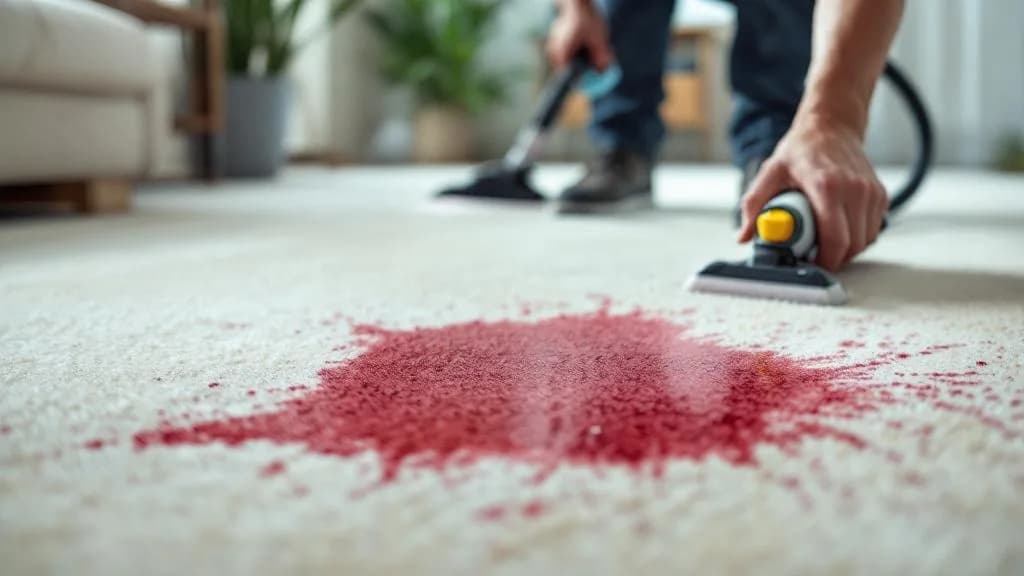
Stain Removal Sutherland Shire
Find a local cleaner for stain removal in Sutherland Shire: carpet, upholstery and fabric stains, with the treatment matched to the stain.
We know your time matters. Leave your enquiry with us and we'll make it our priority to get you a quote from a local cleaner for stain removal. Read how matching works.
Local Stain Removal Across the Shire
The right treatment for a stain depends on the stain type, the surface it has landed on, and how long it has been there. A pet urine stain in carpet needs an enzyme pre-treatment to break down uric acid at the backing: steam cleaning alone will not remove the odour. A red wine stain needs an oxidising agent; grease needs a dry solvent. On upholstery, the fabric care code determines which products are safe to use. Using the wrong product (on carpet or on a fabric sofa) can set a stain permanently.
We help you get a quote from a local cleaner for stain removal. Ask them to assess the stain type and surface first and select the appropriate treatment before any work starts, and to colour-test on a hidden area of your carpet or upholstery before applying any product to the visible stain.
Enquiries cover carpet stain removal and upholstery and fabric stain removal (sofas, armchairs, dining chairs). Tell us the surface type and stain type when you enquire so we can pass it on, then ask the cleaner whether they handle that combination.
Common Stains and How They Are Treated: Carpet, Upholstery and Fabric
| Stain type | Treatment |
|---|---|
| Pet urine & odour | Enzyme pre-treatment |
| Red wine & tannins | Oxidising agent + extraction |
| Coffee & tea | Enzyme or tannin remover |
| Grease & oil | Solvent pre-treatment |
| Blood | Cold enzyme treatment |
| Ink & marker | Solvent spot treatment |
| Sofa & lounge stains | Fabric-safe enzyme or dry foam |
| Mud & soil | Allow to dry, then vacuum + extract |
Treatment selection and achievable results depend on stain type, surface material, stain age, and prior DIY attempts. Ask the cleaner to assess on arrival and advise before any work starts.
Why Act Quickly on Carpet and Fabric Stains
- Fresh stains respond better: the longer a stain sits, the more deeply it bonds to carpet fibres or fabric weave.
- Heat sets stains permanently: hot water, steam cleaning, or a tumble dryer will set protein stains (blood, urine) if applied before pre-treatment, on both carpet and upholstery.
- DIY products can make it harder: some over-the-counter sprays leave surfactant residue that attracts more dirt, or block the enzyme action of professional stain treatment.
- Pet odour requires backing treatment: steam cleaning the carpet surface will not remove urine odour that has penetrated to the underlay and subfloor. Enzyme pre-treatment at the backing level is required.
- Rubbing spreads fabric stains, on upholstery or fabric, rubbing a fresh stain pushes it deeper into the weave. Blot gently and call a professional rather than scrubbing.
- Wrong product can fix a stain in: applying a bleach-based product to a coloured carpet or synthetic fabric can permanently lighten or discolour it, making professional correction harder or impossible.
Fabric Stain Removal and Upholstery Spot Cleaning
Fabric stain removal on upholstery (sofas, armchairs, dining chairs, ottomans) works differently from carpet stain removal. The fabric care code on the manufacturer's label determines what is safe to use:
- WWater-based cleaning agents only: most common on synthetic fabrics.
- SSolvent-based cleaning only: used on silk, velvet, and some wool blends.
- WSEither water or solvent-based agents can be used.
- XVacuum only: no liquid cleaning agents; professional spot cleaning is not recommended.
Ask the cleaner to check the care code and fibre type before selecting a product, and to test on a hidden seam (typically under a cushion or at the back of the sofa) before treating any visible stain. Common upholstery stains treated include pet accidents, food and drink spills, body oil build-up on armrests, and ink or crayon from children.
Carpet Stain Removal by Fibre Type
The fibre type of your carpet affects both which stain treatments are safe and how well a stain can be removed. Ask the cleaner to identify the fibre type before selecting products.
Nylon
The most forgiving fibre for carpet stain removal. Nylon responds well to enzyme, oxidising, and solvent treatments. Most stains (including red wine, coffee and pet urine) can be significantly improved even on older nylon.
Polypropylene (olefin)
Solution-dyed polypropylene resists water-based stains but is vulnerable to oil-based ones. Bleach-based products will not affect the dye, but grease and solvent-based stains penetrate the fibre more deeply than on nylon.
Wool
Wool requires alkaline-safe, pH-controlled treatments. Bleach, high-pH products and aggressive scrubbing will damage or permanently discolour wool fibres. Ask the cleaner to test on a hidden area before any treatment on wool carpet.
Polyester
Polyester resists water-based spills well but is prone to oil wicking: grease stains can reappear after cleaning if the backing is not fully treated. A dry-solvent pre-treatment is typically used on polyester for oil-based stains.
Blended or unknown fibre
Many carpet tiles and affordable residential carpets are unlabelled blends. A cautious approach is best: pH-neutral enzyme treatment first, then assess the result before moving to stronger chemistry if needed.
Stain Removal for Rental Properties and End of Lease
At the end of a lease, the exit inspection compares carpet and upholstery condition with the entry condition report. In NSW you must leave the property reasonably clean, having regard to its condition at the start of the tenancy.
- Ask the cleaner for a written tax invoice with their ABN: useful documentation for bond return and any NSW Fair Trading dispute.
- Stain pre-treatment is typically done before the main steam clean on the same visit: more efficient than two separate callouts at end of tenancy.
- A lease can only require professional carpet cleaning in limited cases, for example, an additional term where pets were kept. Check your agreement or NSW Fair Trading.
- Carpet stain removal can often be combined with an end-of-lease clean in a single visit. Ask the cleaner.
- Ask the cleaner for an honest pre-assessment. If a stain has permanently damaged the carpet and cannot be improved, you should hear that before the work starts rather than after.
Carpet and Upholstery Stain Removal Costs: Sutherland Shire
Indicative 2026 pricing from independent local cleaners. Final price is set after the cleaner assesses the stain type, surface material, and number of spots. Carpet stain removal and upholstery spot cleaning are often quoted together when both are needed on the same visit.
Indicative 2026 ranges: each independent cleaner sets their own price, which varies with surface type and stain complexity. See the 2026 cleaning cost guide.
Stain treatment (per stain)
$20 – $60
Usually an add-on to a carpet clean; a spot-only visit may carry a minimum call-out charge.
Pet urine treatment (per area)
$50 – $150
Enzyme treatment for pet accidents, usually an add-on to a carpet clean.
Upholstery spot cleaning
Ask for a quote
Single stain on a sofa, armchair, or dining chair; quoted after the fabric is assessed.
Why find a local cleaner for stain removal through us?
Stain-specific treatments
The right enzyme, solvent or oxidiser is matched to the stain type.
Pet accident treatments
Typical treatments neutralise uric acid crystals at the carpet backing, which can help stop odours returning.
Ask for an honest assessment first
A good cleaner will tell you if a stain is unlikely to come out before any work starts.
Ask for a colour test first
Ask the cleaner to colour-test treatments on a hidden spot first to protect carpet, upholstery and fabric appearance.
How It Works
- 1
Fill in the form: your suburb, the surface type (carpet, rug or sofa), what type of stain it is, and how long it has been there.
- 2
We find a local cleaner in your suburb and pass on your enquiry.
- 3
The cleaner contacts you and quotes. Ask them to assess the stain and surface and colour-test the product on a hidden area before any work starts. You decide whether to go ahead.
Learn more about how it works.
Ready to find a local cleaner for stain removal?
We know your time matters. Leave your enquiry with us and we'll make it our priority to get you a quote from a local cleaner.
Stain Removal FAQs: Carpet, Upholstery and Fabric
Can old or set-in stains be removed?
Often yes, even stains months old can be significantly improved. Results depend on stain type, carpet fibre, and whether prior DIY attempts have set the stain. Ask the cleaner to assess the stain type on arrival and tell you the expected outcome before work starts. Some stains that appear permanent (particularly tannin-based stains like red wine or tea) can still respond well to professional oxidising treatments even after weeks.
Do pet urine smells come out, not just the visible stain?
Often they can be reduced or neutralised: professional enzyme treatments break down uric acid crystals at the carpet backing and underlay, addressing the source of the odour rather than masking it with fragrance. Results depend on how far the urine reached the underlay, so ask the cleaner for an honest assessment. Surface cleaning alone cannot eliminate urine odour that has soaked through to the backing. The enzyme pre-treatment needs to penetrate to the same depth as the urine, which often means saturating the affected area so the product reaches the underlay.
Can stains be removed from upholstery and fabric sofas?
Usually, but the method differs from carpet: fabric care codes (W, S, WS, X) determine which cleaning agent can be used safely on your specific upholstery. Ask the cleaner to check the care label and test on a hidden seam before treating any visible stain on your sofa, armchair, or dining chair.
Are stain removal treatments safe for children and pets?
It depends on the products the cleaner uses. Ask them before the job (including low-tox or fragrance-free options) and keep children and pets off treated areas until they are fully dry (typically 2–4 hours for carpet and 4–6 hours for upholstery, depending on ventilation and weather). If you have specific sensitivities or known chemical reactions, mention them when you enquire so the cleaner can confirm the products they intend to use.
How much does stain removal cost in the Sutherland Shire?
Stain treatment is usually quoted as an add-on to a carpet clean, indicatively $20–$60 per stain, and $50–$150 per treated area for pet urine enzyme treatment (2026), each independent cleaner sets their own price. A spot-only visit may carry a minimum call-out charge, and upholstery spot cleaning is quoted after the fabric is assessed. Ask the cleaner for a written quote before any work starts.
Will stain removal damage or bleach my carpet or fabric?
Ask the cleaner to colour-test every treatment on a hidden area of your carpet or upholstery before applying it to the stain. This checks the solution suits your specific carpet dye and fibre (or fabric weave and colour) before any visible area is treated. If a solution poses a bleaching risk, the cleaner should tell you before proceeding and suggest a gentler alternative.
What is spot cleaning and when is it used?
Spot cleaning refers to targeted stain treatment applied to a specific area rather than a full room or whole-item clean. It is used when the stain is localised and the rest of the carpet or upholstery does not need a full clean. In a spot clean, the cleaner applies pre-treatment directly to the stain, works it in, then extracts. If the surrounding area has general soiling, the cleaner can advise on whether a full clean would be more effective.
What if the stain cannot be fully removed?
Ask the cleaner for an honest assessment before any work starts. If a stain is not fully treatable (for example, a permanent dye transfer, a stain where prior bleach use has already damaged the carpet, or an ink that has bonded to synthetic fibres) they should say so before starting. A significant improvement may still be achieved even when full removal is not possible. Ask for the realistic outcome, not a best-case promise.
Can stain removal be done at the same time as a full carpet clean?
Yes, stain pre-treatment is often done before the main steam clean on the same visit, which makes it more cost-effective than a separate spot-only call-out. If you want a full clean and stain treatment together, mention it when you enquire so the cleaner can allow the appropriate time in their visit.
Which suburbs do you cover for stain removal?
We help people get quotes from local cleaners for stain removal across the Sutherland Shire, including Cronulla, Miranda, Caringbah, Kirrawee, Engadine, Jannali, Gymea, Sutherland, Menai, Sylvania, Oyster Bay, Port Hacking, Loftus, Woolooware, Bundeena and surrounding suburbs. Submit the form with your suburb and we will do our best to find a cleaner near you.
Related services
Related articles
Red Wine on Carpet: What Actually Works
Step-by-step method to lift red wine before it sets, and when to call a professional.
Read moreWhy Does My Carpet Smell? Common Causes and What Each Requires
Identify the source of the smell first: each cause needs a different treatment.
Read morePet Urine in Carpet: Why Surface Cleaning Doesn't Work
Uric acid crystals explained, why the smell returns, and what treatment genuinely removes it.
Read moreWater-Damaged Carpet: What to Do in the First 48 Hours
Burst pipe, roof leak or storm flooding: what to do immediately to save your carpet from mould.
Read moreFind a local cleaner for stain removal: carpet, upholstery and fabric
We know your time matters. Leave your enquiry with us and we'll make it our priority to get you a quote from a local cleaner. Read how matching works.
Find a Cleaner for Stain Removal
Carpet, upholstery and fabric stains. We know your time matters. Leave your enquiry with us and we'll make it our priority to get you a quote from a local cleaner.
Prefer to talk?
Tell us your suburb, the stain type, and how long it has been there and we will look for a local cleaner who can help.
(02) 5301 5397