
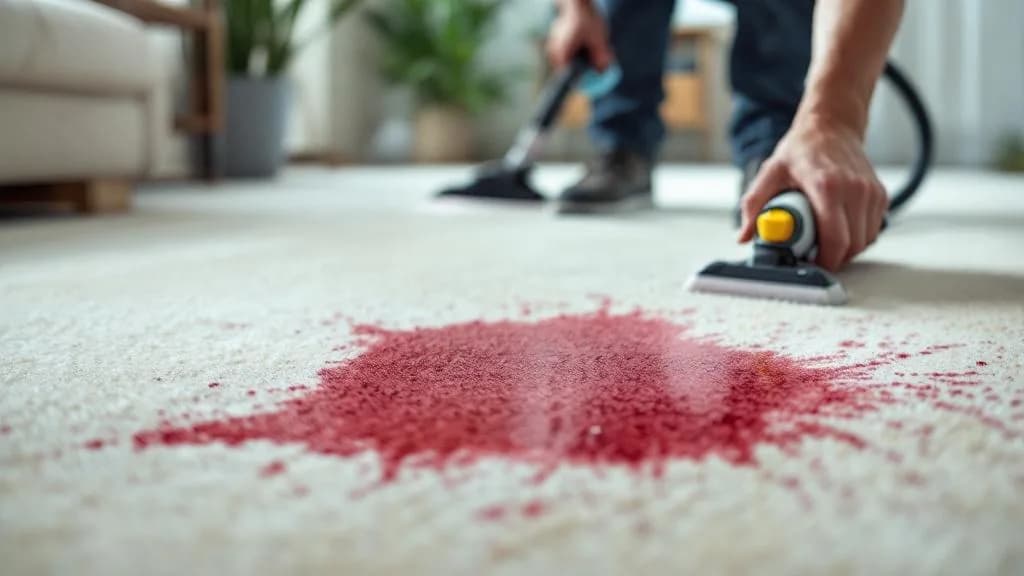
Carpet odour is one of the most common reasons people seek professional carpet cleaning. The mistake most homeowners make is applying a deodorising product (sprays, powders, baking soda) without identifying and treating the underlying cause. Deodorisers mask odour compounds temporarily. They do not eliminate them. The smell returns as soon as the deodoriser dissipates. Treating the source is the only durable solution.
Pet Urine Odour
The most persistent carpet odour in Australian homes. Pet urine contains uric acid crystals that become insoluble as the urine dries and are not removed by standard cleaning. The crystals re-hydrate when the carpet becomes slightly damp (from humidity, steam cleaning, or further accidents) and release the characteristic ammonia smell again. Uric acid odour requires enzyme cleaner treatment: the enzymes break down the uric acid molecules at a chemical level. UV inspection identifies all deposit sites, including dried historic spots that are invisible under normal light.
Mould and Mildew Odour
A musty or earthy smell is usually mould growing in the carpet backing or underlay, often from a past flood, slow leak, or carpet that was left wet for too long after cleaning. Mould in carpet backing cannot be resolved by surface treatment. If the smell is persistent and musty, check by lifting a carpet edge at a corner: visible mould growth or a strong musty smell from the underlay confirms the source. Affected underlay typically requires replacement. Professional antifungal treatment of the carpet itself may be viable if the mould has not penetrated the secondary backing.
Food and Beverage Odour
Accumulated food spills (particularly in dining rooms and areas where food is eaten on the carpet) produce a sour or stale smell as organic material breaks down. Unlike pet urine, food odour responds well to thorough hot-water extraction cleaning with an enzyme pre-spray. The enzyme pre-spray breaks down the organic food residue at the fibre level, and the extraction removes it from the pile. One professional clean typically resolves food odour in carpet that has not had a mould issue develop.
Body Oil and Skin Cell Accumulation
In bedrooms and areas where people sit or lie on the carpet, body oils and shed skin cells accumulate in the pile over years and produce a dull, slightly stale smell. This is distinct from urine or food odour. It is typically mild and only noticeable on close contact. Regular professional cleaning and frequent vacuuming manage this. Enzyme pre-treatment before hot-water extraction is the most effective professional approach for accumulated organic body material in carpet.
New Carpet Off-Gassing
New synthetic carpet has a distinctive chemical smell from the manufacturing process: adhesives, dyes, and fibre treatments release VOCs (volatile organic compounds) for a period after installation. This is not a cleaning issue. It resolves naturally within a few days to weeks with good ventilation. Opening windows, running fans, and airing the room accelerates the process. The smell is not considered a health risk at normal levels, but sensitive individuals should ensure adequate ventilation during the initial off-gassing period.
Find a local cleaner in the Sutherland Shire
In the Sutherland Shire? We know your time matters. Leave your enquiry with us and we'll make it our priority to get you a quote from a local cleaner.
Get a MatchThis site matches enquiries with independent local carpet cleaners. We do not employ cleaners directly.
Get a Shire quote
In the Sutherland Shire? We help you get a quote from a local cleaner. They quote you directly.
Frequently asked
The carpet in a room we never use has started to smell musty. No spills. What causes this?
A musty smell in a rarely-used room without spills is most commonly from mould growing in the carpet backing or underlay due to ambient moisture over time. This is particularly common in rooms with poor ventilation, south-facing rooms with limited airflow, or rooms with concrete subfloors that transmit ground moisture. Lift a carpet corner to check for mould in the backing or underlay. Increasing ventilation in the room (opening windows or running a dehumidifier) addresses the underlying cause. If mould is confirmed, professional treatment or replacement may be needed.
I had the carpet professionally cleaned and it smelled better for a week, then the pet smell came back. Why?
This is the classic indicator of uric acid crystals in the carpet. The cleaning temporarily reduced surface odour but the uric acid crystals remain in the fibre and backing. They re-hydrate as the carpet returns to ambient humidity and re-release the ammonia smell. The fix is enzyme treatment: a UV inspection to map all deposit sites, followed by enzyme cleaner applied with adequate dwell time to break down the crystals. A professional cleaner should apply enzyme pre-treatment as standard for pet odour rather than HWE alone.
Can baking soda eliminate carpet odour permanently?
No, baking soda absorbs and temporarily neutralises odour compounds on the surface of the pile. It does not penetrate deeply enough to reach uric acid crystals in the backing, does not kill mould, and does not remove the organic compounds that cause food or body odour. Baking soda is useful as a short-term freshener or to absorb odour during a drying period, but it is not a treatment for the underlying cause. For persistent odour, identifying and treating the source is necessary.