
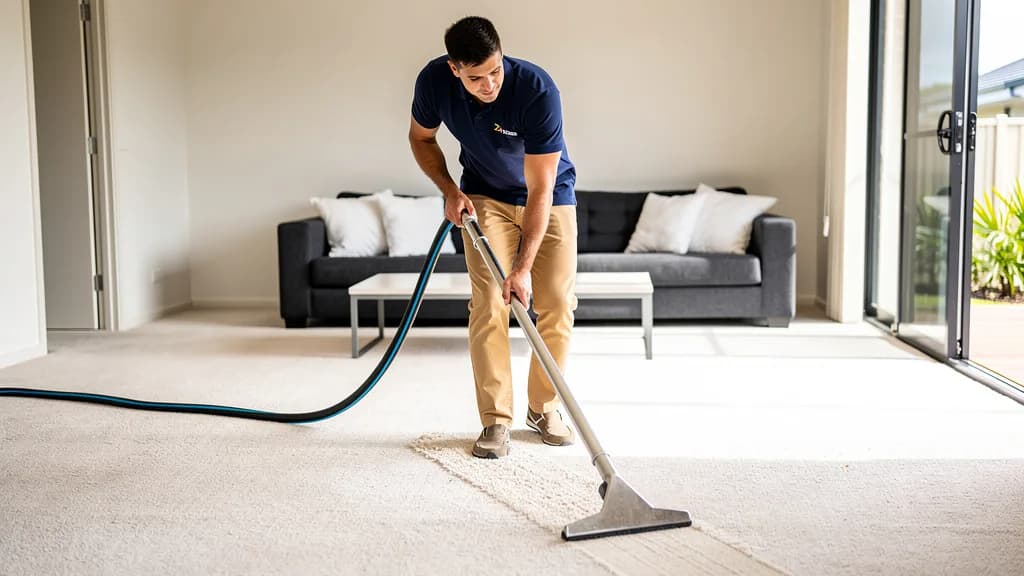
Traffic lanes are the most common reason carpet looks worn and dirty unevenly across a room. The path between door and seating, the corridor between rooms, and the stair treads all receive disproportionate foot traffic, and the carpet in these zones accumulates soil, suffers pile crush, and shows wear faster than the rest of the room. Understanding the mechanics of traffic lane soiling helps target maintenance effectively.
Why Traffic Lanes Soil Faster
Foot traffic does three things to carpet: it deposits soil carried in on shoes and socks, it grinds existing grit deeper into the pile, and it crushes the pile direction in the direction of travel. Crushed pile in a single direction reflects light differently from the surrounding carpet and looks darker than the rest of the room. This is why traffic lanes are visible even when the carpet is not technically dirty. The soil embedded by grinding cuts the carpet fibres over time, dulling the pile surface.
Preventive Maintenance for High-Traffic Zones
- Vacuum high-traffic zones at least three times per week: more frequently than the rest of the carpet.
- Use a doormat at every external entry point. Internal doormats at the transition from hard floor to carpet capture the soil that would otherwise be carried in from other rooms.
- A shoes-off policy at the door is the single most impactful preventive measure for hallway and entry carpet.
- Place a rug runner over the traffic lane in hallways and lounge room pathways: the rug takes the wear, protects the carpet beneath, and is rotatable and replaceable.
- Apply carpet protector to high-traffic areas more frequently than low-traffic areas: professional re-application every 6–12 months in traffic zones is appropriate.
Increasing Professional Cleaning Frequency for High-Traffic Areas
While annual professional cleaning is the standard recommendation for the whole home, high-traffic areas benefit from more frequent cleaning:
- Hallways and main living room pathways: every six months.
- Stairs: every six months: stairs accumulate soil and carpet protector wears off faster under foot pressure on stair edges.
- Main entry carpet: every three to four months in households without a shoes-off policy.
- Consider spot cleaning or interim professional spot treatment of heavily soiled traffic lanes between full home cleans.
Restoring Crushed Pile in Traffic Lanes
Pile that has been crushed flat in a consistent direction by traffic can be partially restored between professional cleans. Vacuum against the direction of travel. This lifts pile that has been flattened toward the door. A carpet rake pulled against the traffic direction lifts flattened pile more effectively than vacuuming alone. Hot-water extraction cleaning by a professional includes a final pile-grooming pass that restores pile direction across the whole cleaned area.
Find a local cleaner in the Sutherland Shire
In the Sutherland Shire? We know your time matters. Leave your enquiry with us and we'll make it our priority to get you a quote from a local cleaner.
Get a MatchThis site matches enquiries with independent local carpet cleaners. We do not employ cleaners directly.
Get a Shire quote
In the Sutherland Shire? We help you get a quote from a local cleaner. They quote you directly.
Frequently asked
The hallway carpet looks dark compared to the rest of the house even right after professional cleaning. Why?
Persistent darkening in a traffic lane after cleaning can indicate that the pile has been permanently compacted or that fine grit has cut the fibre surface: dulling the fibre rather than just soiling it. When grit grinds fibres over time, the cut fibre ends scatter light differently and appear dull and darker regardless of how clean they are. This is wear rather than soiling and is not fully reversible by cleaning. A carpet rake to restore pile direction can improve the appearance, but if the fibre surface has been physically abraded, the change is permanent.
We have carpet on the stairs and the nose of each step wears through much faster than the rest. Is this preventable?
Stair nose wear is accelerated by the fact that foot placement on stairs concentrates pressure and friction on the leading edge of each tread. Preventive measures: stair runners or individual stair pads (replaceable, protect the underlying carpet), shoes-off policy, and more frequent professional cleaning and protector re-application of stairs. For existing wear on stair noses, professional carpet repair can patch or replace individual treads if the damage is localised.
Should I put a rug over the traffic lane in the lounge room?
A rug runner in a lounge traffic lane is one of the most cost-effective investments for carpet longevity. The rug takes the daily wear instead of the carpet beneath. Choose a rug with a non-slip backing to prevent movement. Rotate the rug periodically so it wears evenly. When the rug eventually wears out, the carpet underneath should be in significantly better condition than an unprotected traffic lane of equivalent age.