
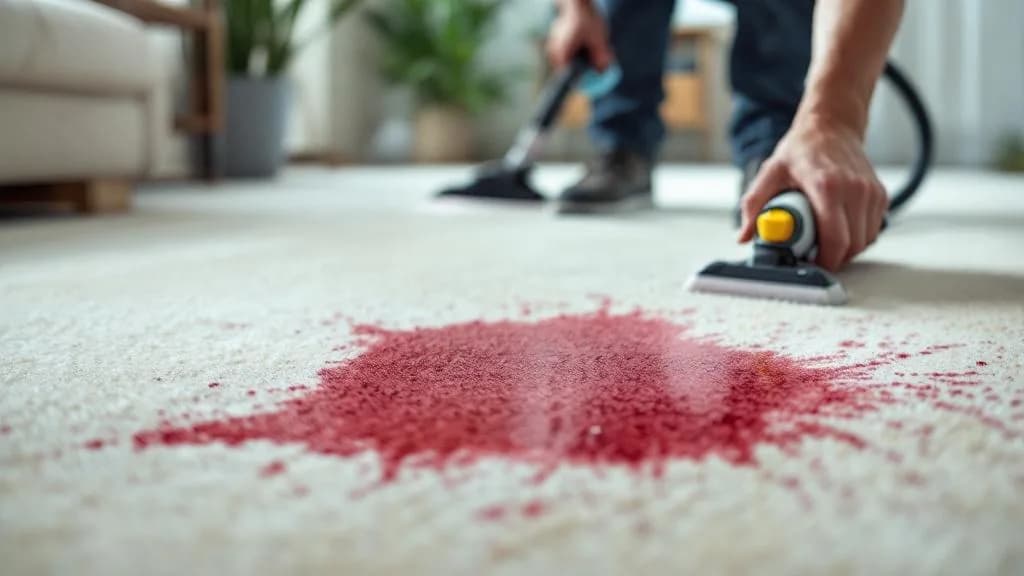
Home hair dyeing is increasingly common, and the bathroom floor, hallway carpet, or anywhere the dye kit gets moved is at risk of a spill. Hair dye is one of the hardest carpet stains to deal with because the chemistry is working against you: the dye is engineered to permanently colour protein fibres: exactly what wool and many carpet face yarns are made of. Even on synthetic carpet, the dye compounds bind aggressively. Speed is the single biggest factor in the outcome.
How Hair Dye Works, and Why It Is So Hard to Remove
Most permanent and semi-permanent hair dyes are oxidative dyes. They contain small dye molecules (p-phenylenediamine and related compounds) that are colourless when first applied. Mixed with the developer (hydrogen peroxide), the peroxide oxidises the dye precursors inside the fibre: the molecules expand, become coloured, and are physically trapped within the fibre structure. This is the same process the dye uses on hair, and on wool carpet it is equally effective. Synthetic fibres (nylon, polyester) are less receptive to oxidative dyes but still stain from surface adsorption of the coloured developer mixture.
The first 60 seconds matter most
Oxidative dye development is a chemical reaction that begins the moment the dye and developer make contact. The longer the dye is on the carpet, the more the colour compounds develop and bond to the fibres. Treatment within the first minute gives significantly better outcomes than treatment after 10 minutes. If you spill dye, treat it immediately, even a partial dilution with water in the first seconds helps.
Immediate Treatment: The First Steps
- Blot immediately with paper towels: absorb as much undeveloped dye mixture as possible before it reacts. Do not rub.
- Apply cold water generously to the area and blot again. This dilutes the dye and slows the oxidative reaction.
- Continue cold water dilution and blotting for 2–3 minutes. The goal is to remove as much of the dye mixture before it has fully developed.
- Apply dish soap to the area and work gently into the pile. Dish soap does not reverse the chemical reaction but removes surface dye that has not bonded.
- Rinse and blot repeatedly.
After Initial Treatment: What to Try Next
If colour remains after the initial treatment (which it usually does) the following agents can achieve further improvement on a dye stain that has not fully set:
- Isopropyl alcohol: Apply to a white cloth and blot the stain. Alcohol disrupts some dye-fibre bonding and can lift partially developed colour.
- Hydrogen peroxide (3%): On light-coloured or white carpet, dilute 3% hydrogen peroxide with water (1:1) and apply to the stain. Hydrogen peroxide can oxidise and bleach residual colour but may also affect carpet dye. Test in a hidden area first, and do not use on wool.
- Commercial hair dye stain remover: Products such as Colour B4 or colour stain removers from beauty supply stores are formulated for this specific chemistry. They work by reducing the oxidised dye molecules back to their colourless precursor state.
- Ammonia solution (non-wool only): One tablespoon of ammonia in 250 ml of cold water can break down some dye bonds. Do not use on wool carpet: ammonia damages wool fibres.
Wool Carpet: Especially Vulnerable
Wool carpet is significantly more vulnerable to hair dye than synthetic carpet because the dye chemistry is designed specifically for protein fibres, and wool is a protein fibre. Once oxidative dye has developed on wool carpet, it may be permanent. Avoid ammonia, hydrogen peroxide, and any strongly alkaline treatments on wool. Stick to cold water dilution and a gentle dish soap treatment immediately, and contact a professional carpet cleaner quickly: some specialised wool-safe dye reducers exist in professional products that are not available to consumers.
Fully Set Dye: Honest Assessment
Hair dye that has been on carpet for more than 30 minutes and has fully developed is extremely difficult to remove completely. Professional treatment with reducing agents can achieve partial lightening (converting the developed dye back toward its colourless precursor) but full removal to the original carpet colour is unlikely for dark or vivid dyes on light carpet. For permanent hair dye on light carpet, the realistic options for full restoration are plug-patching the affected area or carpet re-dyeing to blend the stain.
Find a local cleaner in the Sutherland Shire
In the Sutherland Shire? We know your time matters. Leave your enquiry with us and we'll make it our priority to get you a quote from a local cleaner.
Find a local carpet cleanerThis site matches enquiries with independent local carpet cleaners. We do not employ cleaners directly.
Get a Shire quote
In the Sutherland Shire? We help you get a quote from a local cleaner. They quote you directly.
Frequently asked
Is hair dye on carpet permanent?
It depends on how quickly you treated it and what type of carpet you have. Fresh dye treated within a minute or two can often be significantly reduced or removed on synthetic carpet. Fully developed oxidative dye on wool carpet is likely permanent or near-permanent. On synthetic carpet, thorough treatment with IPA and hydrogen peroxide can achieve good results even after partial development.
What is the best product to remove hair dye from carpet?
For fresh dye: cold water dilution immediately, then dish soap. For partially set dye: isopropyl alcohol followed by a commercial hair dye stain remover (beauty supply stores) or dilute hydrogen peroxide on non-wool carpet. For fully set dark dye: professional treatment is more likely to achieve results than consumer products.
Will bleach remove hair dye from carpet?
Chlorine bleach will destroy the carpet dye alongside the hair dye stain, leaving a permanent pale patch. This is not an appropriate treatment for carpet. Dilute hydrogen peroxide (a much weaker oxidiser) is a safer option on non-wool carpet in specific circumstances, but chlorine bleach should never be used on carpet.
I spilled hair dye on the bathroom floor carpet: what should I do first?
Blot immediately with paper towels to absorb as much of the undeveloped dye mixture as possible. Apply cold water generously and continue blotting: cold water slows the oxidative development reaction. Work as fast as possible; every second of delay allows more dye to develop and bond. If the stain persists, contact a local carpet cleaner about professional treatment.
Can professional carpet cleaners remove hair dye?
Professional cleaners have access to reducing agents (colour stain removers) and other products that can partially reverse oxidative dye development. Results are best on synthetic carpet treated promptly. On wool carpet or fully set dark dye on light carpet, professionals can often achieve partial improvement but may recommend plug-patching or re-dyeing for complete restoration.