
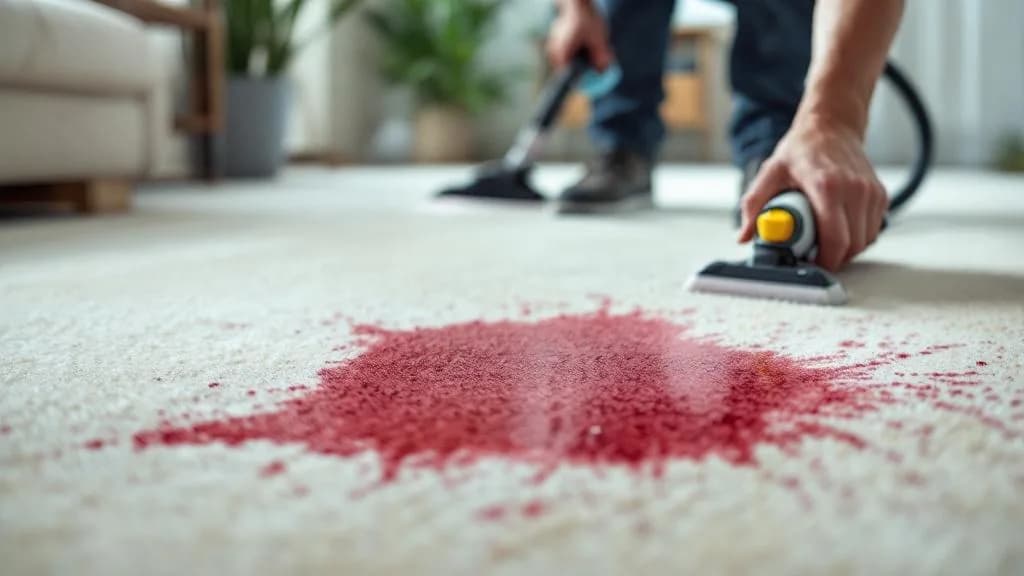
Massage oil and aromatherapy oil spills on carpet leave behind a greasy film that is not immediately obvious but becomes a real problem over time. Carrier oils (sweet almond, jojoba, grapeseed, fractionated coconut) are non-drying oils that sit in the carpet fibre and attract airborne dust and foot traffic dirt. Left untreated, the spot gradually darkens as it collects grime. The essential oils blended in for fragrance evaporate naturally, but the carrier oil base does not. Cleaning needs to draw out the oil before it has a chance to accumulate dirt.
Why massage oil spills need prompt attention
Unlike water-based spills, oil does not evaporate or dry out. It stays liquid and mobile in the carpet fibre indefinitely. In the first hours after a spill, the oil is concentrated near the surface and easier to draw out with an absorbent powder. The longer it sits, the deeper it migrates toward the carpet backing and underlay. An oil spill that has been in carpet for several days is harder to treat than a fresh spill because the oil has dispersed throughout the full depth of the pile.
Cleaning a fresh massage oil spill
- Blot up any pooled oil immediately with a clean dry cloth or paper towel. Press and lift: do not rub, which pushes the oil deeper into the fibre.
- Cover the oily area generously with an absorbent powder: cornflour, baking soda, or talcum powder all work well. Allow it to sit for at least 15 minutes (30 minutes for a larger spill) to draw oil out of the fibre.
- Vacuum up the powder thoroughly.
- Apply dish soap solution (1 teaspoon of clear dish soap per cup of warm water) to a cloth and work it gently into the oily area using a blotting and gentle circular motion. Dish soap is a surfactant that breaks up and emulsifies the carrier oil so it can be rinsed away.
- Blot with a clean dry cloth to lift the emulsified oil and soap.
- Rinse by blotting with a clean cloth dampened with plain warm water. Repeat until all soap residue is removed: soap left in carpet attracts dirt.
- Press a dry towel over the area and allow to air-dry fully.
Repeat the powder step for large spills
For a large massage oil spill, apply absorbent powder, wait, vacuum, then apply fresh powder and wait again before moving to the dish soap step. A second powder round draws additional oil from deeper in the pile and makes the dish soap step more effective.
Cleaning massage oil that has been on carpet for some time
If the oil has been in the carpet for more than a few hours and the area has already started to darken with collected dirt, begin with the dish soap treatment directly rather than the powder step: the oil is now combined with particulate dirt and the powder will not be as effective. Apply dish soap solution generously and work it into the area with a soft brush or cloth using a gentle scrubbing motion. Blot thoroughly, rinse, and allow to dry. For old oil spots with significant dirt accumulation, a second dish soap round may be needed once the carpet is dry and the extent of any remaining oil residue is visible.
Dealing with persistent fragrance from essential oils
If the massage oil blend contained strong essential oils (eucalyptus, peppermint, tea tree, ylang ylang) the fragrance may linger in the carpet even after the carrier oil is removed. Essential oil fragrance compounds are volatile and will dissipate with ventilation over one to three days. To speed this up, apply a light dusting of baking soda to the dry area, allow it to sit for 30 minutes to absorb residual aromatic compounds, then vacuum. Good airflow in the room accelerates natural evaporation.
Find a local cleaner in the Sutherland Shire
In the Sutherland Shire? We know your time matters. Leave your enquiry with us and we'll make it our priority to get you a quote from a local cleaner.
Find a Matched Local SpecialistThis site matches enquiries with independent local carpet cleaners. We do not employ cleaners directly.
Get a Shire quote
In the Sutherland Shire? We help you get a quote from a local cleaner. They quote you directly.
Frequently asked
I spilled massage oil with lavender essential oil: the scent is very strong. Does the essential oil itself need different treatment from the carrier oil?
The carrier oil (the bulk of the spill) and the essential oil blend together in the carpet and are largely removed together by the dish soap treatment: dish soap emulsifies both the carrier oil and the essential oil dissolved in it. The fragrance from the essential oil will linger longer than the visual oil stain, since fragrance compounds adsorb onto carpet fibre. These dissipate naturally with ventilation over one to three days. Baking soda applied to the dry area after the dish soap clean accelerates fragrance removal. No separate treatment step is needed specifically for the essential oil.
The carpet looks darker where the massage oil spilled, even after I cleaned it. Why?
Post-cleaning darkening usually has one of two causes: residual oil still in the fibre that has not been fully removed, or soap residue left from the cleaning process that is attracting new dirt. To distinguish them: if the dark area feels slightly greasy to touch, residual oil is the cause: repeat the dish soap treatment and rinse. If the area feels clean but looks dark, soap residue is likely the cause. Rinse with plain warm water and blot dry. Allow to dry fully before re-evaluating, as damp carpet also appears darker than dry carpet.
Is coconut oil harder to remove from carpet than almond or jojoba oil?
Fractionated coconut oil (the liquid form used in massage blends) behaves similarly to other liquid carrier oils and responds well to the dish soap treatment. Regular coconut oil has a melting point of around 24°C and can be semi-solid at room temperature. If spilled when solid, scrape up the excess before treating. The dish soap treatment emulsifies coconut oil effectively once applied. Compared to lighter oils like jojoba or grapeseed, coconut oil has a slightly higher tendency to leave a residue on the carpet surface rather than penetrating deeply, which actually makes it somewhat easier to lift with the absorption powder step.