
Moving house involves a lot of packing tape, and at some point a roll gets set down, dragged, or peeled off a box directly over carpet. The adhesive transfers easily to carpet fibres and, once there, acts like a lint trap: picking up dust, pet hair, and dirt until it becomes a grey-brown patch that resists normal vacuuming.
Understanding the adhesive type
Most packing tape uses acrylic or rubber-based pressure-sensitive adhesive. Both are solvent-soluble, which is why petroleum-based solvents, rubbing alcohol, and some natural oils are effective at breaking the bond. Water-based cleaning methods alone will not dissolve these adhesives.
Removing fresh tape adhesive
- If any tape is still attached, peel it back slowly at a low angle (almost parallel to the carpet) rather than pulling straight up: sharp angles rip fibres.
- Apply a small amount of rubbing alcohol (isopropyl alcohol, 70% or higher) to a white cloth and dab the adhesive area. Do not saturate: work in small sections.
- Blot and lift repeatedly. The adhesive should begin to soften and transfer to the cloth. Use a fresh section of cloth as each section becomes loaded with residue.
- Alternatively, apply a small amount of cooking oil (coconut, olive, or vegetable) to the residue and allow it to sit for two minutes. Oil softens rubber-based adhesives effectively. Blot away, then follow with a dish soap and water rinse to remove the oil.
- Once residue is cleared, clean the area with a diluted dish soap solution and blot dry.
Removing dried or dirt-contaminated adhesive
Dried adhesive that has collected dirt is harder to remove. The dirt is embedded in the adhesive matrix and cannot be vacuumed out until the adhesive itself is broken down.
- Freeze the patch with an ice pack in a zip-lock bag applied for 5–10 minutes. Frozen adhesive becomes brittle and can be crumbled away from the fibres. Use your fingers or a spoon to break it up gently.
- After freezing and crumbling, vacuum the loose residue.
- Treat remaining adhesive with rubbing alcohol as above.
- For stubborn residue, a commercial adhesive remover (Goo Gone or similar) can be applied sparingly. Test on a hidden area first: some carpet dyes are sensitive to solvent-based products.
Test any solvent on a hidden area first
Apply a small amount to an inconspicuous spot such as inside a wardrobe or under a piece of furniture. Wait five minutes and blot. If the dye transfers or the colour changes, do not use that product on the visible area.
After adhesive removal
Once the adhesive is gone, the carpet fibres may feel stiff or leave a faint mark where dirt was embedded. Clean the area with a diluted dish soap solution (one teaspoon per cup of warm water), blot dry thoroughly, and allow to air dry fully before vacuuming. Vacuum in multiple directions to restore pile direction.
When professional cleaning makes sense
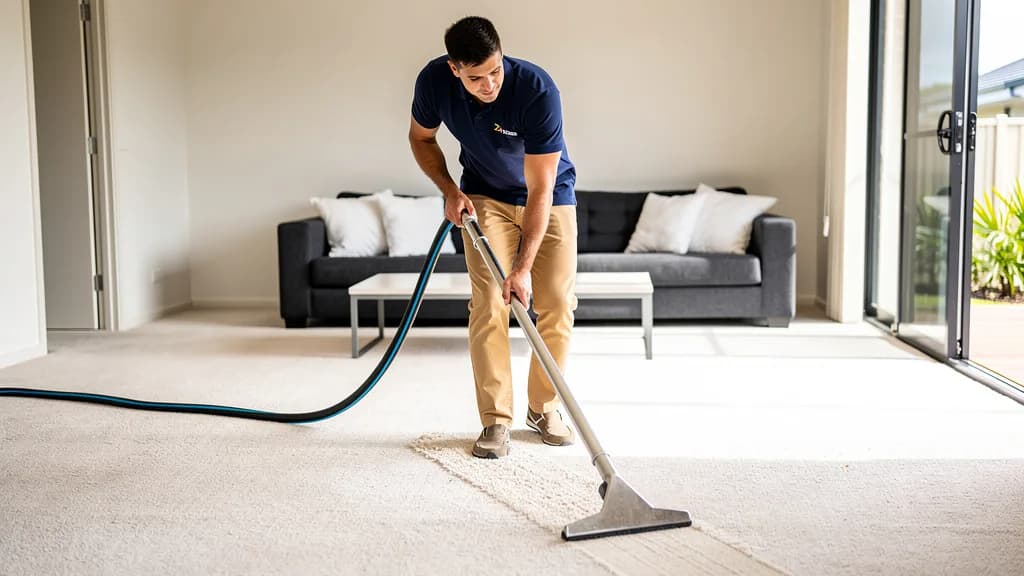
Large tape residue areas (for example, from a roll of tape unspooling across a hallway) can be time-consuming to treat manually. If the area is significant, or if at-home methods are leaving adhesive streaks and fibre damage, professional hot-water extraction can flush residue from the pile more thoroughly than hand treatment.
Find a local cleaner in the Sutherland Shire
In the Sutherland Shire? We know your time matters. Leave your enquiry with us and we'll make it our priority to get you a quote from a local cleaner.
Find a Matched Local SpecialistThis site matches enquiries with independent local carpet cleaners. We do not employ cleaners directly.
Get a Shire quote
In the Sutherland Shire? We help you get a quote from a local cleaner. They quote you directly.
Frequently asked
Will WD-40 remove tape adhesive from carpet?
WD-40 can dissolve adhesive residue but leaves a petroleum-based oil stain that is difficult to remove from carpet fibres. It is better to use rubbing alcohol or a purpose-made adhesive remover and then follow with a dish soap rinse. WD-40 tends to create a secondary stain problem.
The tape has been on the carpet for weeks and left a dark dirty patch. Can it still be removed?
It can usually be significantly improved. Freeze and crumble the dried adhesive first, vacuum, then treat with rubbing alcohol or adhesive remover. The dirt embedded in the adhesive will come away as the adhesive dissolves. Older, heavier patches may require multiple treatment cycles or a professional clean to achieve full restoration.
Can I use nail polish remover (acetone) on carpet?
Acetone is highly effective at dissolving adhesive but carries a significant risk of colour stripping or bleaching on many carpet types, particularly nylon and polypropylene. It should only be used as a last resort on light-coloured carpets, applied minimally, and rinsed immediately. Rubbing alcohol is a safer first choice.
We are moving out and there is tape residue near the door. Will it affect our bond?
Adhesive residue that attracts dirt and matts fibres may be classed as damage beyond fair wear and tear in a bond inspection, particularly if the affected area is visible and large. Addressing it before the final inspection (either yourself or through a professional carpet cleaner) is worthwhile.