
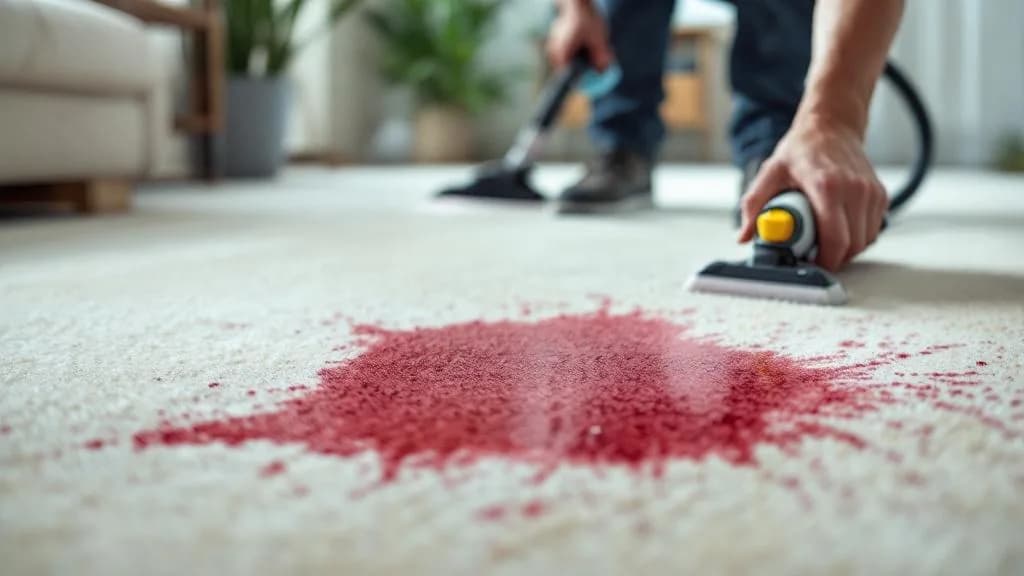
Chlorinated pool water on carpet presents a different risk from most water stains: the active chlorine (hypochlorous acid) in pool water is a bleaching agent that can lighten carpet dye on contact, particularly on coloured or patterned carpet. The risk increases with higher pool chlorine levels, longer contact time, and warmer water (which accelerates chlorine reaction rates). Fresh water dilution is the most important immediate action.
Immediate Action: Dilute and Extract
- Remove the wet towel or swimwear from the carpet immediately. Prolonged contact allows chlorine to keep reacting with carpet dye.
- Blot up as much moisture as possible with dry cloths, working from the outer edge inward.
- Apply cold fresh water to the affected area to dilute the chlorine concentration. This stops further bleaching activity. Blot again to extract the diluted water.
- Repeat the fresh-water rinse and blot twice more to ensure the chlorine is thoroughly diluted out of the fibres.
Understanding the Bleaching Risk
Low chlorine concentrations from a well-maintained pool (typically 1–3 ppm free chlorine) on carpet that dries quickly cause minimal bleaching. The risk escalates when the pool is recently shocked (chlorine levels can reach 10 ppm or higher), when wet items sit on carpet for extended periods, or when the water does not dry quickly and stays in contact with carpet fibres. Permanent bleaching creates a lighter patch that matches the contact area. This cannot be reversed by cleaning and requires colour correction or carpet replacement.
Sodium thiosulphate as a chlorine neutraliser
Photography supply stores and pool shops sell sodium thiosulphate (hypo), which rapidly neutralises chlorine. A small amount dissolved in water and applied to the carpet after dilution blotting can stop any remaining chlorine reaction. Rinse with plain water afterward.
White Mineral Deposit from Evaporated Pool Water
Pool water carries dissolved calcium, magnesium, and other minerals from balancing chemicals. When pool water evaporates from carpet, these minerals can leave a white crystalline deposit. This is a separate problem from chlorine bleaching and responds to a mild acidic treatment. Apply a solution of 1 tablespoon white vinegar in 1 cup of water, blot, and allow to dry. The mild acid dissolves the mineral deposit.
Protecting Carpet in Pool Areas
- Keep a designated wet towel area away from carpeted surfaces: outdoor furniture or a tiled area.
- Use pool-area rugs with rubber backing on non-carpeted surfaces rather than placing pool items on carpet.
- Establish a house rule: dry off on tiles before stepping onto carpet, and wet swimwear goes directly to the laundry or outdoor area.
- If carpet leads to a pool access door, a waterproof barrier mat at the entry point prevents most wet foot contact.
Find a local cleaner in the Sutherland Shire
In the Sutherland Shire? We know your time matters. Leave your enquiry with us and we'll make it our priority to get you a quote from a local cleaner.
Find a Matched Local SpecialistThis site matches enquiries with independent local carpet cleaners. We do not employ cleaners directly.
Get a Shire quote
In the Sutherland Shire? We help you get a quote from a local cleaner. They quote you directly.
Frequently asked
My carpet has a pale patch where a towel was left overnight: is that permanent?
If the pale patch is from chlorine bleaching, it is almost certainly permanent: carpet dye molecules broken down by chlorine cannot be restored by cleaning. A carpet colour correction specialist can sometimes re-dye the area to match the surrounding carpet, which is a cost-effective alternative to full carpet replacement for a localised bleach patch.
We have a pool and kids regularly track wet feet across the carpet: is cumulative low-level chlorine contact damaging?
Repeated contact from well-chlorinated wet feet at normal pool levels (1–3 ppm) can cause gradual, subtle fading over months or years, particularly on older carpet with less colour-fast dye. The effect is slow and diffuse rather than creating obvious patches. Regular vacuuming and professional cleaning to remove mineral deposits slows the process. A carpet runner or waterproof mat on the traffic path is the most practical long-term protection.
Can I use a carpet stain remover on a chlorine-bleached patch?
Standard carpet stain removers cannot restore bleached colour. They are designed to remove added pigment, not to replace removed dye. A carpet stain remover on a bleach patch is unlikely to cause further harm but will not improve the appearance. Professional colour correction with carpet dye is the appropriate treatment for bleach patches.