
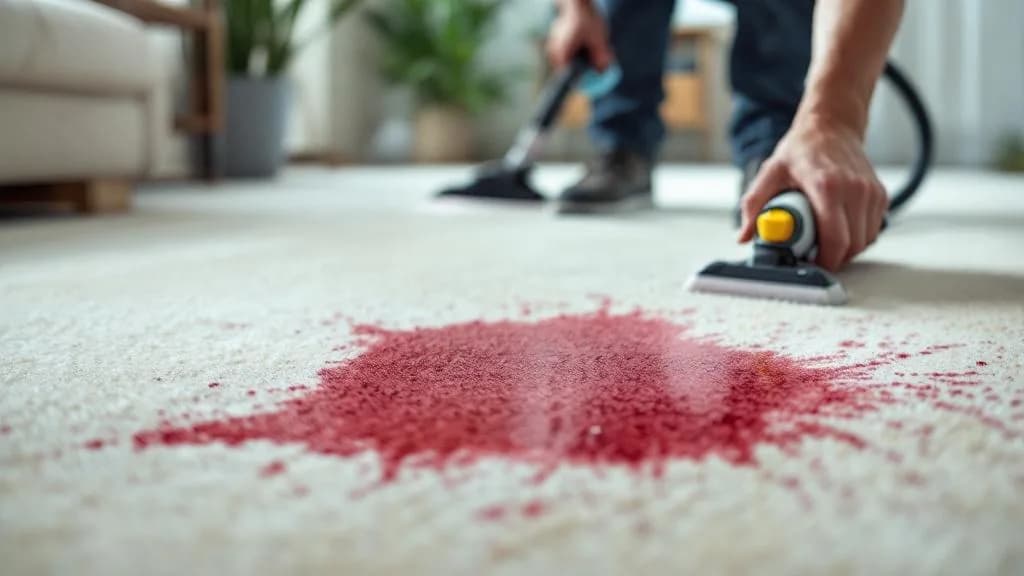
A spilled glass of cordial or a knocked-over can of Coke looks like a simple accident, and the initial blot-and-rinse seems to resolve it. But within days or weeks, the stain often reappears, darker than before and surrounded by a ring of additional soiling. This is the sugar problem: the residue left in the carpet pile after inadequate rinsing acts as a powerful attractant for foot traffic dirt. Soft drink and cordial stains are more complex than they appear, because they contain three chemically distinct staining components.
Three Staining Components in One Spill
- Sugar: the sticky, hygroscopic residue that attracts dirt and causes the stain to darken over weeks as foot traffic presses soil into the tacky surface.
- Acid: citric acid (in most fruit cordials and soft drinks) and phosphoric acid (in cola drinks) can shift the local pH of the carpet dye, contributing to colour change or dye instability in wool and some solution-dyed nylons.
- Food colouring: the artificial or natural colourings in concentrated cordials and energy drinks (especially red, purple and orange dyes) are the most visually persistent component and the hardest to remove without the correct chemistry.
Cold water alone removes the sugar partially and dilutes the acid but has almost no effect on embedded food dye. This is why the standard DIY approach (blot, pour water, blot again) appears to work immediately but fails over the following days.
The Sugar Problem: Why the Stain Comes Back
Sugar dissolved in water is hygroscopic. It continues to attract moisture from the air even after the carpet appears dry. In the days after a soft drink spill, the residual sugar in the pile draws in humidity, which makes the area feel slightly tacky underfoot. This tacky surface then captures airborne dust and tracked-in soil at a much higher rate than the surrounding carpet. The result is a stain that appears to grow or darken over time, even though no new spill has occurred.
Warm water is better than cold for sugar residue
Sugar dissolves more readily in warm water than cold. After the initial emergency blot to lift excess liquid, follow with a warm (not hot) water rinse when treating soft drink stains. Hot water can set protein-based stains, but soft drinks do not contain protein, so warm water is appropriate.
Food Dye: The Hardest Component to Remove
The artificial colouring in Cottee's cordial, Ribena, sports drinks and energy drinks is a concentrated food dye engineered to be stable in an acidic, high-sugar solution. These dyes are resistant to simple water dilution and, once partially dried into carpet fibre, become progressively harder to remove.
| Product Type | Dye Concentration | Key Challenge |
|---|---|---|
| Cola (Coke, Pepsi, generic) | Low: caramel colour | Acid component; sugar residue; relatively easy dye |
| Fruit cordial concentrate (Cottee's, Berri) | Very high: diluted by consumer | If spilled at concentrate strength, intense dye saturation; common Australian household hazard |
| Ribena / blackcurrant | High anthocyanin (natural dye) | Anthocyanin dyes react with pH: can appear to bleach or shift colour depending on treatment chemistry |
| Sports drinks (Gatorade, Powerade) | Medium: bright artificial colour | FD&C dyes; respond to oxidising agent treatment if applied promptly |
| Energy drinks (Red Bull, Mother) | Low-medium | Similar to sports drinks; the taurine/B vitamin content is non-staining |
| Milo (chocolate malt beverage) | Cocoa/malt: low artificial colour | Treated as a food-based stain (cocoa, sugar, milk) rather than a dye stain |
Treatment Sequence
- Blot immediately: use a clean, dry white cloth or paper towel pressed firmly into the pile to absorb as much liquid as possible. Do not rub: rubbing spreads the spill laterally and pushes it deeper into the pile.
- Rinse with warm water: pour a small amount of warm water over the stain and blot again with a fresh cloth. Repeat two to three times to dilute and remove the sugar component.
- Apply a mild detergent solution: a few drops of clear dish soap in 250 ml of warm water, applied with a cloth and blotted inward from the stain edge. This lifts surface colour and any remaining sugar.
- For coloured stains: apply a 3% hydrogen peroxide solution (standard pharmacy strength) to a cloth (do not pour directly onto the carpet) and blot onto the dyed area. Test an inconspicuous area first. Allow 1–2 minutes of contact, then blot and rinse with water. Hydrogen peroxide oxidises many food dyes and is generally safe on synthetic carpet in dilute form.
- Final rinse: a final warm water rinse and thorough blotting removes detergent and peroxide residue.
- Dry quickly: use a fan or open window to accelerate drying: damp carpet left for hours can develop a musty odour and re-wick residual colouring from the backing.
Do not use hydrogen peroxide on wool carpet
Hydrogen peroxide can bleach or permanently discolour wool fibres. For wool or wool-blend carpet, use an enzyme-based carpet cleaner instead. If you are uncertain of your carpet fibre type, test any product in a hidden area first.
When to Call a Professional
A fresh soft drink spill treated immediately has a high success rate with the sequence above. But there are situations where professional treatment is the better path.
- Concentrated cordial spilled and left overnight: the dye has partially set, and the sugar residue has dried into the pile. DIY treatment will lighten but is unlikely to fully remove the stain.
- Ribena or high-anthocyanin blackcurrant on wool: anthocyanin dyes are pH-reactive, and the wrong DIY chemistry can permanently shift the colour. Professional assessment is worth it before attempting home treatment.
- The stain keeps reappearing: this is the classic sign of inadequate sugar removal. It reappears because residue in the backing is wicking up as the carpet wets and dries. Professional hot water extraction removes the full sugar-and-dye residue column from pile to backing.
- Large area spill: a full glass of cordial or a spilled jug covers a large area quickly. Professional extraction is more thorough than manual blotting across a large zone.
Find a local cleaner in the Sutherland Shire
In the Sutherland Shire? We know your time matters. Leave your enquiry with us and we'll make it our priority to get you a quote from a local cleaner.
Find a Matched Local SpecialistThis site matches enquiries with independent local carpet cleaners. We do not employ cleaners directly.
Get a Shire quote
In the Sutherland Shire? We help you get a quote from a local cleaner. They quote you directly.
Frequently asked
How do you get soft drink out of carpet?
Blot excess liquid immediately with a dry white cloth. Do not rub. Follow with warm water rinse and blotting to remove sugar residue. Apply a mild dish soap solution, blot, and rinse again. For coloured drinks, a dilute hydrogen peroxide solution (3%) applied by cloth can oxidise food dye. Test on an inconspicuous area first, and do not use on wool carpet.
Why does the soft drink stain keep coming back after I clean it?
Re-appearing stains are caused by residual sugar and dye in the carpet backing that wicks up to the surface as the pile wets and dries. This happens when the initial clean removes surface residue but does not penetrate to the backing. The solution is a thorough warm water rinse and blotting cycle, or professional hot water extraction that removes the full residue column from pile through to backing.
Will Cottee's cordial stain carpet permanently?
Cottee's and similar concentrated Australian cordials contain high-intensity food dye. If treated immediately, most synthetic carpet fibres can be cleaned with the detergent-and-peroxide approach. If left overnight or longer, the dye may partially set (particularly on older carpet or wool blends) and complete removal may not be achievable. A professional assessment after a set cordial stain will tell you what can realistically be done.
Can Ribena be removed from carpet?
Ribena contains anthocyanin, a natural blackcurrant dye that is pH-reactive. It appears red in acid conditions and blue/purple in alkaline conditions. This means the wrong cleaning chemistry can permanently change the apparent colour of the stain rather than remove it. For Ribena on synthetic carpet, treat with the standard detergent approach first; hydrogen peroxide may help lighten residual colour. On wool or wool-blend carpet, do not use hydrogen peroxide: seek professional treatment.
How do you get cola stain out of carpet?
Cola (Coke, Pepsi) contains caramel colouring, phosphoric acid and sugar. The sugar residue is the main issue for re-appearing stains. Blot immediately, rinse with warm water (not cold), apply a mild dish soap solution and rinse thoroughly. The acid content of cola can affect carpet dye over time if left: prompt treatment is important. Caramel colour is less resistant than artificial food dyes, so cola stains generally respond well to thorough DIY treatment.