
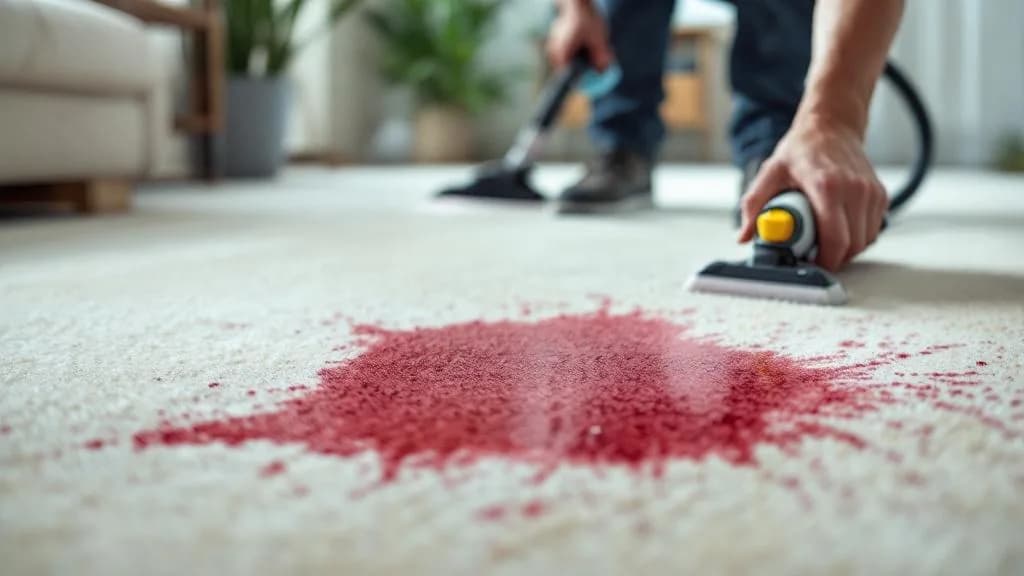
Tea tree oil (Melaleuca alternifolia oil) is an essential oil with a high concentration of terpene compounds: primarily terpinen-4-ol, which is responsible for both its antimicrobial properties and its sharp, medicinal odour. On carpet, a tea tree oil spill creates two problems: the oil itself leaves a greasy residue that attracts dirt, and the terpene compounds penetrate carpet fibre deeply and are slow to evaporate, leaving a persistent smell. Tea tree oil also has mild solvent properties that can interact with carpet dyes, particularly on wool.
Colour fading risk
Terpene compounds in tea tree oil are mild organic solvents. On most solution-dyed synthetic carpet (where colour is embedded throughout the fibre, not surface-applied), the risk is low. On wool carpet or carpet with surface-applied dyes, tea tree oil can partially strip colour: leaving a lighter patch in the affected area. The risk increases with concentration (neat tea tree oil vs diluted) and contact time. Blotting immediately reduces (but does not eliminate) the risk of colour change on susceptible carpet types.
Test on a hidden area before treating wool carpet
If the spill is on wool carpet, test your cleaning approach on a hidden area (inside a wardrobe, under furniture) before applying it to the stain. Wool dyes are more vulnerable to solvent interaction than synthetic carpet dyes, and the cleaning agent itself can sometimes cause additional colour lift on already-stressed wool fibre.
Removal method
- Blot up as much neat oil as possible immediately with a clean dry cloth: press firmly, do not rub
- Apply baking soda or cornstarch generously to the affected area and leave for 15–20 minutes: essential oils absorb into powder effectively; the longer dwell time is needed for terpene compounds
- Vacuum up the powder thoroughly
- Apply dish soap diluted in warm water (a few drops per 500 mL) to the residual oily spot and blot gently: the degreaser breaks the oil bond with the fibre
- Rinse by blotting with a plain warm-water cloth through several changes
- Check for odour: if the medicinal smell remains, apply a light sprinkle of dry baking soda to the now-dry area, leave overnight, then vacuum
- For persistent odour, an activated charcoal pouch placed on the area for 24–48 hours absorbs residual terpene vapour from the pile
Why the odour lingers
Tea tree oil's terpene compounds have a relatively low vapour pressure. They evaporate slowly compared to solvents like alcohol. Combined with the tendency of carpet pile to trap and hold volatile compounds, this means the smell can persist for days to weeks even after the visible oily residue is removed. Ventilating the room (opening windows, running a fan) accelerates evaporation. Activated charcoal absorbers placed on or near the area adsorb terpene vapour more actively. If the smell persists beyond a week after cleaning, the oil has penetrated into the carpet backing or underlay, at that point, professional extraction with hot-water rinse equipment is the most effective option.
Diluted tea tree vs neat oil
Tea tree oil is often used diluted in carrier oils (coconut oil, almond oil) for skin application. A spill of diluted tea tree adds the carrier oil component to the treatment. This is typically a heavier oil that responds well to the baking soda absorption + dish soap sequence. The carrier oil may be more visible as a greasy residue than the tea tree itself; treat for carrier oil first (more baking soda absorption), then the terpene odour second.
Find a local cleaner in the Sutherland Shire
In the Sutherland Shire? We know your time matters. Leave your enquiry with us and we'll make it our priority to get you a quote from a local cleaner.
Find a Matched Local SpecialistThis site matches enquiries with independent local carpet cleaners. We do not employ cleaners directly.
Get a Shire quote
In the Sutherland Shire? We help you get a quote from a local cleaner. They quote you directly.
Frequently asked
Is tea tree oil on carpet harmful to pets?
Yes, tea tree oil (particularly terpinen-4-ol) is toxic to cats and dogs at concentrated levels. A neat tea tree oil spill on carpet that is not fully cleaned represents a contact and inhalation hazard for pets in the household. Thorough removal is important for pet safety, not just odour management. If a pet shows signs of exposure (drooling, lethargy, tremors), contact a vet immediately.
Can I use tea tree oil to clean carpet stains?
Diluted tea tree oil is sometimes suggested as a natural antimicrobial cleaner for carpet. At low dilution (a few drops in a litre of water), the colour-fading risk is minimal on synthetic carpet. However, it does not have particular stain-removing properties beyond mild surfactant action: dish soap is more effective for most stains. Using tea tree oil to treat another stain adds the odour and potential dye interaction of the oil without clear benefit.
My carpet smells like tea tree oil a week after cleaning: what should I do?
Persistent odour a week after cleaning indicates terpene compounds have penetrated into the carpet backing or underlay beneath the surface fibres. Surface cleaning cannot reach this depth. Professional hot-water extraction (which forces rinse water through the carpet at pressure) is the most effective option. An activated charcoal absorber placed on the area between now and a professional clean will reduce ambient odour.
Will the tea tree oil stain the carpet permanently?
Tea tree oil itself does not contain pigment. It does not stain carpet in the colour sense. The risk is oily residue (which attracts dirt and makes a patch of carpet look darker from embedded soil over time) and dye fading on susceptible carpet types. Treated promptly and thoroughly, most synthetic carpet returns to normal appearance. Wool carpet with dye interaction may have a permanent lighter patch regardless of treatment quality.