
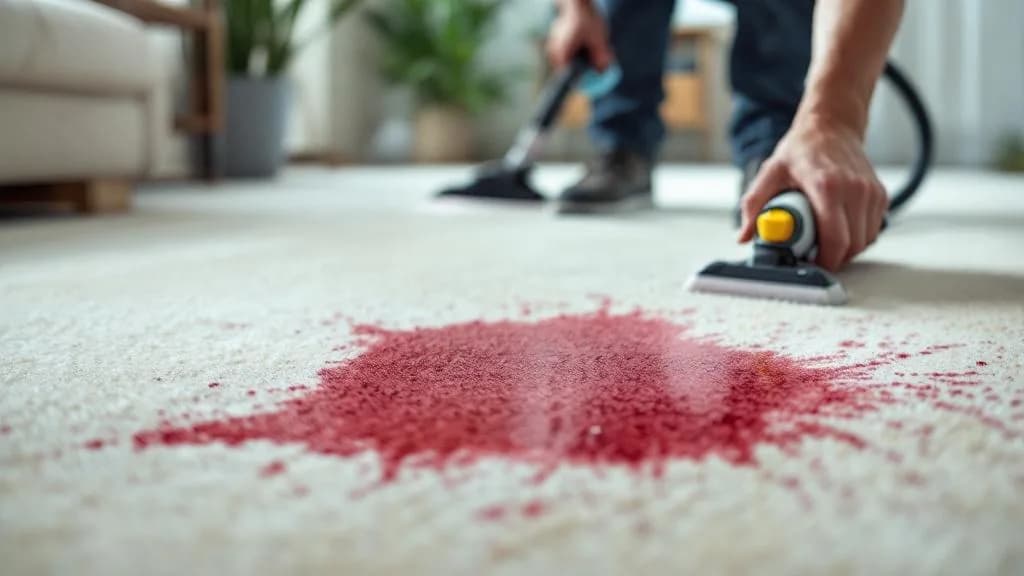
Turmeric and tomato sauce leave similar-looking yellow and red stains, but they have completely different chemistry, and what works on one can make the other worse. Treating them the same is one of the most common stain-removal mistakes in the kitchen. This guide covers each separately.
Turmeric: why it's so persistent
Turmeric's yellow colour comes from curcumin, a compound that has been used as a natural fabric dye for centuries. It is not simply food colouring. It is a genuine dye with strong fibre-bonding properties. Curcumin bonds particularly well to protein fibres (wool, silk) and to the surface of nylon. It is also light-sensitive and alkali-reactive: two properties that define the correct treatment approach.
Never use baking soda on a turmeric stain
Baking soda is alkaline (pH ~8–9). Curcumin is an acid-base indicator. It turns red-pink in alkaline conditions. Applying baking soda to a yellow turmeric stain converts it to a larger red-pink stain that is significantly harder to remove. This is an irreversible chemical reaction. The same applies to other alkaline products including some carpet cleaners and dish soap mixed with baking soda.
Treating a fresh turmeric stain: synthetic carpet
- Blot up as much of the turmeric as possible immediately. Do not rub
- Apply cold water sparingly to dilute the stain; blot again
- Apply a small amount of dish soap (without baking soda) to a cloth and blot the stain. This lifts the oily component of the turmeric paste
- For the persistent curcumin dye on synthetic carpet: apply 3% hydrogen peroxide (available from pharmacies) directly to the stained area: hydrogen peroxide is an oxidising agent that breaks down curcumin
- Leave for 5–10 minutes, then blot up the hydrogen peroxide and rinse with cold water
- Repeat if the stain has not fully lifted
Test hydrogen peroxide on a hidden area first
Hydrogen peroxide at 3% is generally safe on synthetic carpet but can lighten or remove colour on some carpets, particularly wool or older acid-dyed synthetics. Always test on a concealed area (inside a wardrobe, under furniture) before applying to a visible stain. Never use hydrogen peroxide above 3% concentration on carpet.
The sun fading method for persistent turmeric
Curcumin degrades under UV light. This is why turmeric-stained containers become less yellow over time when left in sunlight. For portable rugs, taking the rug outside and exposing the stain to direct Shire summer sun for a full day can significantly reduce a residual turmeric stain that resisted other treatment. This takes time (hours to days) and requires the stain to be damp (wet the area with water, let it sit in direct sun). It is not instant and does not work on wool fibres in the same way.
Turmeric on wool carpet
Wool's protein structure bonds curcumin particularly well. On wool, avoid hydrogen peroxide (it can bleach wool) and avoid any alkaline products. The approach for wool: cold water and a pH-neutral wool-safe cleaner to lift as much as possible, blotting gently. Full removal of turmeric from wool carpet is difficult and professional treatment with specialist dye-lift chemistry is often the best outcome for a significant stain.
Tomato sauce: three components, three steps
Tomato sauce is a compound stain. It contains red pigment (lycopene), protein from tomato solids, oil or fat (from the cooking base), and often sugar. Each component requires a slightly different approach. Treating them in the right sequence prevents setting one component while addressing another.
- Remove solids first: scoop up any solid tomato matter with a spoon before touching the stain; pressing it in makes everything harder
- Cold water and blot: rinse the liquid from the stain with cold water; avoid hot water which sets the protein component (same principle as blood)
- Dish soap for the oil component: a small amount of dish soap in cold water, blotted in with a cloth, emulsifies and lifts the fat/oil base
- Enzyme cleaner for protein residue: if a reddish-brown residue remains after the dish soap step, an enzyme-based cleaner (pet stain remover works well) breaks down the protein compounds from the tomato solids
- Cold water rinse: rinse out all cleaner residue and blot dry
For the remaining red tint from lycopene (the tomato pigment), a small amount of 3% hydrogen peroxide applied to a cloth and blotted on the residual pink area can help on synthetic carpet. Allow to dwell 5 minutes, then rinse thoroughly.
Dried turmeric and tomato stains
Dried turmeric has fully bonded the curcumin to the fibre. Rehydrate the stain with a small amount of cold water and allow to sit for 5 minutes before treating. This softens the dried compound and makes the hydrogen peroxide treatment more effective. Expect partial rather than complete removal from a stain that has been dry for more than a few hours.
Dried tomato sauce should also be rehydrated before treatment. The protein component becomes more difficult to lift once set, and enzyme cleaners require a moist environment to function. They need adequate dwell time (15–20 minutes) on a rehydrated stain to break down dried proteins effectively.
Find a local cleaner in the Sutherland Shire
In the Sutherland Shire? We know your time matters. Leave your enquiry with us and we'll make it our priority to get you a quote from a local cleaner.
Get a local quoteThis site matches enquiries with independent local carpet cleaners. We do not employ cleaners directly.
Get a Shire quote
In the Sutherland Shire? We help you get a quote from a local cleaner. They quote you directly.
Frequently asked
Does hydrogen peroxide remove turmeric from carpet?
Yes, 3% hydrogen peroxide is the most effective home treatment for curcumin (turmeric dye) on synthetic carpet. It oxidises the curcumin molecule, breaking down its ability to absorb light and making it colourless. Apply to a cloth or directly to the stain, dwell for 5–10 minutes, then blot up and rinse. Always test on a hidden area first, and never use it on wool carpet.
Why does turmeric stain turn red when I use baking soda?
Curcumin is a pH indicator. It changes from yellow to red-pink when exposed to alkaline conditions. Baking soda (pH ~8–9) is alkaline, so applying it to turmeric triggers a chemical reaction that converts the yellow stain to a larger red-pink stain. This reaction is not easily reversible. Never use baking soda, alkaline carpet cleaners, or alkaline pre-sprays on a turmeric stain.
How do you get tomato sauce out of carpet?
Scoop up solids immediately. Blot with cold water (not hot: heat sets the protein). Apply dish soap in cold water to address the oil component. Follow with an enzyme cleaner to break down protein residue. Rinse thoroughly with cold water. For residual red tint, 3% hydrogen peroxide blotted on and rinsed can help on synthetic carpet. Act quickly: dried tomato sauce is significantly harder to remove.
Can turmeric stains be removed from carpet permanently?
From synthetic carpet: yes, usually, with 3% hydrogen peroxide treatment applied promptly, before the stain fully dries and bonds. From wool carpet: complete removal is difficult due to wool's protein structure, which bonds curcumin strongly; professional dye-lift treatment is usually required for a significant turmeric stain on wool. The key is acting before the stain dries: a fresh turmeric stain is always more treatable than a dried one.