
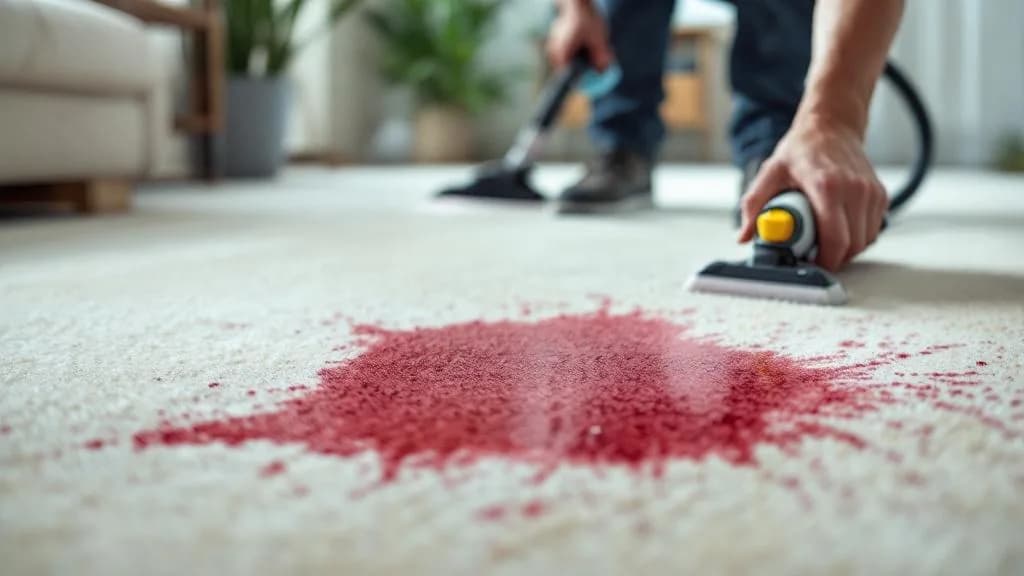
Whiteboard markers (also called dry-erase markers) use an alcohol-soluble ink, typically a pigment or dye dissolved in an alcohol carrier (ethanol or isopropyl alcohol) with a release agent that prevents the ink from bonding permanently to non-porous surfaces. On carpet fibre, the release agent does not function and the ink bonds to the fibre as the alcohol carrier evaporates. Speed is critical: the longer the ink dries, the harder it is to remove.
Isopropyl Alcohol: The Primary Treatment
Apply isopropyl alcohol (70% or higher: higher concentration works better on dry-erase ink) to a white cloth and blot the stain. Do not rub. Hold the cloth against the stain for 20–30 seconds to allow the alcohol to re-dissolve the dried ink, then blot and lift. Replace the cloth with a clean section as ink transfers. Repeat until no ink transfers to the cloth.
Higher Concentration Works Better
For whiteboard marker specifically, 90–99% isopropyl alcohol is noticeably more effective than 70% because less water dilutes the solvent action. Pharmacy-grade or electronics-grade IPA at 90%+ is the best option for stubborn marks.
Methylated Spirits as an Alternative
Methylated spirits (denatured ethanol) is also effective on dry-erase ink and is widely available in Australian hardware and supermarkets. Apply in the same way as isopropyl alcohol: damp cloth, blot, hold, lift. Follow all alcohol treatments with a cold water rinse and blot dry to remove the alcohol and any remaining ink residue from the fibre.
Dish Soap Follow-Up
After the alcohol treatment removes the bulk of the ink, a small amount of clear dish soap in cold water helps lift the remaining dye residue from the fibre. Apply with a white cloth, blot, and rinse. This is particularly useful when a faint colour shadow remains after the alcohol step.
Permanent Marker vs Whiteboard Marker
Permanent markers (Sharpie, Artline) also use alcohol-based ink but with a resin that bonds far more strongly to fibres. Isopropyl alcohol still works as the primary solvent but requires many more applications and longer dwell time. Old permanent marker stains may not fully remove: professional treatment with a commercial ink remover or reducing agent may be needed.
| Marker Type | Ink Base | Primary Solvent | Difficulty |
|---|---|---|---|
| Whiteboard / dry-erase | Alcohol + release agent | Isopropyl alcohol 70–99% | Moderate: easier when fresh |
| Permanent marker | Alcohol + bonding resin | Isopropyl alcohol (multiple passes) | Hard: may not fully remove |
| Water-based marker (Texta) | Water-based dye | Cold water + dish soap | Easy when fresh |
Find a local cleaner in the Sutherland Shire
In the Sutherland Shire? We know your time matters. Leave your enquiry with us and we'll make it our priority to get you a quote from a local cleaner.
Find a Matched Local SpecialistThis site matches enquiries with independent local carpet cleaners. We do not employ cleaners directly.
Get a Shire quote
In the Sutherland Shire? We help you get a quote from a local cleaner. They quote you directly.
Frequently asked
Will isopropyl alcohol bleach my carpet when removing whiteboard marker?
Isopropyl alcohol does not bleach carpet dye in the way chlorine does. It is a solvent, not an oxidiser. However, high-concentration IPA (90%+) applied for extended periods can strip some surface dye from poorly dyed or aged carpet. Test in a hidden spot first, keep applications brief (30 seconds), and rinse with cold water after each pass to remove the alcohol before prolonged contact can affect the dye.
The whiteboard marker has been on the carpet for days: will it still come out?
Dry-erase ink that has been on carpet for days is harder but not impossible to remove. The alcohol carrier has fully evaporated and the ink has partially bonded to the fibre. Use 90%+ IPA, hold the damp cloth against the stain for 60 seconds before blotting, and repeat multiple times. Fresh stains take 2–3 applications; aged stains may take 10 or more.
Can I use hand sanitiser to remove whiteboard marker from carpet?
Yes, alcohol-based hand sanitiser (60%+ ethanol) works on dry-erase ink by the same principle as isopropyl alcohol. Apply a small amount to a white cloth and blot the stain. Gel formulations take slightly longer to penetrate than liquid alcohol. Follow with a dish soap rinse to remove the sanitiser gel residue.
What colour whiteboard markers are hardest to remove from carpet?
Black, blue, and dark green are generally the most persistent colours because they use concentrated pigments or dyes. Red and orange can also leave a noticeable residual colour even after multiple alcohol applications. Light colours (yellow, light blue) tend to be easier to remove fully. On light or white carpet, dark colours may leave a faint shadow even after thorough treatment.