
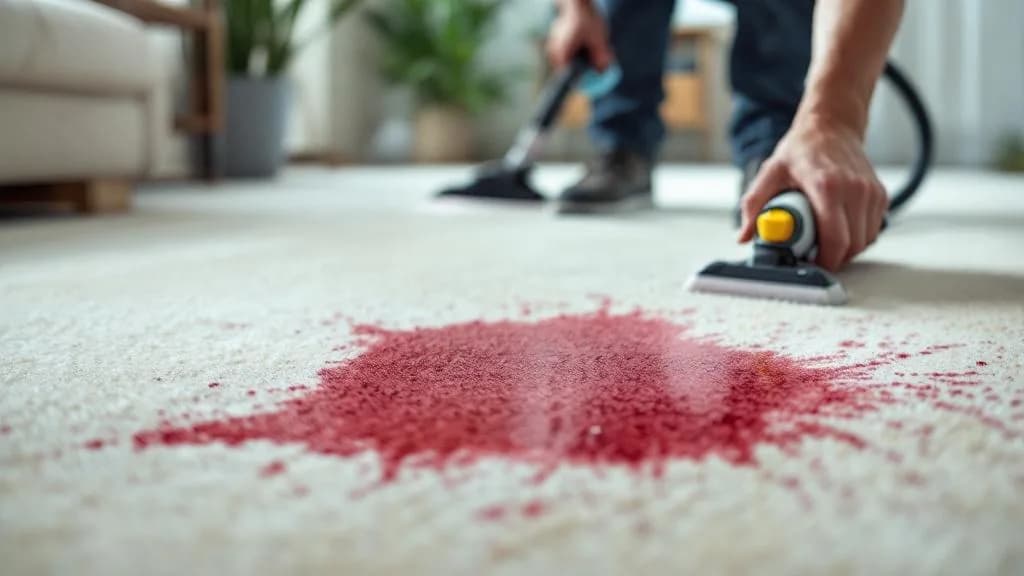
Why Antifreeze on Carpet Is an Urgent Problem
Engine coolant (commonly called antifreeze) is primarily ethylene glycol: a glycol alcohol with a characteristically sweet taste and smell. This sweetness is attractive to pets. Ethylene glycol is acutely toxic to dogs and cats: ingestion of even a small amount causes rapid kidney failure and is fatal without immediate veterinary treatment. If coolant reaches carpet, keep pets out of the area immediately and treat the stain before allowing animal access to the room.
Pet emergency priority
If a pet has been in contact with or may have ingested coolant from carpet, call a vet immediately. Do not wait to treat the stain first. Ethylene glycol poisoning progresses quickly; time is critical. Signs include vomiting, apparent drunkenness, excessive thirst, and lethargy.
Coolant Composition and Staining Mechanism
Most commercial engine coolants combine ethylene glycol with distilled water and corrosion inhibitor additives. The vivid colour (typically bright green, yellow, orange, or pink) comes from fluorescent dye added specifically to help identify leaks. This dye is the primary carpet staining concern: the ethylene glycol itself is colourless and water-soluble, but the fluorescent dye component can bond to carpet fibre and resist simple water treatment.
The good news for carpet treatment is that ethylene glycol is highly water-soluble. Unlike petroleum-based fluids (motor oil, tar), it does not require solvent-based removal: cold water and detergent are effective on fresh spills. The fluorescent dye residue is the component most likely to persist.
Immediate Response
- Remove pets from the area and close the door until treatment is complete.
- Blot up as much liquid as possible with clean cloths or paper towels. Do not rub: blot with firm downward pressure, working from the outside edges inward.
- Apply cold water generously to the area and continue blotting. Ethylene glycol is water-miscible and dilutes readily. Repeat the cold water rinse and blot sequence several times.
- Apply a small amount of dish soap to a clean cloth and blot the remaining residue. Dish soap helps emulsify any corrosion inhibitor additives that may have a detergent-resistant component.
- Rinse thoroughly with clean cold water and blot dry. Place a thick dry cloth over the area and weight it to wick remaining moisture.
Treating the Fluorescent Dye Residue
After the bulk of the coolant is removed, a faint green, yellow, or orange tint may remain from the fluorescent dye. The dye in coolant is typically fluorescein or a related compound: water-soluble but with some affinity for carpet fibres, especially after it has partially dried.
For residual dye colour after the cold-water treatment: apply a small amount of diluted dish soap (one teaspoon per 500 mL water) and blot. Follow with hydrogen peroxide solution (3%: standard pharmacy grade) applied to a cloth and blotted onto the stained area. H₂O₂ is an oxidiser that bleaches fluorescent dye compounds. Test in a hidden area first: 3% H₂O₂ is generally safe on synthetic carpet but can lighten some natural fibre dyes.
Check under UV light
Fluorescent coolant dyes are visible under UV (blacklight): a phone-sized UV torch shows exactly where the dye has spread, even after most colour has been removed from the surface. This is useful for confirming that the extraction was complete and that no residual contamination remains accessible to pets.
Large Spills and Garage Tracked-In Coolant
Coolant tracked in from a garage on shoes or vehicle tyres tends to be in small amounts but spread across a larger area. The tracking pattern is easier to treat than a pooled spill: cold water blotting and dish soap addresses these scattered deposits effectively. For a large-volume spill (a coolant hose failure, an overflowing radiator reservoir brought indoors) professional hot water extraction is recommended: the volume of fluid reaches the carpet backing and underlay, where surface blotting cannot reach.
Find a local cleaner in the Sutherland Shire
In the Sutherland Shire? We know your time matters. Leave your enquiry with us and we'll make it our priority to get you a quote from a local cleaner.
Get a local quoteThis site matches enquiries with independent local carpet cleaners. We do not employ cleaners directly.
Get a Shire quote
In the Sutherland Shire? We help you get a quote from a local cleaner. They quote you directly.
Frequently asked
Is antifreeze on carpet dangerous for pets?
Yes, ethylene glycol in engine coolant is acutely toxic to dogs and cats. Its sweet smell and taste are attractive to pets. Keep animals out of the area until the carpet is fully treated and dry. If a pet has had contact with or may have ingested coolant, call a vet immediately.
Does engine coolant wash out of carpet?
The ethylene glycol component is highly water-soluble and clears with cold water and dish soap. The fluorescent dye additive may leave a faint green, yellow, or orange tint after the bulk is removed: 3% hydrogen peroxide solution (tested in a hidden area first) addresses residual fluorescent dye.
What removes the green stain left by antifreeze on carpet?
Cold water rinsing removes most of the green fluorescent dye when fresh. For residual colour after blotting, 3% hydrogen peroxide solution applied to a cloth and blotted onto the area oxidises and lightens the fluorescent dye compound. Test in a hidden area first, as H₂O₂ can lighten some natural fibre dyes.
How do I know if all the coolant has been removed?
A UV torch (blacklight) shows fluorescent coolant residue even after visible colour is gone: coolant dyes are fluorescent and glow under UV light. This is the most reliable way to confirm the area is clear before allowing pet access to the room.