
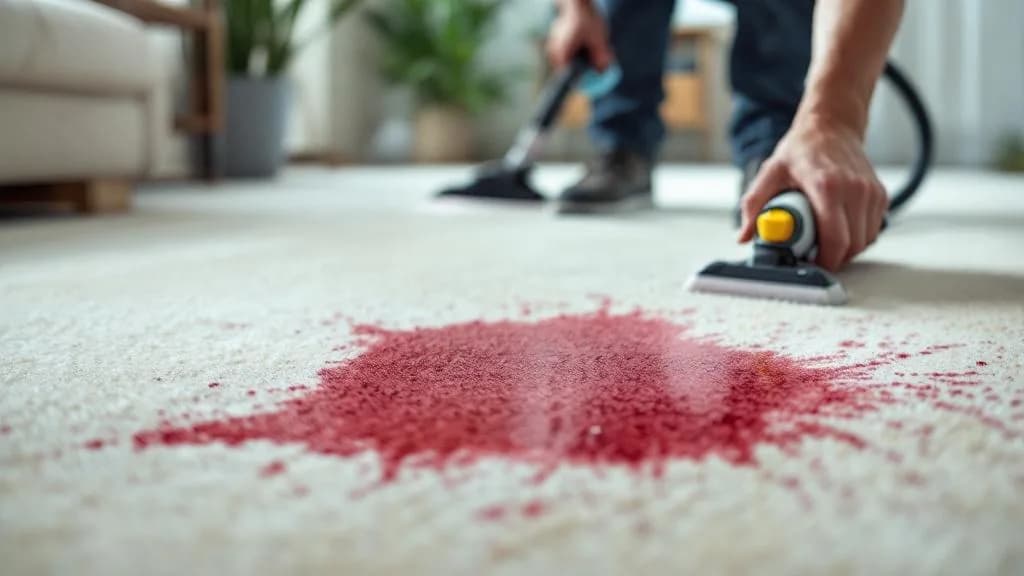
Hand sanitiser is typically 60–80% isopropyl or ethyl alcohol with a gel carrier (usually a carbomer polymer), fragrance, and sometimes humectants like glycerol. The alcohol component evaporates quickly, leaving behind the gel carrier and any non-volatile additives. On carpet, the alcohol itself is rarely a staining problem. It evaporates before it can deposit colour. The concerns are: dye fading on certain carpet types, sticky residue from the gel carrier, and the relatively minor issue of fragrance odour.
Colour fading: the main risk
Isopropyl and ethyl alcohol are mild solvents. On most modern synthetic carpet with colour-fast dyes, a hand sanitiser spill will not cause visible colour change: the alcohol concentration is not high enough and the contact time is too short. However, on certain carpet types (particularly older carpet with less stable dye lots, solution-dyed polypropylene with surface-applied colour, or wool carpet) alcohol can lift or lighten the surface dye. The risk is higher if the sanitiser is rubbed in rather than blotted.
Blot, do not rub
Rubbing hand sanitiser into carpet increases alcohol contact time and mechanical agitation on the dye, both increase the risk of colour loss. Blot immediately and do not scrub.
What to do after a hand sanitiser spill
- Blot up the gel immediately with a clean cloth or paper towel: press firmly, do not rub; most of the alcohol will evaporate within 30–60 seconds
- Check the carpet colour. If the area looks lighter than the surrounding pile, colour fading has occurred; this is usually permanent
- If no colour change is visible, address the gel residue: apply a small amount of warm water to the area and blot: the carbomer gel dissolves readily in water
- For sticky residue that persists, a small amount of dish soap in warm water applied and blotted will clear the gel carrier
- Rinse by blotting with a plain warm-water cloth, then blot dry
- Allow to air dry: the alcohol evaporates quickly so the area dries faster than most wet-treatment spots
If colour fading has occurred
Alcohol-induced colour fading on carpet is usually irreversible: the dye has been partially stripped from the fibre and cannot be reapplied without specialist carpet dyeing. If the faded area is small and in a low-visibility location, it may not warrant further action. If it is visible, carpet colour restoration (spot dyeing) by a specialist can blend the faded area back to match the surrounding carpet. This is a skill-specific service, not all carpet cleaners offer it, but specialists in carpet repair and restoration do.
Odour from hand sanitiser
The alcohol component evaporates quickly and takes most of the odour with it: hand sanitiser odour in carpet typically dissipates within an hour with normal ventilation. If a persistent smell remains, it is from the fragrance or humectant additives in the gel carrier. These respond to the water and dish soap treatment described above: the gel carrier carries the fragrance and removing the gel removes the residual odour source.
Find a local cleaner in the Sutherland Shire
In the Sutherland Shire? We know your time matters. Leave your enquiry with us and we'll make it our priority to get you a quote from a local cleaner.
Find a Matched Local SpecialistThis site matches enquiries with independent local carpet cleaners. We do not employ cleaners directly.
Get a Shire quote
In the Sutherland Shire? We help you get a quote from a local cleaner. They quote you directly.
Frequently asked
Does hand sanitiser stain carpet?
Not in the typical sense: the alcohol component evaporates without depositing colour. The main risks are: colour fading on carpet with less stable dyes, sticky residue from the gel carrier if not cleaned up, and fragrance odour. Most modern synthetic carpet with colour-fast dyes shows no permanent effect from a hand sanitiser spill treated promptly.
My carpet has a lighter patch where hand sanitiser spilled: can it be fixed?
Alcohol-induced colour fading is typically permanent: the dye has been removed from the fibre. Carpet colour restoration (spot dyeing) by a specialist can often blend a small faded area back to match the surrounding carpet. Results depend on the carpet type, the dye system used, and the size of the affected area. It is worth getting an assessment from a carpet repair specialist before assuming the damage cannot be corrected.
The carpet feels sticky where I spilled hand sanitiser: why?
The gel carrier (carbomer or similar polymer) in hand sanitiser leaves a residue when the alcohol evaporates. This residue is water-soluble. Blot with a warm damp cloth to dissolve it, then blot dry. If still tacky, a small amount of dish soap in warm water followed by a plain water rinse removes it fully.
Is hand sanitiser more or less damaging to carpet than rubbing alcohol?
Hand sanitiser contains 60–80% alcohol plus gel carriers: rubbing alcohol (isopropyl) is typically sold at 70% concentration without gel. On a per-application basis, rubbing alcohol has slightly more contact-time with the fibre because it does not have the gel carrier to moderate absorption speed. Hand sanitiser's gel carrier slightly slows alcohol penetration but leaves its own residue. Both carry colour-fading risk on susceptible carpet; neither should be rubbed in.