
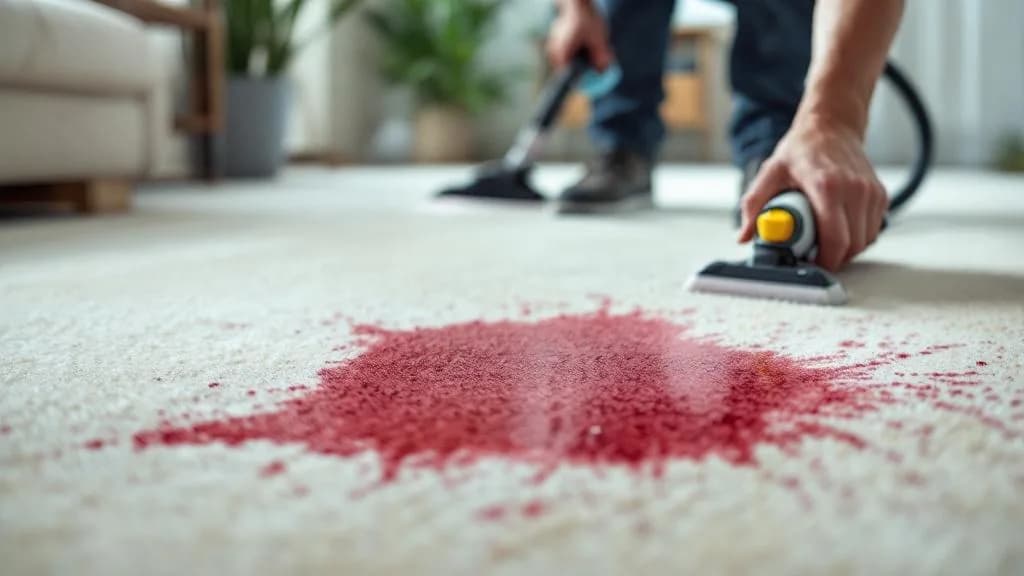
Baby formula and milk spills are one of the most common carpet stain scenarios for families with infants, and one of the most mishandled, because the most natural response (applying warm or hot water) is the worst thing you can do. Understanding the protein chemistry behind milk stains produces significantly better outcomes.
Why Heat Makes Milk Stains Permanent
Milk and baby formula are protein-rich: casein and whey proteins, milk fats, and lactose (milk sugar). When protein comes into contact with heat (from hot water, a hairdryer, or even steam) it denatures and coagulates, bonding to the carpet fibre surface in the same way that an egg white sets when cooked. A milk stain treated with hot water is significantly harder to remove than one treated with cold water, and a stain that has been heated repeatedly may be permanently set.
The sour milk smell that develops over time is caused by bacterial breakdown of the protein and fat residue in the carpet pile: the same fermentation process that makes milk go off. Even when the stain itself appears to have been cleaned from the surface, residue deep in the pile or backing continues to break down, producing the characteristic sour-milk odour that can persist for weeks.
Always use cold water on milk and formula
Never apply warm or hot water to a milk or formula stain. It denatures the protein and bonds it to the carpet fibre. Cold water only, throughout the entire treatment process.
Treatment Sequence
- Blot immediately with a clean cloth. Remove as much liquid as possible. Work from the outside of the spill inward. Do not rub.
- Apply cold water and blot again. Continue with cold water and fresh cloth sections until the cloth shows minimal colour transfer.
- Apply an enzyme-based cleaner to the stain. Enzyme cleaners contain biological enzymes (protease for protein, lipase for fat) that break down the milk components at a molecular level rather than just lifting them from the surface. Apply according to product directions and allow the dwell time specified, typically 5–10 minutes.
- Blot the enzyme cleaner and lifted residue with a clean cloth. Apply another round if needed.
- Rinse with cold water and blot dry.
- For odour: sprinkle baking soda over the dry area, work lightly into the pile, and leave for 30 minutes to several hours before vacuuming. Baking soda neutralises the acidic compounds from bacterial breakdown that cause the sour smell.
Why Enzyme Cleaners Are the Right Tool
Standard household cleaners (dish soap, window cleaner, all-purpose surface spray) work by surfactant action: they surround and lift particles from a surface. For simple soiling this works well, but protein and fat molecules from milk require chemical breakdown rather than just physical lifting. Enzyme cleaners use protease enzymes that specifically cleave protein molecules into smaller fragments that can be extracted, and lipase enzymes that break down fat molecules. This is why pet stain and odour enzyme cleaners also work well on milk. They contain the same enzyme types needed for biological residue.
Enzyme cleaners are widely available in Australian supermarkets and pet supply stores. Products marketed for pet accidents contain the same protease and lipase chemistry appropriate for milk and formula stains. Confirm the product is suitable for carpet (most are) and check that it is safe for your carpet fibre type.
The Persistent Sour Smell: What It Means
If the sour milk smell returns after treatment and drying, it indicates that protein or fat residue remains in the pile, backing, or underlay where the surface treatment did not reach. This is particularly common when a significant amount of liquid saturated through to the underlay, or when a spill was left unaddressed for more than an hour before treatment began.
A sour milk smell that persists in a nursery or baby's room (even with regular cleaning) is worth investigating with professional hot water extraction: the machine's injection pressure and extraction power reaches residue in the backing and upper underlay that surface application cannot access. Post-extraction deodorising treatment neutralises remaining odour compounds at depth.
| Scenario | Treatment | Notes |
|---|---|---|
| Fresh spill, treated immediately | Cold water blot + enzyme cleaner + baking soda | Best outcome; treat within first 10–15 minutes |
| Spill treated with hot water by mistake | Enzyme cleaner + professional if stain persists | Hot water has partially set the protein; enzyme cleaner may still lift some residue |
| Dried stain discovered later | Rehydrate with cold water, then enzyme cleaner | Dried protein is harder but not impossible to treat; allow enzyme dwell time |
| Persistent sour smell despite surface treatment | Professional hot water extraction + deodoriser | Residue in backing or underlay; surface treatment cannot reach |
| Formula soaked through to underlay (large spill) | Professional extraction; underlay assessment | Underlay saturation may require professional equipment to extract |
Find a local cleaner in the Sutherland Shire
In the Sutherland Shire? We know your time matters. Leave your enquiry with us and we'll make it our priority to get you a quote from a local cleaner.
Find a Matched Local SpecialistThis site matches enquiries with independent local carpet cleaners. We do not employ cleaners directly.
Get a Shire quote
In the Sutherland Shire? We help you get a quote from a local cleaner. They quote you directly.
Frequently asked
How do you get baby formula out of carpet?
Blot immediately with a clean cloth using cold water. Never hot water, which sets the protein. Apply an enzyme cleaner (protease/lipase-based, such as a pet stain remover) and allow 5–10 minutes dwell time. Blot, rinse with cold water, blot dry. For odour, apply baking soda to the dry area, leave for 30 minutes, then vacuum.
Why does spilled milk on carpet smell so bad?
The sour smell is caused by bacterial breakdown of the protein and fat residue remaining in the carpet pile after the liquid dries. Even when the visible stain has been cleaned from the surface, residue in the pile and backing continues to ferment, producing lactic and butyric acid compounds responsible for the sour milk odour. Enzyme cleaners break down the protein and fat molecules themselves, removing the odour at its source rather than masking it.
I used hot water on a milk stain. Can it still be removed?
Partially. Hot water denatures milk protein and bonds it to the carpet fibre, but not all of it is irreversibly set depending on the temperature and how quickly it was rinsed. Apply an enzyme cleaner with a full dwell time and blot thoroughly. This can break down and lift the partially-set protein. If a stain shadow or odour persists after enzyme treatment, professional hot water extraction is the next step.
My baby's room has a persistent sour smell I cannot get rid of. What should I do?
A persistent sour milk smell that does not resolve with enzyme cleaning and baking soda treatment is almost always caused by residue in the carpet backing or underlay: below where surface treatment can reach. Professional hot water extraction with an enzyme pre-treatment and post-extraction deodorising is the appropriate solution. The machine's injection and extraction pressure reaches the backing depth that surface application cannot access.
Does baking soda remove milk smell from carpet?
Baking soda neutralises the acidic compounds (lactic and butyric acids) that cause sour milk smell, and can significantly reduce surface odour. It does not break down the protein and fat residue that is producing the odour. That requires enzyme treatment. Use baking soda as a finishing step after enzyme treatment: apply to the dry area, leave for 30 minutes to several hours, then vacuum. For deep or persistent odour, professional treatment is needed.