
Sand from the beach or park is one of the most common carpet contaminants in coastal suburbs, and one of the most mishandled. The instinct to vacuum immediately, or to use a beater attachment, can actually drive angular sand particles deeper into the carpet pile and backing. In quantity, sand is abrasive: it acts like fine sandpaper against the carpet fibres as people walk over it, causing accelerated fibre wear that looks like general shabbiness but is actually mechanical damage.
Let It Dry Completely First
Damp sand from beach towels or wet feet clumps together and sticks to fibres. Vacuuming damp sand is largely ineffective: the clumps resist the suction and clog the vacuum. Allow the sand to dry completely before attempting removal. This typically takes two to four hours, depending on ventilation and weather. Once dry, the individual particles separate and vacuum more effectively.
Correct Vacuuming Technique for Sand
- Use a plain suction head, not a beater bar attachment. A rotating beater bar beats the sand deeper into the pile before suction can extract it.
- Vacuum slowly, with multiple passes in overlapping directions. Sand is heavy and needs slow, sustained suction to pull free.
- For carpet with a dense or high pile, use the carpet's nap direction for the first pass (with the pile, not against it) to avoid flattening the fibres under the sand.
- Empty the vacuum canister or bag part-way through a large sand removal job: a full bag reduces suction efficiency significantly.
- After initial vacuuming, brush the pile gently with a stiff carpet brush to bring sand from deeper in the pile to the surface, then vacuum again.
Door mats are the most effective long-term solution
A coarse-fibre door mat at each entry point and a dedicated towel or tray area near the back door for beach gear reduces the volume of sand reaching carpeted areas. Sand that never gets tracked in does not need to be vacuumed out.
When Sand Has Been Ground In Over Time
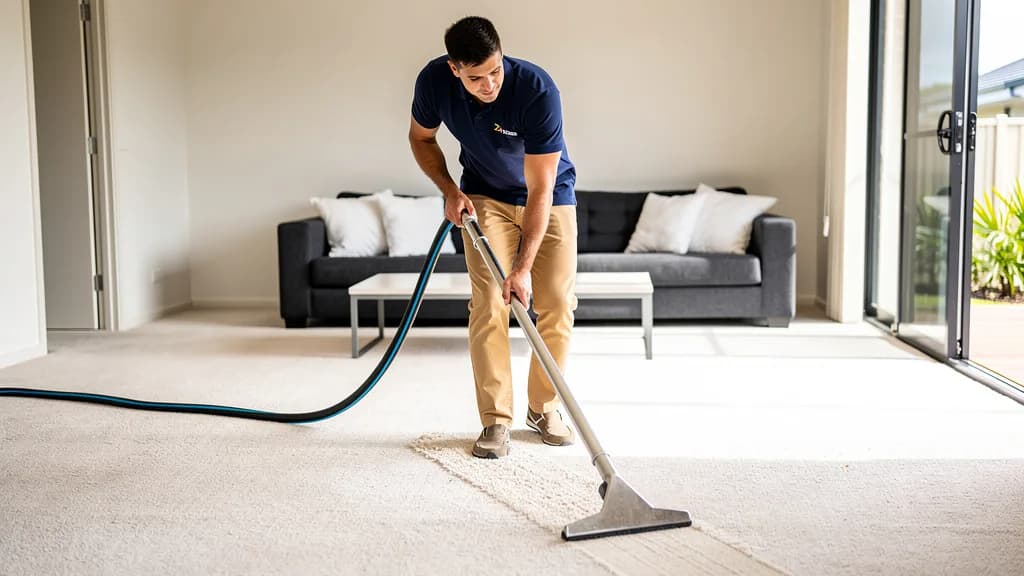
Sand that has been walked over repeatedly before removal becomes embedded in the backing of the carpet and cannot be extracted by vacuuming alone. It also combines with any moisture or organic material (sunscreen, salt water residue, food) to create a grimy layer at the base of the pile. Professional hot-water extraction reaches this deeper layer: the high-pressure spray and strong extraction pull embedded sand and the material bonded to it out of the backing.
In coastal homes where beach access is frequent and carpet cleaning is infrequent, the most common presentation is a general grey-brown dulling of the carpet in high-traffic zones. Vacuuming alone will not restore the colour: professional cleaning is needed to address what has settled into the base of the pile.
Find a local cleaner in the Sutherland Shire
In the Sutherland Shire? We know your time matters. Leave your enquiry with us and we'll make it our priority to get you a quote from a local cleaner.
Get a MatchThis site matches enquiries with independent local carpet cleaners. We do not employ cleaners directly.
Get a Shire quote
In the Sutherland Shire? We help you get a quote from a local cleaner. They quote you directly.
Frequently asked
My carpet feels gritty even after vacuuming. Is there still sand in it?
Yes, the gritty feel underfoot after vacuuming means sand particles are still embedded in the pile, usually at the backing level where suction cannot easily reach them. Professional hot-water extraction is the most effective way to clear deeply embedded sand. Alternatively, continue with multiple slow-pass vacuuming sessions with a brush in between; it is possible to clear significant amounts with persistence, but it takes time.
Is beach sand more damaging to carpet than regular dirt?
Yes, for two reasons. Beach sand particles are more angular than weathered inland dirt particles. They have sharper edges that abrade fibres more aggressively. Second, beach sand often carries salt and sunscreen residue that bonds the particles to fibres and to each other, making mechanical removal harder. Regular vacuuming after beach visits, before particles are ground in, is significantly more effective than infrequent deep cleaning.
Can I use a wet vacuum to remove sand from the carpet?
A wet/dry vacuum in dry suction mode is useful for sand removal: the larger capacity and stronger suction can handle sand volumes that overwhelm a regular vacuum. Do not use it in wet mode unless you intend to fully clean the carpet, as wetting dry sand turns it back into clumping wet sand and makes removal harder.