
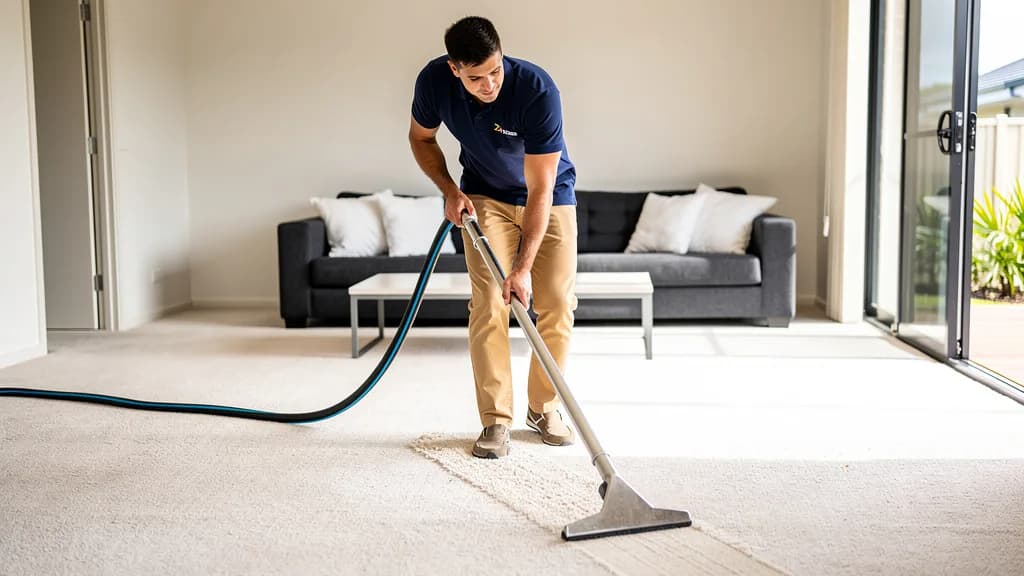
Renovation and building work (plastering, sanding, concrete cutting, drilling, or demolition) generates extremely fine dust that travels far beyond the work area and settles into carpet pile throughout the property. The particles are finer than typical household dirt and embed at the backing level where standard vacuuming has limited reach. The result is a carpet that looks clean on the surface but feels gritty underfoot and releases dust clouds when walked on.
Types of Renovation Dust and Their Impact
- Plaster and gyprock dust: fine white calcium sulfate particles; can absorb moisture and harden if wetted before removal, making wet cleaning counterproductive until dry dust is removed first.
- Silica dust (from concrete, masonry, or tile cutting): a health concern at high concentrations; requires careful handling during removal.
- Timber sanding dust: fine wood particles mixed with any existing finish; stains carpet fibres on contact if wet.
- Paint overspray or primer mist: harder to remove than dry dust; requires solvent treatment if it has dried on the carpet.
- General construction grit: coarser than the above, abrades fibres if ground in; typically easier to vacuum than fine dust.
Dry Dust Removal Before Any Wet Treatment
The first step after renovation dust exposure is always dry removal. Wetting the carpet before removing dry dust converts loose particles into a wet paste or slurry that is driven deeper into the pile and backing: dramatically harder to remove than dry dust. Thorough dry vacuuming first is non-negotiable.
- Use a vacuum with a HEPA filter if available: standard vacuum filters allow fine construction dust to pass through and recirculate into the air.
- Make multiple slow passes over the entire carpet in different directions: renovation dust requires more passes than everyday vacuuming.
- Use a crevice tool along skirting boards and carpet edges where dust accumulates most heavily.
- Repeat vacuuming the following day: fine particles settle back down from the air and a second vacuum session lifts the remaining settled dust.
- Only after dry vacuuming is thorough should any wet cleaning be considered.
Silica dust: wear a P2 mask when vacuuming post-renovation
Concrete, tile, and masonry dust contains respirable crystalline silica. While the concentration on carpet after typical residential renovation work is low, vacuuming disturbs settled particles. Wearing a P2 (N95 equivalent) dust mask during post-renovation vacuum sessions is a sensible precaution, particularly in poorly ventilated rooms.
When Professional Extraction Is the Right Choice
Domestic vacuuming removes surface and mid-pile dust but struggles to extract fine particles that have settled to the backing level over days or weeks of renovation activity. Professional hot-water extraction uses high-pressure water injection and powerful suction to flush fine particles from the full pile depth, including the backing. For carpet that has been exposed to renovation dust for more than a few days, or where the work was extensive (whole-room plastering, major sanding), professional extraction is the most efficient path to a fully clean result.
Paint Overspray on Carpet: Different Treatment
If the renovation included painting near carpeted areas and overspray or primer mist settled on the carpet, the approach differs from dry dust. Fresh water-based paint overspray can be blotted with a damp cloth before it dries. Dried water-based paint spots respond to warm water and dish soap, worked gently into the spot. Oil-based paint overspray requires mineral turpentine while still wet. If it has dried fully, it is very difficult to remove without risk of fibre damage and a professional assessment is worthwhile.
Find a local cleaner in the Sutherland Shire
In the Sutherland Shire? We know your time matters. Leave your enquiry with us and we'll make it our priority to get you a quote from a local cleaner.
Find a Matched Local SpecialistThis site matches enquiries with independent local carpet cleaners. We do not employ cleaners directly.
Get a Shire quote
In the Sutherland Shire? We help you get a quote from a local cleaner. They quote you directly.
Frequently asked
We had our bathroom retiled and the grout dust got through the gap under the door onto the hallway carpet. How do I remove it?
Grout dust is fine cement and silica particles. Vacuum thoroughly first with multiple passes. Allow it to dry fully if it got damp before vacuuming, as wet cement dust on carpet sets harder as it dries. After thorough dry vacuuming, if a haze or residue remains, professional hot-water extraction will flush the remaining fine particles from the pile. Do not wet mop or add water until all loose dry particles are vacuumed up.
My carpet looks clean after renovation vacuuming but feels gritty underfoot. Why?
Fine renovation dust settles to the base of the pile and into the backing where suction has limited reach. The surface looks clean because visible particles on the pile tips have been removed, but the embedded lower-pile grit remains. Professional hot-water extraction with high-pressure injection reaches the backing level where domestic vacuuming cannot. Multiple additional vacuum sessions with a beater-bar attachment can also progressively reduce the embedded grit over time.
We are about to start a renovation. What can I do to protect the carpet?
Use heavy-duty polythene sheeting or builders plastic to cover all carpeted areas in and adjacent to the work zone, taped down at the edges. Self-adhesive carpet protection film is also available from trade suppliers and adheres directly to the pile. These measures are significantly more effective than trying to clean renovation dust out of carpet after the fact. Remove the protection gradually once dust generation has finished and before any foot traffic can track particles under the edges.
The plasterer left white haze on our dark carpet after sanding. Is it permanent?
Plaster sanding dust on dark carpet produces a visible white haze because the fine particles sit on the pile tips and reflect light. This is not a permanent stain: the particles are not bonded to the fibre. Thorough vacuuming with multiple slow passes progressively removes the haze. If haze remains after thorough vacuuming, professional extraction flushes the remaining fine particles from the pile depth and restores the carpet's appearance.