
New foam mattress toppers, particularly memory foam (viscoelastic polyurethane) and high-density foam products, off-gas volatile organic compounds (VOCs) from the manufacturing process. The smell is often described as chemical, plasticky, or petroleum-like. When a topper is stored on the bedroom carpet or placed directly on the floor to air out, the carpet fibres absorb these VOCs, and the smell can persist in the carpet long after the topper itself no longer smells.
Why Carpet Absorbs the Smell
Carpet fibres (especially synthetic fibres like nylon and polyester) are porous and readily absorb airborne VOCs. In an enclosed bedroom with low ventilation, VOC concentration builds rapidly, and the carpet acts as a large-surface-area sponge. Direct contact between the foam and carpet (topper stored rolled-up on carpet before use, or laid flat on the floor) deposits VOCs directly into the pile rather than through air alone, significantly increasing odour load.
Step One: Remove the Source and Ventilate
- Move the foam topper off the carpet immediately and place it outdoors in a shaded area or in a well-ventilated garage: continuing to off-gas indoors onto the carpet prolongs the problem.
- Open all bedroom windows and set a fan to exhaust mode (blowing out of the window) to flush the room air. This is more effective than a fan blowing in.
- Leave the room ventilating for at least four hours; overnight ventilation is ideal.
Step Two: Deodorise the Carpet
- Apply baking soda liberally across the carpet area: baking soda absorbs and neutralises VOC odours. Leave for a minimum of three hours; overnight application is significantly more effective.
- Vacuum the baking soda thoroughly.
- Repeat the baking soda treatment once more for persistent odour.
- Lightly mist the carpet with undiluted white vinegar from a spray bottle and allow to air-dry completely: vinegar neutralises VOC compounds and the vinegar smell dissipates as the carpet dries.
Activated charcoal accelerates odour removal
Place bowls of activated charcoal granules or activated charcoal sachets on the carpet and around the room overnight. Activated charcoal has a very high surface area and adsorbs VOC molecules highly effectively. Available from hardware stores and aquarium suppliers. Replace every two to three days until the odour resolves.
How Long Does Off-Gassing Last in Carpet?
For indirect absorption through room air only, the carpet odour typically resolves within three to five days of removing the topper and ventilating. For direct contact off-gassing (topper stored on carpet for days or weeks), odour can take one to two weeks to fully resolve with baking soda treatment. Memory foam off-gasses over a longer period than standard polyurethane foam due to its higher density and greater VOC content.
When Professional Cleaning Helps
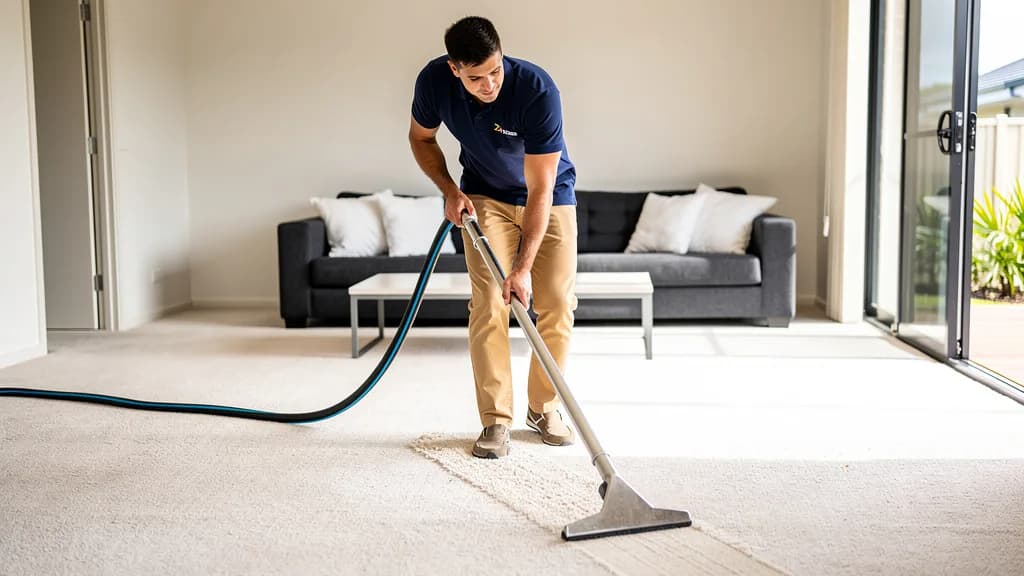
If the odour has persisted beyond three weeks despite ventilation and baking soda treatments, professional hot water extraction cleaning can clear embedded VOC residue from carpet fibres and underlay. The hot water used in steam extraction volatilises odour compounds and the extraction process physically removes them from the pile. This is particularly effective when a foam topper was stored on the carpet for an extended period before the problem was identified.
Find a local cleaner in the Sutherland Shire
In the Sutherland Shire? We know your time matters. Leave your enquiry with us and we'll make it our priority to get you a quote from a local cleaner.
Find a Matched Local SpecialistThis site matches enquiries with independent local carpet cleaners. We do not employ cleaners directly.
Get a Shire quote
In the Sutherland Shire? We help you get a quote from a local cleaner. They quote you directly.
Frequently asked
My foam mattress topper was stored rolled up on the bedroom carpet for three weeks and now the carpet has a strong chemical smell. Is this permanent?
Three weeks of direct foam contact will have deposited a significant amount of VOCs into the carpet fibres and likely the underlay. It is not permanent, but it will take consistent treatment to resolve. Apply the baking soda treatment daily for a week (three hours minimum each application, then vacuum), keep the room ventilated with windows open, and use activated charcoal overnight. If the odour persists after two weeks of this treatment, professional extraction should clear the remaining embedded compounds.
I applied baking soda, vacuumed it, and the smell improved, but came back the next morning. Why?
This is common with carpet underlay absorption. The underlay acts as a secondary reservoir for VOCs and continues releasing them upward through the carpet after surface treatment. For underlay-level odour, ventilation is the most effective approach: the VOCs need to off-gas slowly over time. Continue the baking soda treatment every day, keep windows open, and the odour will diminish progressively as the underlay VOC load depletes.
Is the smell from foam mattress topper off-gassing harmful to breathe?
The VOCs from polyurethane foam off-gassing can cause temporary irritation (headache, throat irritation, mild nausea) in sensitive individuals or in poorly ventilated spaces with concentrated exposure. For most people in a normally ventilated bedroom, the levels are below concern thresholds and decrease rapidly within the first week. Ventilate the room thoroughly (particularly overnight when prolonged exposure occurs) until the odour has resolved. If symptoms persist, see a GP.