
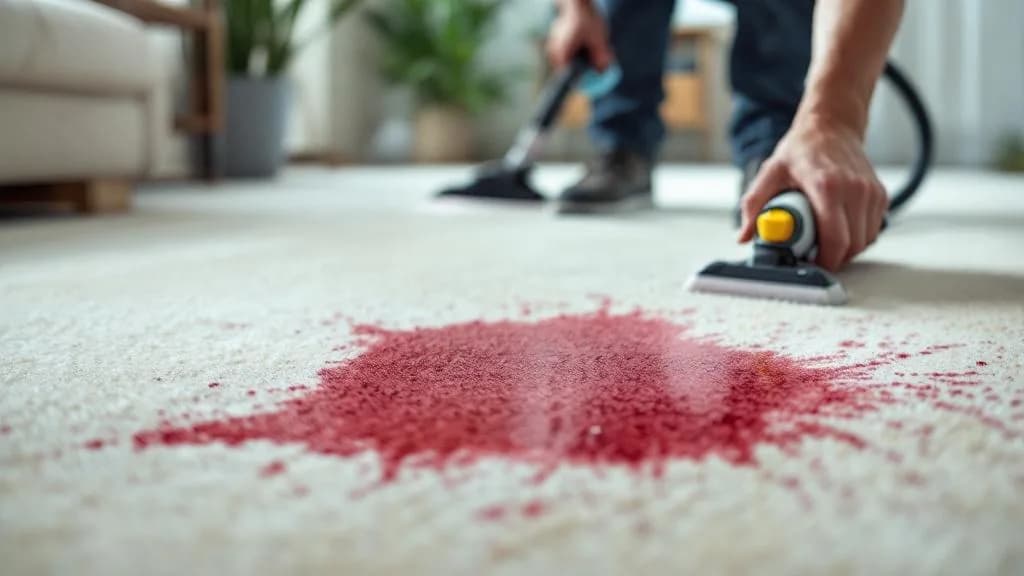
Caesar dressing is an emulsified salad dressing built on egg yolk, olive oil, anchovies, garlic, lemon juice, Worcestershire sauce, and Parmesan cheese. It is thick and creamy in texture, similar to a thin mayonnaise. A Caesar dressing spill on carpet combines several distinct components: olive oil and egg yolk fat (high fat content requiring dish soap), egg protein and anchovy marine protein (requiring enzyme cleaner), garlic (producing a persistent smell), lemon juice and Worcestershire sauce (mild acidity), and Parmesan solids. The anchovy component is the most important to address. It produces a strong fermented marine smell in carpet fibres that persists long after the visual residue has been cleaned.
Cleaning steps
- Scrape up any visible chunks (Parmesan shavings or anchovy pieces) with a blunt spoon before any liquid treatment.
- Apply cornflour over the spill and allow 10 minutes to absorb the olive oil and egg yolk fat. Vacuum once absorbed.
- Apply cold water and blot to dilute the residue. Cold water prevents the egg and anchovy protein from setting under heat.
- Apply dish soap solution (1 teaspoon per cup of cold water) and blot to emulsify the remaining olive oil.
- Apply enzyme cleaner and allow 15–20 minutes dwell time. This is the critical step for Caesar dressing. It breaks down the combined egg protein, anchovy marine protein, and Parmesan aged cheese protein that cause the lingering smell.
- Rinse thoroughly with cold water blotting.
- Allow to air-dry. Apply baking soda to the dried area, leave overnight, and vacuum. The baking soda step addresses the garlic and anchovy volatile compounds that produce a background smell even after enzyme treatment.
Anchovy smell requires enzyme cleaner, not just baking soda
The persistent fermented smell from Caesar dressing in carpet comes from anchovy trimethylamine and fermentation compounds. Baking soda alone adsorbs odour volatiles temporarily but does not break down the protein source. The enzyme cleaner step must come first. It digests the anchovy and egg protein that are producing the smell. The baking soda step after enzyme treatment and rinsing then handles any remaining volatile compounds. Reversing the sequence (baking soda first, then enzyme) is less effective.
Caesar dressing in restaurant and home serving contexts
- Caesar salad with chicken: adds chicken protein to the spill: enzyme cleaner covers both the anchovy and chicken protein components.
- Caesar salad with croutons: adds bread and garlic-infused oil from the croutons. Pick up the crouton solids first; the garlic oil from croutons is addressed by the dish soap and baking soda steps.
- Store-bought Caesar dressing (bottled): may use less anchovy and substitute anchovy paste or anchovy extract: the treatment is the same; enzyme cleaner is still required for the fish protein base.
- Anchovy-free vegan Caesar: typically uses capers and Worcestershire sauce (or a vegan substitute) for the briny flavour. No marine protein concern: enzyme cleaner addresses the caper and vegetable protein instead. Smell concern is reduced without anchovy.
Find a local cleaner in the Sutherland Shire
In the Sutherland Shire? We know your time matters. Leave your enquiry with us and we'll make it our priority to get you a quote from a local cleaner.
Find a Matched Local SpecialistThis site matches enquiries with independent local carpet cleaners. We do not employ cleaners directly.
Get a Shire quote
In the Sutherland Shire? We help you get a quote from a local cleaner. They quote you directly.
Frequently asked
The Caesar dressing spill includes a whole Caesar salad that tipped. There is lettuce, chicken, croutons, Parmesan, and dressing all together on the carpet. How do I treat the full salad spill?
A full Caesar salad spill requires a sequence approach. Remove solids first: pick up lettuce leaves, crouton pieces, and Parmesan shavings by hand before any liquid step: large solids left in place make treatment harder and prevent the cleaning solution from reaching the carpet directly. Apply cornflour across the remaining dressing residue to absorb the olive oil. Vacuum. The chicken protein and egg yolk protein are both covered by enzyme cleaner. Apply for 20 minutes across the full affected area. The crouton garlic oil is addressed by dish soap; the Parmesan aged cheese protein by enzyme cleaner. Rinse and apply baking soda overnight for the combined anchovy, garlic, and chicken smell.
I made Caesar dressing from scratch using raw egg and the whole batch spilled. The raw egg content concerns me: is there a food safety issue with raw egg in carpet?
Raw egg in carpet does not pose a food safety hazard under your feet in the way it would in food: carpet is not a food surface. However, the raw egg yolk and white contain more protein than a cooked egg-containing dressing, which means the enzyme cleaner step is even more important. Raw egg white contains high levels of albumin protein that bonds strongly to carpet fibres when left to dry. Apply enzyme cleaner promptly and allow a 20-minute dwell time: enzyme cleaners that specify protein digestion work well on raw egg. The Salmonella concern in raw egg is also addressed by thorough cleaning and drying: Salmonella does not survive well in a dry, cleaned carpet environment. The priority is simply completing the protein removal steps as thoroughly as possible.
After treating the Caesar dressing spill, there is a faint yellowish tint on the carpet where the egg yolk component was most concentrated. How do I remove the yellow?
The yellow tint is from egg yolk carotenoids (lutein and zeaxanthin) that have remained in the carpet fibres after the protein has been broken down. These pigments are fat-soluble, so if the cornflour and dish soap steps did not fully remove the fat fraction, the yellow colour remains in the oil residue. Apply a second dish soap round to the yellow area: the dish soap re-emulsifies any remaining egg yolk fat and lifts the carotenoid pigment with it. After the dish soap step and rinse, apply hydrogen peroxide (3%) to any remaining yellow on light carpet and allow 5 minutes before blotting and rinsing. Hydrogen peroxide oxidises the carotenoid pigment and addresses the remaining yellow. This combination (dish soap round then hydrogen peroxide) is more effective than hydrogen peroxide alone when the yellow is from a fat-soluble carotenoid rather than a water-soluble pigment.