
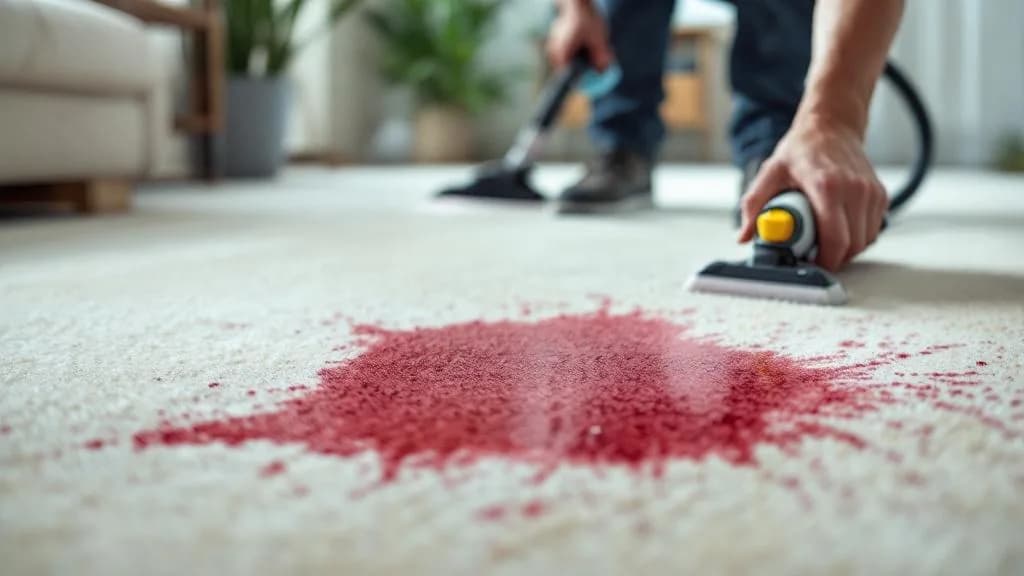
Sourdough starter (also called a levain or mother culture) is a thick paste of flour and water colonised by wild yeast (primarily Saccharomyces cerevisiae and related wild strains) and lactic acid bacteria (Lactobacillus species). These bacteria produce lactic and acetic acids as fermentation by-products. This is what gives sourdough its sour flavour and the starter its characteristic sour-acidic smell. A starter spill on carpet deposits flour starch, living microorganisms, and fermentation acids into the pile. The biological activity continues at room temperature for hours after the spill, meaning the acidic by-product generation continues after the spill occurs.
Immediate Cleaning Steps
- Scoop up as much starter as possible with a spoon or spatula. Lift from the outer edge inward.
- Do not spread or rub: the paste consistency means spreading dramatically increases the affected area.
- Apply cold water to the remaining residue and blot immediately.
- Apply dish soap solution (one teaspoon per two cups cold water) and blot.
- Continue blotting until the visible paste residue is removed.
- Apply an enzymatic cleaner to address the protein and starch residue. Allow 10 minutes dwell time.
- Rinse thoroughly with cold water blotting.
- Allow to dry completely and check for any remaining sour smell once dry.
Residue left in pile will ferment: odour worsens over time
Sourdough starter left partially cleaned in carpet pile continues to ferment at room temperature. The remaining yeast and bacteria produce carbon dioxide (causing bubbling in the residue), lactic acid, acetic acid, and alcohols as they metabolise the residual flour starch. The result is a progressively souring smell from the carpet that worsens over 12 to 24 hours after an incomplete clean. If the carpet smells increasingly sour in the days after a starter spill, the biological residue was not fully removed. Re-treat with enzymatic cleaner and thorough rinsing.
Addressing the Sour Smell
The sour smell from a sourdough starter spill comes from two sources: the organic acids already produced (lactic and acetic acid present in the starter at the time of spill), and ongoing fermentation of residual flour starch by surviving microorganisms. Enzymatic cleaner addresses the residual organic material. For the acid smell specifically, a baking soda application after the enzymatic step neutralises the acidity: dust baking soda over the cleaned area, leave for 20 to 30 minutes, then vacuum thoroughly. A white vinegar solution (1:4 with water) applied and blotted after the baking soda step leaves a neutral pH residue. Allow the carpet to dry in a well-ventilated area: airflow helps disperse remaining volatile acid compounds.
Flour Starch Residue
The flour component of starter leaves a starch residue in the carpet pile that becomes stiff and slightly crusty as it dries. Cold water dissolves flour starch: blotting with cold water lifts the dissolved starch out of the pile. Avoid hot water, which gelatinises the starch and bonds it more firmly to the fibres. If the carpet feels stiff after drying (indicating starch residue remaining in the pile), re-wet with cold water, allow one to two minutes contact time, and blot firmly with a clean cloth. Repeat until the stiffness is gone.
Find a local cleaner in the Sutherland Shire
In the Sutherland Shire? We know your time matters. Leave your enquiry with us and we'll make it our priority to get you a quote from a local cleaner.
Find a Matched Local SpecialistThis site matches enquiries with independent local carpet cleaners. We do not employ cleaners directly.
Get a Shire quote
In the Sutherland Shire? We help you get a quote from a local cleaner. They quote you directly.
Frequently asked
My sourdough starter jar fell and shattered on the carpet. There is starter mixed with glass fragments. How do I approach this safely?
Glass fragments in a carpet spill require the glass to be addressed before any wet cleaning. First, carefully pick up visible glass pieces with thick gloves. Then place a damp cloth over the area and press firmly: the cloth picks up glass slivers that are too small to see. Carefully peel the cloth away and inspect. Repeat with fresh damp cloths until no glass transfers. Only once you are confident the glass fragments are removed should you proceed with the sourdough starter cleaning steps. Do not vacuum glass from carpet with a standard household vacuum: glass slivers damage the vacuum motor and can be ejected from the exhaust. Use a hard-floor vacuum mode or brush-and-dustpan method for any loose glass near the carpet edge.
The starter spilled and was on the carpet for about four hours before I found it. The carpet now smells very sour. Can this be reversed?
Four hours of active fermentation in carpet pile means a significant build-up of organic acids and fermentation by-products. The smell is reversible, but requires a more thorough treatment than a fresh spill. Start with cold water rinsing and dish soap to remove the surface residue. Apply enzymatic cleaner and allow a full 20-minute dwell time (longer than standard) to break down the accumulated organic compounds. Follow with the baking soda neutralising step. Allow the carpet to dry in a well-ventilated room with airflow: a fan directed at the area accelerates the drying and the dispersal of volatile acid compounds. If the smell persists after drying, the enzymatic treatment was not complete: re-apply and allow a longer dwell time. For very persistent odour, a professional carpet cleaning with deodourising treatment achieves more thorough extraction.
Is the starter spill a food safety risk for pets or children?
Sourdough starter on carpet is not acutely toxic: the wild yeasts and lactic acid bacteria it contains are the same organisms present in fermented foods consumed regularly. However, there are practical concerns: residual starter in carpet pile continues to ferment and can grow moulds if the carpet stays damp, which creates a different hygiene concern. Children and pets ingesting carpet residue containing active starter may experience minor digestive upset from the bacterial culture. Prompt and thorough cleaning eliminates these concerns. Once the carpet is fully cleaned and dry, the area is safe for normal use.