
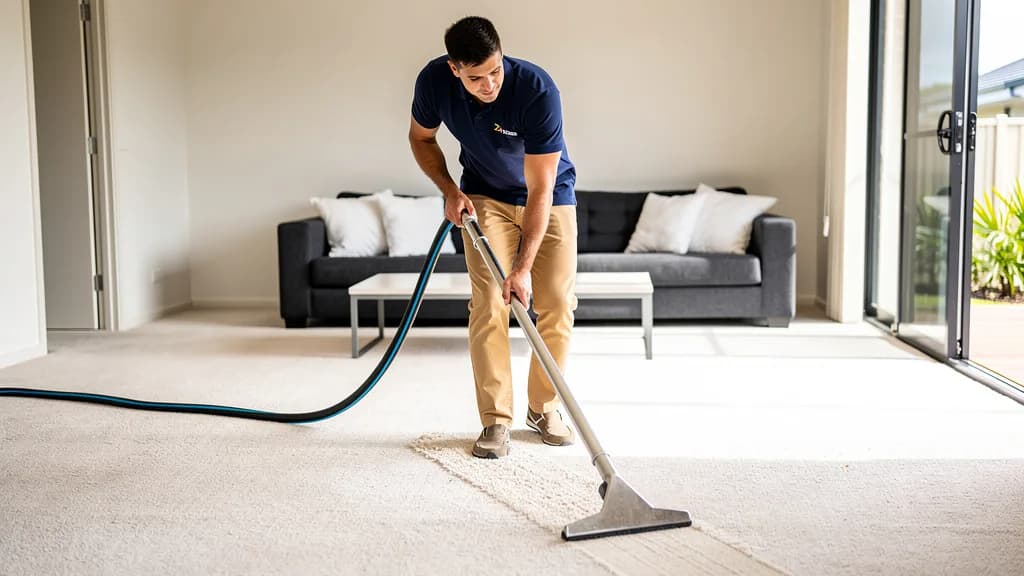
For households with asthmatic members, carpet cleaning is a double-edged scenario: dirty carpet is a reservoir for dust mite allergens and mould spores that worsen respiratory symptoms, yet the cleaning process itself can release airborne particles and chemical vapours that trigger acute episodes. Getting the approach right means thinking beyond stain removal to the full sequence: product choice, extraction method, ventilation, and dry time.
Why the Cleaning Process Can Trigger Asthma
- Agitation during scrubbing or vacuuming stirs settled dust mite particles and pet dander into the breathing zone
- Conventional carpet shampoos and foaming cleaners contain fragrances and surfactants that off-gas VOCs (volatile organic compounds): common asthma triggers
- Wet carpet that does not dry fully within 24 hours can develop surface mould, adding another biological trigger to the environment
- Steam cleaning at high temperature kills dust mites effectively, but the steam plume can raise humidity rapidly and leave carpets wet for longer in poor ventilation
Choosing Low-VOC Cleaning Products
The most important product choice for asthma households is fragrance-free and low-VOC carpet cleaning solution. Heavily fragranced products: "fresh linen", "spring breeze": contain synthetic musks and aldehyde compounds that are well-documented respiratory irritants. Look for enzyme-based or plant-derived formulations with no added fragrance. If a product requires significant dilution before use, mix it in a well-ventilated area away from the person with asthma.
Patch test new products
Apply any new cleaning solution to a small, low-traffic section of carpet and allow it to dry fully. Walk through the dried area and assess whether any odour remains before treating the whole room. This is particularly important for natural fibre carpets (wool, sisal) that can retain product residue longer than synthetic.
HEPA-Filtered Vacuuming and Extraction
A key distinction for asthma management is using a vacuum with a sealed HEPA filter. Standard vacuums with bag or bagless cyclone systems can exhaust fine particles (including dust mite faecal matter, the primary asthma trigger) back into the air. A HEPA-filtered vacuum (H13 or H14 rated) traps particles down to 0.3 microns. Pre-vacuum the carpet thoroughly before any wet treatment to reduce the allergen load before moisture is introduced. The person with asthma should not be present during vacuuming.
Professional hot water extraction (steam cleaning) is highly effective at reducing dust mite populations when combined with sufficient heat (above 55°C). The extraction step removes the detergent residue along with the loosened debris. This is important because detergent left in carpet pile can attract dust and act as an ongoing VOC source. Ensure the operator uses a truck-mounted or high-powered portable unit with strong vacuum recovery, so carpets typically dry in 6–8 hours, depending on ventilation and weather.
Ventilation and When to Vacate
The period immediately after carpet cleaning (particularly wet cleaning) carries the highest respiratory risk in asthma households. Airborne particles are elevated, and if chemical-based products were used, VOC levels peak in the first hour after application. A cautious approach for asthmatic occupants is to stay out of the cleaned area during the clean and for at least two to four hours after the carpet appears dry. For whole-house cleans, vacating the premises entirely for four to six hours and returning once windows have been open for at least an hour is safest.
- Open all windows and doors in the cleaned area before the asthmatic person re-enters
- Run ceiling fans or pedestal fans to accelerate air exchange, not recirculating air conditioning which can spread particles throughout the house
- In humid Sutherland Shire conditions (particularly November to March), use a dehumidifier to bring carpet dry time below 24 hours
- Avoid re-vacuuming the cleaned area for at least 24 hours to allow any remaining airborne particles to settle
Dry Time Is Critical: Preventing Post-Clean Mould
Damp carpet and mould risk
If carpet remains damp for more than 24 hours after wet cleaning, surface mould can begin to establish in the pile, particularly in poorly ventilated rooms or in humid coastal weather. For asthmatic households, mould spores are as significant a trigger as dust mites. If the carpet is still damp at the 24-hour mark, use a dehumidifier and fan combination and lift furniture off the wet area to improve airflow.
Frequency Recommendations for Asthma Households
Professional hot water extraction every six months, alongside regular vacuuming, helps reduce dust mite allergen build-up. For households with severe asthma or multiple asthmatics, quarterly professional cleaning combined with weekly HEPA vacuuming produces the best ongoing reduction in trigger load. Between professional cleans, spot-treat spills immediately with fragrance-free product to prevent residue buildup that attracts dust and mould.
Find a local cleaner in the Sutherland Shire
In the Sutherland Shire? We know your time matters. Leave your enquiry with us and we'll make it our priority to get you a quote from a local cleaner.
Get a MatchThis site matches enquiries with independent local carpet cleaners. We do not employ cleaners directly.
Get a Shire quote
In the Sutherland Shire? We help you get a quote from a local cleaner. They quote you directly.
Frequently asked
How long should someone with asthma stay out of a room after carpet cleaning?
A minimum of two to four hours after the carpet is visibly dry, with the room well-ventilated throughout. For whole-house cleans or where chemical-based products were used, four to six hours is safer. The person with asthma should return only after windows have been open and fresh air has been circulating for at least an hour.
Is steam cleaning or dry cleaning better for asthma?
Hot water extraction (often called steam cleaning) is generally superior for asthma management because it removes dust mite allergens and their faecal matter from deep in the pile and extracts them, rather than leaving residue. The trade-off is a longer dry time. Dry powder or encapsulation methods leave less moisture but may not extract allergens as thoroughly. If dry time is a concern, ask about high-powered extraction equipment: carpets then typically dry in six to eight hours, depending on ventilation and weather.
Can carpet cleaning trigger an asthma attack?
Yes, particularly during and immediately after the clean when airborne particle levels are elevated and chemical vapours from cleaning products may be present. The person with asthma should not be in the house during cleaning and should allow adequate ventilation time before re-entering. Using fragrance-free, low-VOC products significantly reduces chemical trigger risk.
Does vacuuming make asthma worse?
Standard vacuums without HEPA filtration can exhaust fine allergen particles back into the air, temporarily worsening air quality. A vacuum with a sealed H13 or H14 HEPA filter captures these particles. The person with asthma should not be in the room during vacuuming and should wait 20–30 minutes after vacuuming for any disturbed particles to settle before re-entering.