
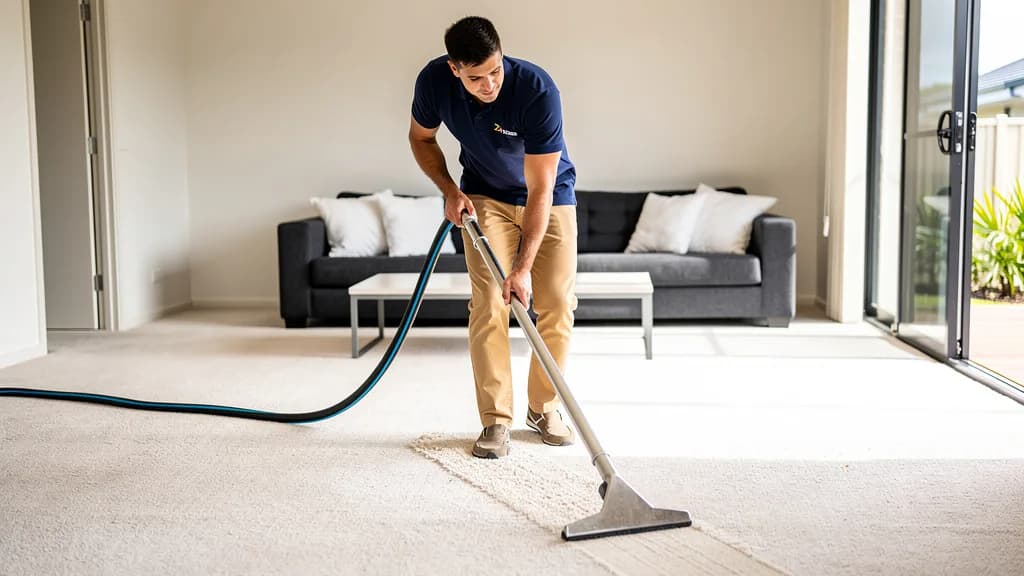
Carpet condition is a common source of end-of-tenancy disputes on the outgoing condition report. Getting the process right (documentation, timing, and supplier selection) protects your landlord clients and reduces NCAT exposure.
NSW Bond Cleaning and Carpet Requirements
Under the NSW Residential Tenancies Act 2010, tenants must return the property in the same condition as at the start of the tenancy, fair wear and tear excepted. For carpet, this means the condition documented in the ingoing inspection report, and 'fair wear and tear' has been interpreted by the NSW Civil and Administrative Tribunal as the gradual deterioration expected from normal residential use over the tenancy duration.
There is no automatic legal requirement for tenants to have carpets professionally cleaned at the end of every tenancy. However, if the ingoing report documented clean carpets and the outgoing report documents dirty or stained carpet beyond fair wear and tear, professional cleaning costs can be claimed against the bond: provided the costs are reasonable and documented.
Lease clauses requiring professional cleaning
In NSW the tenant must leave the property reasonably clean, having regard to its condition at the start of the tenancy (check the entry condition report). A lease can only require professional carpet cleaning in limited cases, for example, an additional term where pets were kept. Check the agreement or NSW Fair Trading.
Documentation That Holds Up at NCAT
If a bond dispute proceeds to NCAT, the Tribunal will look for a clear before/after comparison. The following documentation package gives you the strongest possible position:
- Ingoing condition report with dated photographs showing carpet condition at tenancy commencement: floor-level photos showing pile condition, not just room-overview shots.
- Outgoing condition report with equivalent dated photographs showing each area of concern. Photos should be taken in the same room positions to enable direct comparison.
- Tax invoice from a professional carpet cleaner that clearly states the property address, date of service, areas cleaned, and treatment type (e.g. hot water extraction).
- Before-and-after photographs taken by the cleaning operative if significant staining was treated. Ask the cleaner whether they can provide these.
- Any written communication with the tenant regarding the carpet condition, including any requests to remedy prior to vacating.
Ask for a written assessment
When the carpet condition is borderline, ask the cleaning specialist to provide a written assessment noting what damage is beyond fair wear and tear versus what is general soiling from normal use. A written professional opinion is useful evidence alongside your own notes.
Timing End-of-Tenancy Carpet Cleaning
Carpet cleaning should occur after the tenant has fully vacated and all furniture is removed: access with furniture in place typically means areas under beds and sofas are not cleaned, which creates a visible line at the edge of moved furniture and weakens any documentation. The standard process for an efficient handover is:
- Outgoing inspection immediately after tenant vacates: document carpet condition with photographs before any cleaning.
- Arrange carpet cleaning soon after the outgoing inspection, before the new tenancy begins.
- Conduct ingoing inspection and photography after carpet cleaning is complete and fully dry (typically 4–6 hours after hot water extraction, weather and ventilation dependent).
- File tax invoice with the property file. If claiming from bond, attach to the bond claim documentation.
Strata and Common Area Carpet Management
Strata managers face a different challenge from residential property managers: common area carpets in lobbies, corridors, and lift areas receive continuous foot traffic from all owners and tenants. These high-traffic areas require more frequent professional cleaning than individual units, typically two to four times per year depending on foot traffic volume and carpet type.
| Area Type | Recommended Frequency | Notes |
|---|---|---|
| Lobby / entry | Every 6–8 weeks | First impression zone; visible soiling accumulates fastest near entry matting transitions |
| Lift interior | Every 4–6 weeks | High contact point |
| Corridor carpet (residential blocks) | Every 12–16 weeks | Lower traffic than lobby; combine with the lobby clean to batch cost |
| Stairwell carpet | Every 16–20 weeks | Less visible; dry extraction rather than wet can reduce drying disruption |
| Community room / function area | After each significant event plus quarterly baseline | Event-driven timing is more efficient than a fixed calendar |
Bulk Arrangements and Supplier Relationships
Property managers with multiple properties or strata schemes benefit from consolidating carpet cleaning through a consistent supplier relationship. The practical advantages include: consistent documentation standards, familiarity with individual property quirks and carpet types, easier planning during busy vacancy periods, and batch pricing that can reduce per-property cost.
For end-of-tenancy work, the critical timing constraint is the gap between outgoing and ingoing tenancies, which can be short. An established supplier relationship, with timing agreed in advance, helps avoid either delaying the ingoing tenant or presenting uncleaned carpet.
Seasonal demand peaks
Busy vacancy periods, such as around the end of the financial year and the post-Christmas period, can mean less choice of times. Arranging annual maintenance cleans for strata common areas in quieter months gives you more flexibility.
Reporting Carpet Condition and Residual Life
Landlord clients may ask for advice on carpet replacement timing. The ATO sets an effective life of 10 years for residential carpet, which is a useful reference point for depreciation in bond claims: a stain on 9-year-old carpet in a property leased for 3 years carries a very different claim value than the same stain on 2-year-old carpet.
When advising landlords on replacement decisions, document the current condition against approximate age. Carpet that is near or past its effective life, but cleaned and presentable, does not support a full replacement claim against a departing tenant regardless of condition. Proactive replacement between tenancies, especially before a new long-term lease, removes future dispute exposure and can be depreciated against rental income.
Find a local cleaner in the Sutherland Shire
In the Sutherland Shire? We know your time matters. Leave your enquiry with us and we'll make it our priority to get you a quote from a local cleaner.
Find a Matched Local SpecialistThis site matches enquiries with independent local carpet cleaners. We do not employ cleaners directly.
Get a Shire quote
In the Sutherland Shire? We help you get a quote from a local cleaner. They quote you directly.
Frequently asked
Can I require a tenant to professionally clean carpets at the end of their tenancy in NSW?
Not automatically. In NSW the tenant must leave the property reasonably clean, having regard to its condition at the start of the tenancy (check the entry condition report). A lease can only require professional carpet cleaning in limited cases, for example, an additional term where pets were kept. Check the agreement or NSW Fair Trading.
What documentation do I need to claim carpet cleaning costs from a bond?
At minimum: ingoing condition report with photographs showing carpet condition at start of tenancy, outgoing report with equivalent photographs showing damage or soiling, and a tax invoice from a professional cleaner with the property address, date, areas cleaned, and cost. Photographs that allow direct before/after comparison are significantly more persuasive at NCAT than written descriptions alone.
How often should strata common area carpets be professionally cleaned?
Lobbies and entry areas: every 6–8 weeks. Lift interiors: every 4–6 weeks. Corridor carpet: every 12–16 weeks. Community rooms or function areas: after significant events plus a quarterly baseline. These are general guidelines: actual frequency depends on foot traffic volume, carpet type, and building standards. High-end residential buildings and those with concierge or front-of-house standards typically clean more frequently.
A tenant left a large stain. Can I claim the full cost of carpet replacement from the bond?
Only if the carpet was new or near-new and the damage cannot be remedied by professional cleaning. NCAT applies a betterment principle. If the carpet had 4 years of effective life remaining, the claim is for 4 years of value, not full replacement cost. If professional cleaning can restore the carpet to acceptable condition, replacement cost is not claimable. Document condition before and after cleaning; if the stain persists, document the residual effect on the carpet's remaining value.
How far ahead should end-of-tenancy carpet cleaning be arranged in Sutherland Shire?
As early as you can: timing depends on local availability, and the cleaner confirms it when they contact you. Busy vacancy periods (around the end of the financial year and late January) can mean less choice of times, so planning the clean between the outgoing and ingoing tenancies in advance avoids last-minute pressure.