
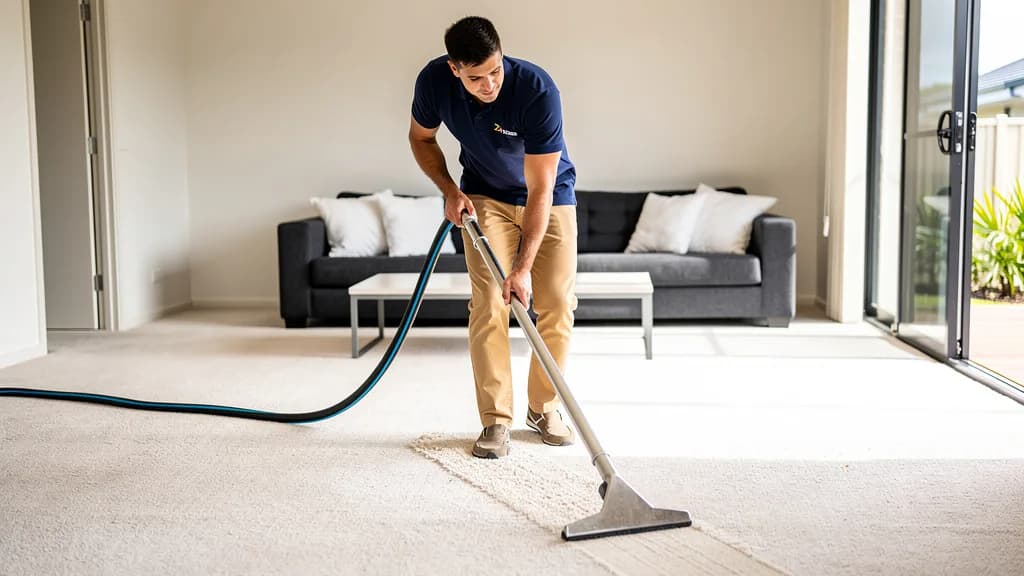
Carpet cleaned by DIY steam cleaning machine, rental machine, or hot-water extraction typically dries in four to eight hours, depending on ventilation and weather. Carpet that remains damp beyond 12–24 hours (especially in cooler, less-ventilated rooms) risks mould growth in the backing and underlay, and a persistent musty smell that is difficult to remove after the fact.
Why Carpet Stays Wet Longer Than Expected
- Over-wetting during cleaning: rental machines often deposit more water than they extract, particularly when the user makes multiple slow passes.
- Worn or low-suction machine: an older rental machine with reduced extraction power leaves more moisture in the carpet.
- Thick underlay: moisture migrates downward into thick underlay and dries very slowly.
- Low air circulation: a closed room with no airflow allows humidity to build and slows evaporation.
- Cold conditions: cooler air holds less moisture and slows evaporation significantly.
- High-humidity days: cleaning carpet on a humid day reduces the vapour pressure differential that drives drying.
How to Speed Up Drying
- Open windows and doors in the cleaned room to create cross-ventilation.
- Use a box fan or pedestal fan directed at the carpet surface: moving air is the single biggest accelerator of carpet drying.
- Run the air conditioner in cooling mode: air conditioners dehumidify the room as they cool, significantly accelerating drying.
- Place a dehumidifier in the room if available.
- Avoid replacing furniture on the carpet until it is fully dry: furniture blocks airflow over the most heavily used areas.
- Keep foot traffic off damp carpet.
The 24-hour threshold
If the carpet is still clearly damp at the 24-hour mark, run a fan and dehumidifier continuously and lift the edge of the carpet at a corner to check whether moisture has reached the underlay. Wet underlay will not dry adequately with surface airflow alone: the carpet may need to be lifted to dry both layers separately.
The Musty Smell After Cleaning
A mild "wet carpet" smell immediately after cleaning is normal and should dissipate as the carpet dries. A musty or sour smell that persists or develops over the 24–48 hours after cleaning indicates that the carpet or underlay is still wet and microbial activity is beginning. At this point, aggressive drying is critical, and if the smell persists after the carpet is dry, professional treatment for mould in the backing or underlay may be required.
Find a local cleaner in the Sutherland Shire
In the Sutherland Shire? We know your time matters. Leave your enquiry with us and we'll make it our priority to get you a quote from a local cleaner.
Get a MatchThis site matches enquiries with independent local carpet cleaners. We do not employ cleaners directly.
Get a Shire quote
In the Sutherland Shire? We help you get a quote from a local cleaner. They quote you directly.
Frequently asked
How long should carpet take to dry after professional hot-water extraction?
Professional hot-water extraction using truck-mount equipment typically dries in two to four hours, depending on ventilation and weather, because professional equipment extracts considerably more water than rental machines. Portable professional units are similar to the upper end of rental machine performance, typically four to eight hours. DIY rental machines on thicker carpet in less-ventilated rooms can take 12–24 hours.
My carpet dried but there are stiff, crunchy patches. What is this?
Stiff or crunchy patches after drying usually indicate that detergent residue has dried in the fibres. This happens when the cleaning solution was not fully rinsed out during extraction. The residue also attracts dirt rapidly, causing those areas to re-soil faster than the rest of the carpet. Treat by dampening the patch, working through with a small amount of plain water, and blotting thoroughly. For a large area, a re-rinse pass with the machine using plain water is the most effective fix.
Can I speed drying by using a hair dryer?
A hairdryer can help on a small localised patch but is impractical for a whole room of carpet. It also risks overheating and damaging synthetic carpet fibres if held too close. A box fan creates much more effective airflow over a larger area. Reserve hairdryer use for a very small damp patch in a corner or under furniture where a fan cannot reach.