
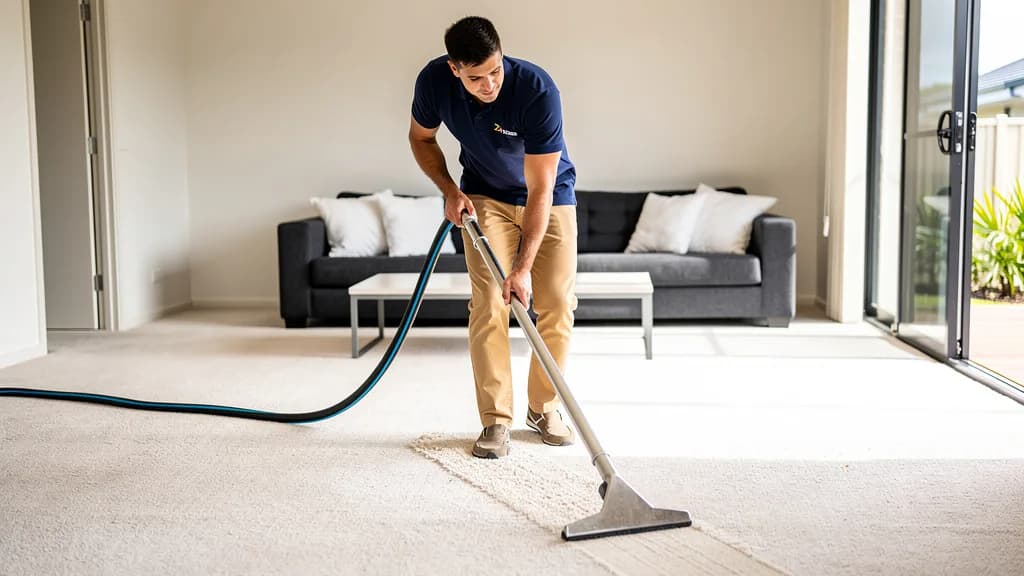
Professional hot-water extraction leaves carpet significantly drier than most people expect. Because commercial equipment operates at 300–500 PSI with high-powered vacuum extraction, it removes most of the injected water during the cleaning pass. A typical result is carpet that feels slightly cool and just barely damp underfoot. You can typically walk on it carefully after 30–60 minutes, and it is typically fully dry in 4–8 hours, depending on ventilation and weather.
Typical drying times by cleaning method
| Cleaning method | Typical dry time |
|---|---|
| Professional truck-mount extraction | 2–6 hours |
| Professional portable extraction unit | 4–8 hours |
| DIY rental machine (e.g. Rug Doctor) | 12–24 hours |
| Dry carpet cleaning (encapsulation) | 1–2 hours |
| Steam-only (no extraction) | 8–24 hours |
The truck-mount vs portable difference matters because truck-mounted units generate significantly more suction and heat than portable equipment, resulting in more thorough water removal during extraction. If you're arranging a cleaner and drying time is a concern, it's worth asking whether they're using a truck-mount or portable unit.
Factors that affect how long carpet takes to dry
- Ventilation. The single biggest variable you can control. Cross-ventilation (windows on opposite sides open) dramatically speeds moisture evaporation. A closed house with no airflow can double drying time.
- Humidity. High ambient humidity slows evaporation: the air can't absorb moisture as efficiently. This matters seasonally in the Sutherland Shire: winter mornings in enclosed homes and humid, still days can noticeably extend drying time compared to a dry summer day.
- Carpet pile depth and density. Thick, dense pile (like plush or saxony) holds more water than low-pile carpet. Berber and loop pile tends to dry faster than cut pile.
- Underlay type. Foam or felt underlay absorbs moisture and releases it slowly. Rubber-backed or hard underlay dries faster.
- Room temperature. Warmer rooms dry faster. A heated room at 22°C with ventilation will dry carpets considerably faster than an unheated room in winter.
- Soil level before cleaning. Heavily soiled carpets may require more water passes, leaving more moisture.
How to speed up carpet drying
- Open windows before and during cleaning to create airflow from the moment cleaning starts.
- Run ceiling fans at medium-high speed in each cleaned room. This is often the most effective single intervention.
- Use a portable fan directed across the carpet surface if ceiling fans aren't available.
- Run air conditioning on dry or fan mode (not cold mode, which can introduce humidity indoors). Even a dehumidifier in a closed room significantly accelerates drying.
- Clean on a clear, dry day rather than a rainy or humid day where possible.
- Keep the room warm: turn off air conditioning if it's cooling the room below ambient temperature.
Best time of year to clean carpets in the Sutherland Shire
Late spring and early autumn offer the best combination of moderate temperatures, lower humidity, and good ventilation conditions for carpet drying. Mid-winter (July–August) brings the slowest drying conditions in the Shire, not a reason to avoid cleaning, but worth planning for a clear day and maximising ventilation.
What happens if carpet stays wet too long
Carpet that remains damp for more than 24 hours risks developing mould or mildew in the pile or underlay. The risk is higher in enclosed rooms with poor ventilation, in humid conditions, or with thick underlay that retains moisture. Signs of a problem: musty smell developing a day or two after cleaning, or carpet that still feels damp after 24 hours.
If this happens, focus ventilation on the affected room, consider running a dehumidifier, and contact the cleaner. Ask whether they will come back to re-inspect or re-treat if a moisture problem develops after the clean.
When can I walk on carpet after cleaning?
For professional extraction, light foot traffic with clean shoes or socks is typically fine 30–60 minutes after the clean finishes, depending on ventilation and weather. Avoid bare feet (oils from skin can attract soil) and dark-soled shoes (which can transfer dye) until the carpet is fully dry. Move furniture back only when carpet is completely dry to avoid rust marks from metal feet or discolouration from wooden furniture.
Get a Shire quote
In the Sutherland Shire? We help you get a quote from a local cleaner. They quote you directly.
Frequently asked
How long does carpet take to dry after professional steam cleaning?
Professionally steam-cleaned carpets typically dry in 4–8 hours, depending on ventilation and weather. Truck-mounted extraction systems typically achieve drying in 2–6 hours. DIY rental machines take significantly longer (often 12–24 hours) because their extraction power is considerably less than professional equipment.
Can I sleep in a room with wet carpet after steam cleaning?
It's generally fine to sleep in the room, but maximise ventilation overnight to help the carpet dry within 24 hours. If the room smells musty or the carpet still feels damp after 24 hours, contact the cleaner: carpet that stays wet for more than 24 hours risks developing mould.
Why does my carpet take so long to dry after cleaning?
The most common reasons are poor ventilation (closed windows and no fans), high ambient humidity, thick pile or dense underlay that holds moisture, and lower-powered equipment if using a rental machine. Opening windows, running fans, and cleaning on a dry day significantly reduce drying time.
How long after carpet cleaning can I put furniture back?
Wait until the carpet is completely dry, typically 4–8 hours for professional extraction, depending on ventilation and weather, and longer for DIY. Moving furniture back onto damp carpet risks rust marks from metal casters, dye transfer from wooden feet, and indentation on soft pile. If you must move furniture back sooner, use foil under metal feet.
Does carpet cleaning take longer to dry in winter in Sydney?
Yes, lower temperatures and higher humidity in winter extend drying time compared to summer. In winter, drying after professional extraction typically takes 6–10 hours, compared with 3–5 hours on a warm, dry summer day, depending on ventilation and weather. Plan winter cleans for clear days and maximise indoor ventilation to compensate.