
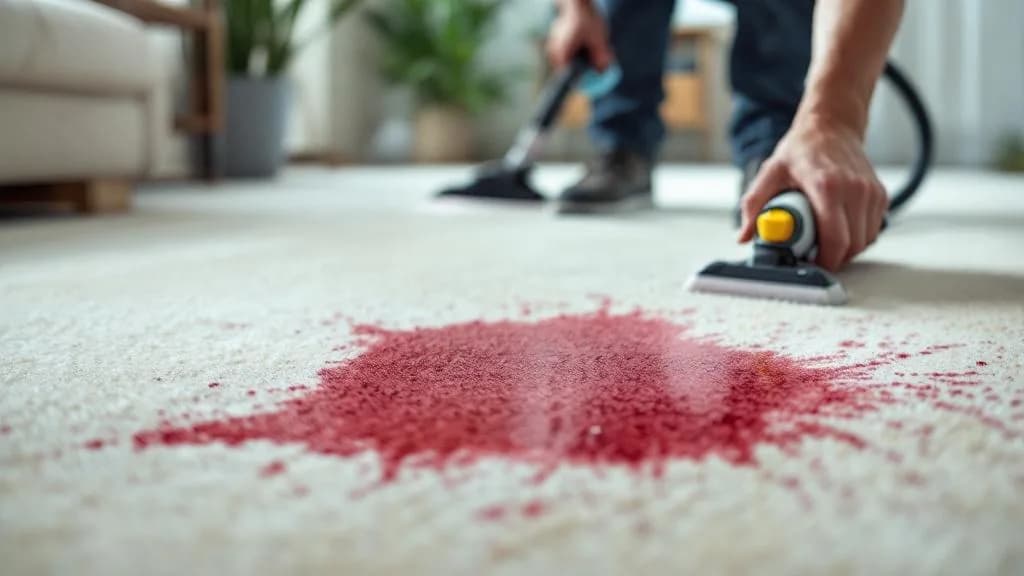
Chilli sauce (whether it is a store-bought hot sauce, a homemade chilli paste, or a fresh chilli-based condiment) is one of the more complex food stains on carpet because it contains multiple soiling mechanisms at once. There is an oil or fat component from the base, a pigment from the chilli or tomato, and capsaicin (the compound that gives chilli its heat) which can leave a residue that attracts future soiling if not fully removed.
Three stain components to address
| Component | Source | Why it matters | Removal approach |
|---|---|---|---|
| Oil/fat | Oil base, sesame oil, cooking fat in the sauce | Causes oily residue that re-attracts soil | Dish soap (degreaser) or dry solvent first |
| Pigment | Chilli, tomato, paprika: carotenoid compounds | Deep red/orange colour that can set permanently with heat | Cold water dilution + oxidising agent if needed |
| Capsaicin residue | Active compound in chilli | Not visible but causes stickiness; attracts dirt over time | Thorough rinse to remove residue fully |
Step-by-step removal method
- Remove solid material: scoop up any chunks of sauce with a spoon or blunt knife. Work from the outside edge toward the centre to prevent spreading
- Blot up excess liquid with a clean white cloth: press firmly without rubbing; replace cloths as they absorb sauce
- Apply a small amount of dish soap mixed with cold water to the stain: dish soap is a surfactant that emulsifies the oil component and begins to lift it from the fibres
- Work the soapy solution in gently with a soft cloth, again blotting from the outside in. Do not scrub, which can spread the pigment and damage pile
- Rinse by blotting with a clean cloth dampened with plain cold water: repeat 3–4 times to remove soap residue (residue left in the pile re-attracts soil)
- If a colour stain remains after the oil is lifted, apply a diluted white vinegar solution (1 part white vinegar to 2 parts cold water) and blot: the mild acidity can help break down carotenoid pigment
- For persistent red/orange staining, apply a small amount of 3% hydrogen peroxide (patch test on a hidden area first) and allow to dwell for 5 minutes before blotting and rinsing
- Blot dry, allow to air dry completely. Avoid walking on the area until fully dry
Do not use hot water or heat
The pigment in chilli sauce contains carotenoid compounds that can bond more permanently under heat. Use cold water throughout. Do not use a steam cleaner or hot extraction on a fresh chilli stain. Heat also sets oily components deeper into carpet backing.
Does sauce type matter?
Not all chilli sauces are identical. A thin, vinegar-based hot sauce like Tabasco has minimal oil and lighter pigment: easier to remove. A thick homemade chilli paste with oil, tomato paste, and chilli flakes has all three components in concentrated form and is harder to treat. Fermented chilli sauces (gochujang, sambal) can have added complexity from sugars and fermentation byproducts that add a tacky residue. In all cases the method is the same, but more concentrated sauces may require a second treatment pass.
Dried/set chilli sauce
If the sauce has dried on the carpet, dampen the area first with cold water to rehydrate the residue before attempting to remove solids or blot. Trying to scrape dried chilli sauce off without rehydrating it first will spread the pigment into a larger area.
When professional cleaning is the right call
Chilli sauce that has been in the carpet for more than a few hours (especially if it has been walked on) typically leaves a pigment stain that home methods can lighten but not fully remove. Professional hot-water extraction with appropriate pre-treatment chemistry (alkaline pre-spray for oil, oxidising agents for pigment) is more effective than DIY methods on set stains. If the spill was large or occurred on light-coloured carpet, professional assessment is worth considering early rather than after multiple home attempts have pushed the stain deeper.
Find a local cleaner in the Sutherland Shire
In the Sutherland Shire? We know your time matters. Leave your enquiry with us and we'll make it our priority to get you a quote from a local cleaner.
Find a Matched Local SpecialistThis site matches enquiries with independent local carpet cleaners. We do not employ cleaners directly.
Get a Shire quote
In the Sutherland Shire? We help you get a quote from a local cleaner. They quote you directly.
Frequently asked
Can chilli sauce permanently stain carpet?
Yes, if left untreated or treated with hot water, the carotenoid pigment in chilli can bond with carpet fibres permanently. Light-coloured carpet is most at risk. Fast treatment with cold water and a dish soap solution gives the best chance of full removal. Set stains (dry or walked-on) are harder to fully remove but can often be significantly lightened.
Will carpet cleaner spray remove chilli sauce?
Most off-the-shelf carpet cleaner sprays address general soil and some food stains but are not specifically formulated for the oil and pigment combination in chilli sauce. Dish soap (as a degreaser) is often more effective on the oil component, followed by vinegar or hydrogen peroxide for the pigment. If a commercial product fails, professional treatment is the next step.
My carpet has a chilli stain that smells: why?
Chilli sauces that contain fermented ingredients (vinegar-based sauces, sambal, gochujang) can leave an odour residue even after the visible stain is treated. A thorough rinse-and-extraction pass removes the residue. If odour persists after cleaning, a baking soda application (sprinkle, leave 30 minutes, vacuum) can neutralise residual odour-causing compounds.
Does red chilli sauce stain differently from green chilli sauce?
Red and orange chilli sauces contain carotenoid pigments (from tomato, paprika, and red chilli) which are more persistent on carpet fibres than the chlorophyll-based pigments in green sauces. Green chilli sauces still have the same oil and capsaicin components but the colour pigment is generally easier to remove. Both should be treated the same way: the green sauce just tends to produce a less visible residual stain.