
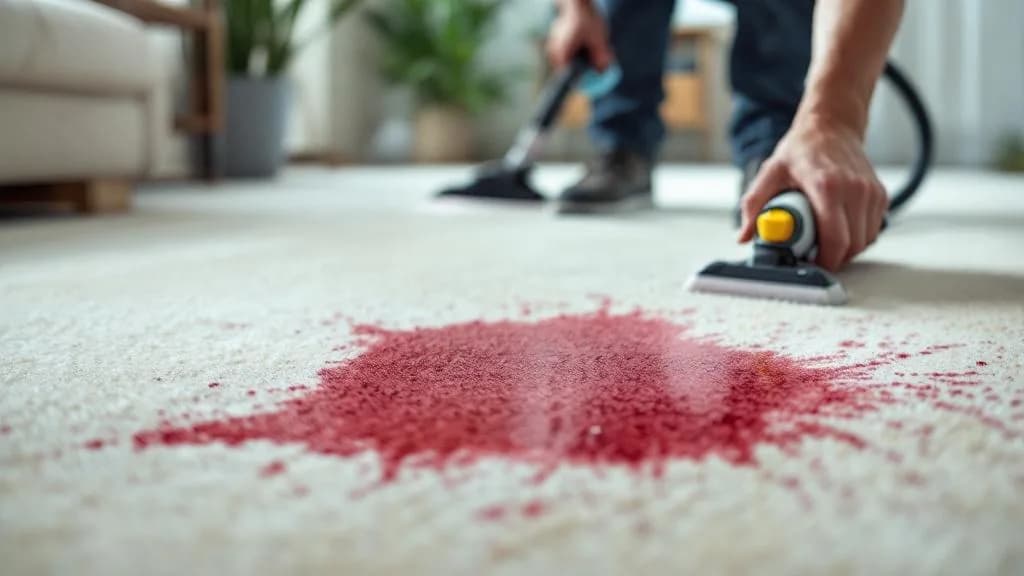
Engine oil on carpet happens most often from garage-to-house foot tracking: oil from the driveway, garage floor, or a car maintenance session getting onto shoe soles and then onto carpet. The dark black or dark brown stain of motor oil is distinctive and alarming-looking, but it is a petroleum hydrocarbon stain that responds well to the right degreasing approach if treated before it sets deeply.
Engine Oil vs Cooking Oil: Why Different
Cooking oils are vegetable-derived triglycerides that respond well to dish soap degreasing. Engine oil is a petroleum hydrocarbon lubricant with a complex mixture of refined oil fractions, viscosity modifiers, anti-wear additives, and detergent packages. It is both heavier and more hydrophobic than cooking oil, and dish soap alone is less effective. Engine oil also contains carbon particles, oxidation byproducts, and combustion residue that contribute to its dark colour. Dry-cleaning solvent or a petroleum solvent is a more appropriate primary treatment.
Step 1: Absorb Excess Oil
Apply a generous layer of baking soda, cornstarch, or cat litter (unscented, non-clumping) to the fresh oil stain. These absorbents draw oil out of the carpet fibres through physical absorption. Leave in place for at least 15–30 minutes (longer is better, up to an hour for a heavy spill). Vacuum up the absorbent thoroughly, removing as much of the oil-saturated powder as possible before applying any liquid treatment.
Step 2: Dry-Cleaning Solvent or Isopropyl Alcohol
Dry-cleaning solvent (from hardware or laundry stores) is the most effective DIY product for petroleum-based stains on carpet. Apply a small amount to a white cloth and blot the stain from the outside in: the solvent dissolves the petroleum hydrocarbon and allows it to transfer to the cloth. Isopropyl alcohol (IPA) at 70% or higher is an accessible alternative where dry-cleaning solvent is not available. Work with fresh cloth sections as they pick up oil. Repeat until no more dark material transfers.
Do not use petrol, kerosene, or lighter fluid
Flammable solvents like petrol, kerosene, or lighter fluid can dissolve petroleum stains but are highly flammable, toxic in an enclosed space, and leave their own hydrocarbon residue in the carpet. They are not appropriate for indoor use on carpet. Use dry-cleaning solvent or IPA instead.
Step 3: Dish Soap Degreasing
After the solvent step has removed as much of the petroleum oil as possible, dish soap and warm water emulsifies and removes the remaining surface residue. Mix a small amount of dish soap with warm water, apply with a clean white cloth, work gently into the pile, and blot repeatedly. Rinse with cold water. This step also removes any remaining solvent residue from the carpet.
Old and Dried Engine Oil: Harder but Treatable
Engine oil that has been on carpet for days or weeks has oxidised and polymerised slightly: the lighter hydrocarbon fractions have evaporated, leaving a harder, stickier residue. The absorbent powder step is less useful for fully dried oil. Apply dry-cleaning solvent directly and allow it to dwell for 2–3 minutes to re-dissolve the oxidised material before blotting. Multiple treatment rounds on consecutive days progressively reduce old stains. Black carbon particles from used engine oil can remain as a grey shadow even after the oil is removed. This requires professional hot water extraction with a degreaser pre-spray for full removal.
Engine Oil on Garage Carpet or Floor Mats
Removable floor mats or garage carpet squares are easier to treat because they can be taken outside. For floor mats, apply the absorbent powder, leave for an hour, vacuum, then apply dry-cleaning solvent or IPA. For heavily oil-saturated garage mats, a commercial degreaser (available from auto parts stores) applied directly before rinsing with a hose is more practical than household methods.
Find a local cleaner in the Sutherland Shire
In the Sutherland Shire? We know your time matters. Leave your enquiry with us and we'll make it our priority to get you a quote from a local cleaner.
Find a local carpet cleanerThis site matches enquiries with independent local carpet cleaners. We do not employ cleaners directly.
Get a Shire quote
In the Sutherland Shire? We help you get a quote from a local cleaner. They quote you directly.
Frequently asked
What removes motor oil from carpet?
The most effective DIY sequence is: baking soda absorption for 30 minutes (vacuum), then dry-cleaning solvent or isopropyl alcohol applied with a white cloth and blotted repeatedly, then dish soap in warm water to emulsify the residue, followed by a cold water rinse. Work from outside the stain inward at each step.
Will dish soap alone remove engine oil from carpet?
Dish soap is effective against lighter cooking oils but less effective against heavier petroleum hydrocarbons like engine oil. Use a petroleum solvent (dry-cleaning solvent or IPA) as the primary treatment to break the oil's bond with the carpet fibres, then follow with dish soap to emulsify and remove the loosened residue. Dish soap alone may leave a significant dark residue for heavy engine oil stains.
Can I use car brake cleaner or carburetor cleaner on carpet?
No, these are highly concentrated solvents designed for metal parts, not fabrics. They can dissolve synthetic carpet fibres (nylon, polyester) and remove carpet dye. Dry-cleaning solvent or IPA are the appropriate carpet-safe petroleum solvents.
The engine oil left a dark stain even after cleaning: what is the grey residue?
Used engine oil contains carbon particles from combustion residue. After the oil component is removed, these carbon particles may remain as a grey shadow in the pile. They are similar to graphite or soot and respond to professional hot water extraction that physically flushes the fine particles out. Multiple hot-water passes with a strong suction unit are needed.
How do I stop engine oil tracking from the garage onto carpet?
A garage entry doormat is the first line of defence: a coarse coir or rubber mat placed just inside the garage door before the carpeted threshold. Garage-only shoes or slip-on overshoes worn in the garage prevent oil tracking onto house shoes. A drip mat under the car catches oil before it reaches the garage floor.