
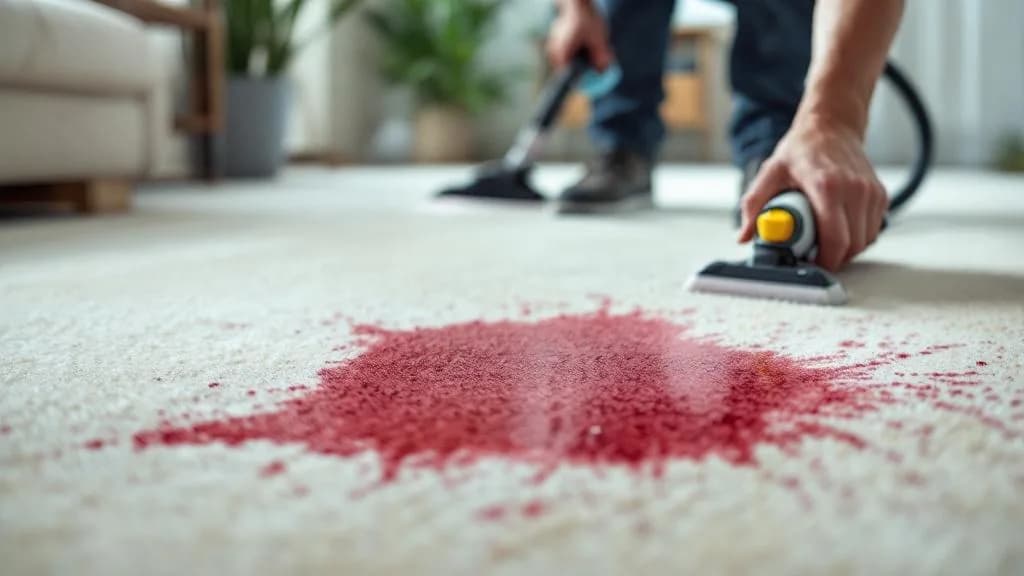
Champagne and sparkling wine spills are a common celebration-related carpet incident. Unlike red wine, sparkling wine is typically low in tannin: the pigment compounds that cause red wine's deep staining. However, sparkling wine still contains residual sugar (even in "dry" champagne), yeast derivatives, and in the case of rosé champagne, anthocyanin pigments. The carbonation creates a distinctive froth that spreads the liquid rapidly across a larger area than still wine.
What Sparkling Wine Contains That Affects Carpet
- Residual sugar: Even brut champagne contains 6–12 g/L of sugar. As the spill dries, this sugar concentrates and can ferment slightly in warm conditions, creating an odour and a sticky residue that attracts soil.
- Alcohol (ethanol): Evaporates quickly and leaves no residue, but can affect some carpet dyes if not rinsed promptly.
- Tannins: Very low in most white sparkling wines; higher in rosé and red sparkling varieties. The tannin content is what determines whether a shadow stain remains.
- Carbon dioxide: Creates froth on contact with carpet, spreading the liquid over a larger footprint than still wine.
- Anthocyanins (rosé/red sparkling only): Pink-to-red pigments that behave like dilute red wine and require the same cold-water urgency.
Treatment Steps
- Blot up the liquid immediately with a white cloth or paper towels: press firmly and lift, do not rub. The fizz spreads the liquid; blot from the outer edge inward to contain the spill area.
- Apply cold water to a cloth and blot to dilute the sugar and tannin concentration in the carpet.
- Mix one tablespoon of white vinegar with two cups of cold water. Blot this solution onto the stain: the mild acid helps neutralise residual tannin and sugar compounds.
- Follow with a small amount of dish soap diluted in cold water to remove the vinegar and any remaining residue. Blot, then rinse with clean cold water.
- For rosé or red sparkling wine: after the vinegar step, apply a small amount of club soda (carbonated water): the carbonation helps lift remaining pigment from the pile.
- Press dry with a clean towel, allow to air-dry, and vacuum to restore pile texture.
Cold water only: heat sets the sugar
Hot water activates the residual sugar in champagne, making it stickier and harder to remove. It also fixes any tannin present. Always use cold water for sparkling wine stains. Do not steam clean the area before the stain is fully lifted.
Dried Champagne: The Sticky Residue Problem
A champagne spill noticed the next morning (after drying overnight) often feels sticky underfoot and may show a slight brownish tinge from concentrated tannin and yeast derivatives. Re-wet the area with cold water to rehydrate the dried sugar, then proceed with the vinegar treatment above. The sticky feel is from concentrated sugar and responds to cold water blotting. Multiple rounds may be needed for a spill that dried overnight.
Find a local cleaner in the Sutherland Shire
In the Sutherland Shire? We know your time matters. Leave your enquiry with us and we'll make it our priority to get you a quote from a local cleaner.
Find a Matched Local SpecialistThis site matches enquiries with independent local carpet cleaners. We do not employ cleaners directly.
Get a Shire quote
In the Sutherland Shire? We help you get a quote from a local cleaner. They quote you directly.
Frequently asked
Does salt on champagne stains help like it does for red wine?
Salt on red wine works by absorbing the liquid before it sets. For champagne (especially white), the tannin content is so low that the main concern is the sugar residue and any pigment in rosé. Cold water blotting is more effective than salt for champagne. Salt can be used as an emergency absorber if nothing else is to hand, but rinse it away promptly: salt residue left in carpet attracts moisture.
Prosecco or cava: same treatment as champagne?
Yes. Prosecco, cava, and other sparkling wines have very similar composition to champagne for carpet treatment purposes. They all contain residual sugar, low-to-moderate tannin, alcohol, and carbon dioxide. Rosé versions of any sparkling wine have higher pigment content and should be treated with greater urgency. The cold-water blot and vinegar treatment applies to all sparkling wine varieties.
The champagne was spilled on a light-coloured carpet and there is a beige-brown ring. What is that?
A ring mark after a liquid spill is a wicking residue, as the water evaporated from the centre of the spill outward, it carried dissolved compounds (tannin, sugar, yeast particles) to the outer edge of the wet area, concentrating them into a visible ring. Treat the ring area with the vinegar-and-water solution, blotting outward past the ring boundary. A professional clean is effective for persistent wicking rings.