
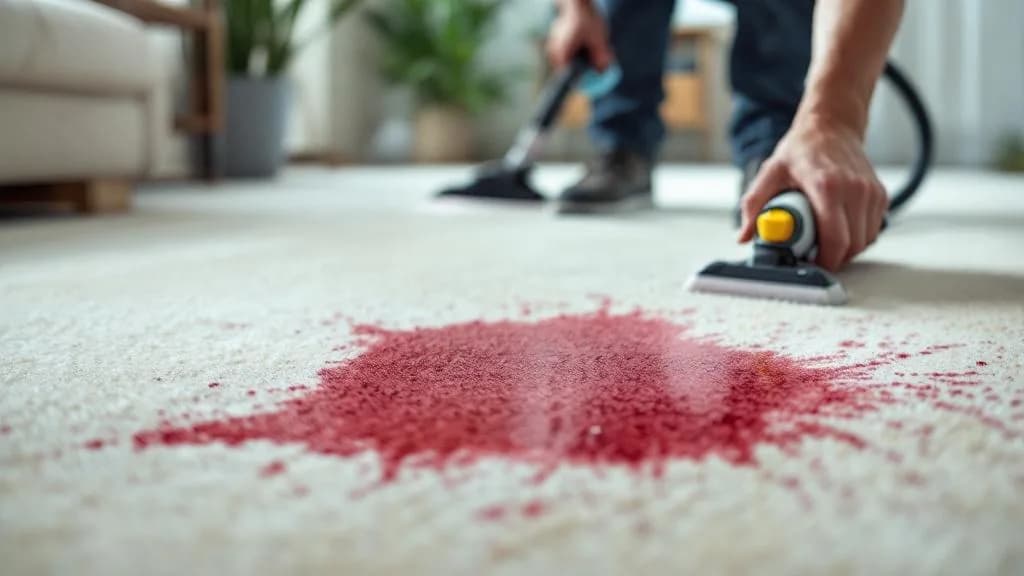
Floor cleaner is not one type of product. It covers surfactant-based cleaners, disinfectant cleaners (quaternary ammonium or pine-oil formulas), bleach-containing cleaners (sodium hypochlorite), and solvent-based degreasers. Each has a different effect on carpet fibres and carpet dyes, and some can cause permanent damage that appears only as the carpet dries. Identifying what type of floor cleaner was spilled is the first step before starting any treatment.
Identify the product type first
- Surfactant floor cleaner (e.g. Pine O Cleen regular, most "floor wash" products): mild, treat like a dish soap spill.
- Disinfectant floor cleaner (quaternary ammonium / "antibacterial"): can cause fibre yellowing on some synthetic carpets over time; rinse thoroughly.
- Bleach-based floor cleaner (contains sodium hypochlorite / chlorine bleach): will remove carpet dye on contact; requires immediate rinsing but colour loss may be irreversible.
- Pine oil or phenolic disinfectant: can cause rubber backing deterioration and fibre discolouration; rinse immediately.
- Solvent-based degreaser/cleaner: risk of fibre damage or dye removal; professional assessment recommended.
Bleach-based floor cleaners cause permanent colour loss
Products containing sodium hypochlorite (chlorine bleach) destroy carpet dye on contact. Rinsing immediately with cold water will halt the reaction and limit the damage, but any dye already affected cannot be restored by cleaning, only professional carpet re-dyeing can address the resulting pale patch.
Surfactant floor cleaner: removal steps
- Blot up undiluted product immediately with clean white cloths.
- Apply cold water in small amounts and blot up: repeat 4–6 times to dilute and extract the surfactant.
- Check for stickiness once dry. If the carpet feels sticky, repeat the rinse-and-blot cycle.
- Allow to air-dry with ventilation.
Bleach-based floor cleaner: emergency steps
- Blot up as much undiluted product as possible immediately: every second counts.
- Flush the area with a generous amount of cold water to dilute and stop the bleach reaction. Blot up the water.
- Repeat the cold water flush 3–4 times.
- Assess the colour: if pale patches are already visible, the dye is gone. Further cleaning will not restore it. Seek professional carpet re-dyeing assessment.
- If no colour change is visible, allow to dry and assess again: some bleach colour loss only becomes apparent as the carpet dries.
Disinfectant and antibacterial floor cleaners
Quaternary ammonium (quat) disinfectants (the most common antibacterial floor cleaner ingredient) are generally safe on carpet fibres but leave a surfactant residue that can cause yellowing on white or cream synthetic carpet over weeks. Rinse thoroughly with cold water and blot dry. Pine oil disinfectants carry a higher risk of backing degradation on foam or latex-backed carpet. Rinse immediately and allow to air-dry fully.
| Product type | Carpet risk | Priority action |
|---|---|---|
| Surfactant floor wash | Sticky residue, soil attraction | Cold rinse and blot x4–6 |
| Quat disinfectant | Yellowing on white synthetic carpet | Thorough cold rinse; monitor for colour shift |
| Bleach-based (sodium hypochlorite) | Permanent dye removal / pale patch | Immediate cold water flush; colour loss is irreversible |
| Pine oil / phenolic | Backing degradation, discolouration | Rinse immediately; professional assessment for wool/foam-backed |
| Solvent degreaser | Dye removal, fibre damage | Blot: do not spread; professional assessment recommended |
Check the label for "contains bleach" or sodium hypochlorite before cleaning
Many floor cleaners that appear neutral in colour contain bleach. Products labelled "disinfecting floor cleaner," "kills 99.9% of bacteria," or "hospital-grade" may contain sodium hypochlorite or hydrogen peroxide bleaching agents. Check the active ingredients panel before using near carpet.
Find a local cleaner in the Sutherland Shire
In the Sutherland Shire? We know your time matters. Leave your enquiry with us and we'll make it our priority to get you a quote from a local cleaner.
Find a Matched Local SpecialistThis site matches enquiries with independent local carpet cleaners. We do not employ cleaners directly.
Get a Shire quote
In the Sutherland Shire? We help you get a quote from a local cleaner. They quote you directly.
Frequently asked
My floor cleaner left a white or pale patch on the carpet: can it be fixed?
A pale patch from a bleach-based floor cleaner is dye removal, not a surface stain. The dye in the carpet fibre has been chemically destroyed. Cleaning cannot restore it. Professional carpet re-dyeing by a dye-injection technician can blend the pale area back toward the surrounding carpet colour. It is the only practical fix for significant bleach patches.
Can I use a floor cleaner to clean carpet stains?
Floor cleaners are formulated for hard, non-porous surfaces. Using them on carpet risks sticky surfactant residue, dye damage from bleaching agents, and fibre deterioration from solvents or phenolics. Use products specifically formulated for carpet or upholstery, or plain dish soap and cold water.
I mopped past the carpet edge and floor cleaner wicked under the edge: how do I treat that?
Lift the carpet edge if possible and blot up any pooled liquid from the underside. Rinse the affected area from both sides with cold water and blot. Allow to dry with the edge lifted and ventilated. If the backing is foam and was in contact with bleach, assess for discolouration and deterioration: foam backing is vulnerable to both.
The floor cleaner has dried into the carpet: is it still treatable?
Yes for surfactant residues: rehydrate with cold water, blot, and repeat. For bleach-based products that have dried, the dye damage is already done and rinsing at this stage won't worsen or improve the colour loss. For disinfectant residues, cold water rinsing will still remove the chemical even after drying.