
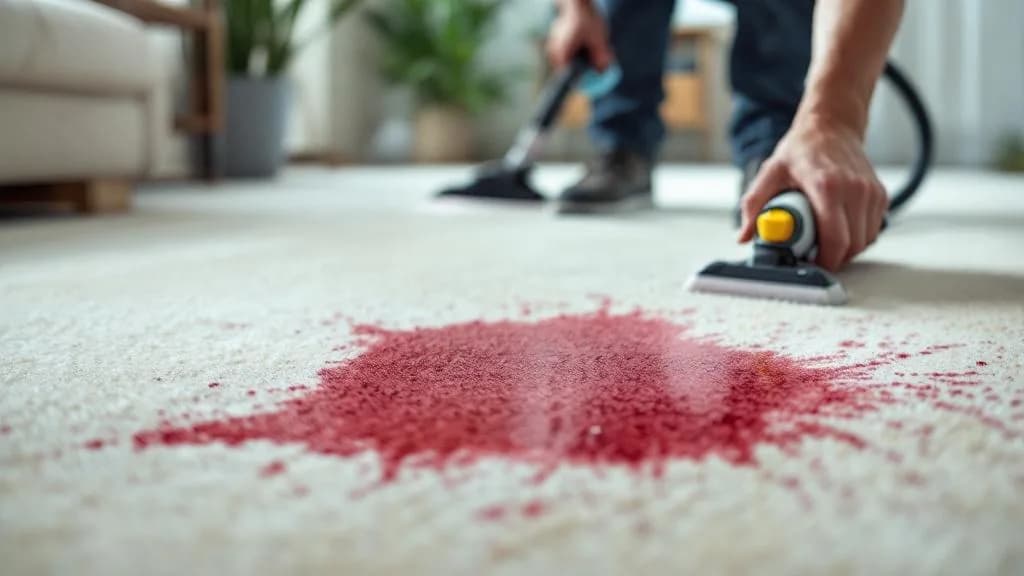
Laundry detergent (whether powder, liquid, or pod gel) is one of the most concentrated cleaning products found in the home. A spill on carpet creates two separate problems: an immediate foaming reaction whenever water is applied (surfactants producing lather), and a sticky residue that remains in the pile after drying and continues to attract soil for months. The rinsing process is more important than the initial clean-up.
Laundry pods are the hardest to treat
Laundry pods (Dynamo, OMO, Surf pods, etc.) contain a higher concentration of surfactant, enzyme, and fragrance than loose powder or liquid in a gelatine coating. When the coating dissolves on carpet, a very concentrated gel releases all at once. The rinse sequence below applies, but expect to repeat it more times than for loose powder or liquid.
Laundry powder spill: dry scoop first
- Scoop up as much dry powder as possible with a spoon or dustpan before adding any water. Vacuum the remaining powder thoroughly.
- Apply a small amount of cold water. Do not pour a large amount. Blot with clean white cloths and absorb the foaming solution.
- Repeat the small-pour-and-blot cycle 5–8 times until foam no longer appears when water is added.
- Place dry white paper towels weighted with something heavy over the area to absorb remaining moisture. Allow to dry fully with ventilation.
Laundry liquid or pod gel spill
- Blot up as much undiluted liquid as possible immediately with clean cloths. Do not rub.
- Apply cold water in small amounts and blot. Expect heavy foaming. Continue blotting to absorb the foam and diluted detergent.
- Repeat the rinse-and-blot cycle until foam output reduces significantly. This typically takes 6–10 cycles for liquid detergent and more for pod gel.
- Finish with a clean dry-cloth blot and allow to air-dry.
Sticky carpet after drying: dealing with residue
Laundry detergent contains optical brighteners, enzymes, and fragrance compounds in addition to surfactants: all of which can leave residue in carpet pile. If the carpet feels stiff, sticky, or attracts noticeable dirt after drying, the rinsing was insufficient. Repeat the cold water rinse-and-blot cycle on the dry carpet, adding small amounts of water and blotting until the residue is extracted. For large or severe spills, professional hot-water extraction with a plain-water flush rinse is the most reliable approach.
Laundry detergent with bleaching agents
Some laundry powders and liquids (particularly "ultra white" or "stain-lift" variants) contain oxygen bleach (sodium percarbonate) or optical brighteners that can affect carpet dye colour. If you notice colour change or brightening during treatment, rinse immediately with plain cold water and assess the result when dry.
| Product type | Initial step | Rinse cycles needed |
|---|---|---|
| Laundry powder (dry) | Dry scoop + vacuum before any water | 5–7 cycles |
| Laundry liquid | Blot undiluted product before water | 6–10 cycles |
| Laundry pod (gel) | Blot gel before water. Expect heavy foam | 8–12+ cycles |
| Fabric softener | Similar to liquid: blot first, rinse thoroughly | 4–6 cycles |
Find a local cleaner in the Sutherland Shire
In the Sutherland Shire? We know your time matters. Leave your enquiry with us and we'll make it our priority to get you a quote from a local cleaner.
Find a Matched Local SpecialistThis site matches enquiries with independent local carpet cleaners. We do not employ cleaners directly.
Get a Shire quote
In the Sutherland Shire? We help you get a quote from a local cleaner. They quote you directly.
Frequently asked
Can I use a carpet cleaning machine on a laundry detergent spill?
A carpet cleaning machine will generate excessive foam from laundry detergent and may overflow the machine's recovery tank. Remove as much detergent as possible with the manual blot-and-rinse method first. Once foam is minimal, a carpet machine with plain water in the clean-water tank can be used for a final extraction rinse.
My carpet is crusty or stiff after a laundry powder spill: what caused this?
Laundry powder contains sodium carbonate and sodium sulphate (builders and fillers) that crystallise as they dry. This causes the stiff, crusty texture. Rehydrate the area with cold water, agitate gently with a soft brush, blot up the dissolved crystals, and repeat. The stiffness resolves once the mineral compounds are fully rinsed out.
Does laundry detergent actually clean the carpet when it spills?
Not in a useful way. The detergent does lift some soil from carpet fibres as it lathers, but it introduces far more residue than it removes. The net effect is a cleaner-looking surface with a sticky, soil-attracting foundation that will look dirtier than the surrounding carpet within weeks. A thorough rinse is needed regardless of any apparent brightening.
Will laundry detergent damage my carpet?
Surfactant residue alone does not damage carpet fibres, but it attracts soil, stiffens the pile over time, and can cause premature wear as gritty particles are ground into resin-coated fibres. Oxygen bleach variants can cause colour loss, and enzyme cleaners in some formulas can affect protein fibres (wool) if left to dwell without rinsing. Thorough rinsing prevents all of these issues.