
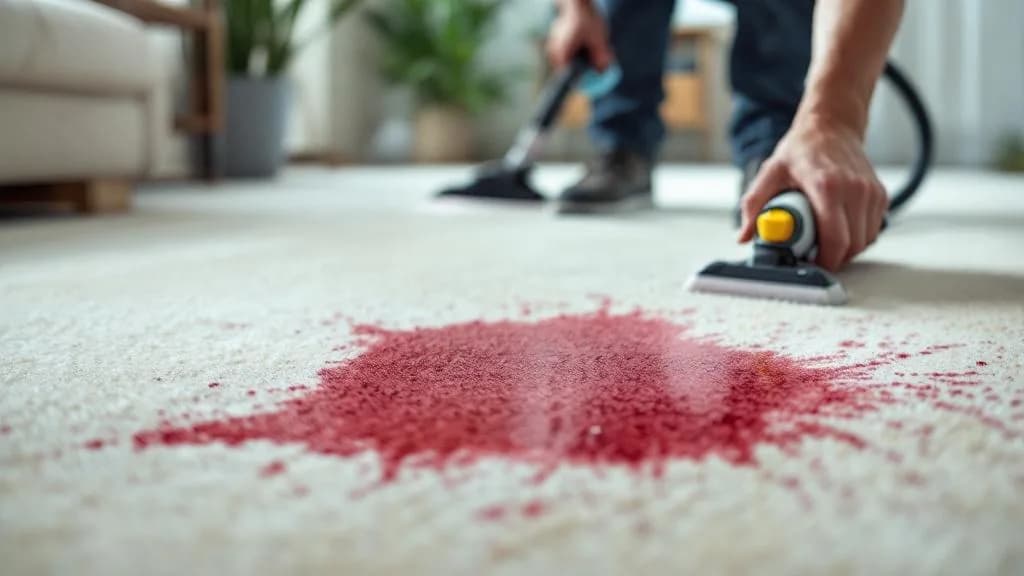
A spilled teapot or loose-leaf tea caddy leaves two distinct problems on carpet: the physical leaf matter (fine particles that lodge between carpet fibres) and the tannin compounds in tea, which are water-soluble but stain fabric quickly on contact. The tannins are what cause the brown discolouration familiar from tea staining on fabric and carpet.
Dry Removal Before Any Liquid Treatment
The most common error with loose tea leaf spills is adding water immediately. This turns the dry leaf particles into a wet paste that is pushed deeper into the pile. Dry removal first is the correct sequence.
- Vacuum the spilled tea leaves thoroughly before applying any liquid. Use a crevice tool to concentrate suction on the spill area.
- If leaves remain after vacuuming, use a stiff brush or old toothbrush to gently loosen them from the pile, then vacuum again.
- Once all visible leaf matter is removed, assess the tannin staining remaining on the carpet.
Treating the Tannin Stain
- Mix one tablespoon of white vinegar, one tablespoon of dish soap, and two cups of warm water.
- Apply to the stained area using a clean white cloth. Blot from the outside edge inward to prevent spreading.
- Allow the solution to dwell on the stain for 2–3 minutes.
- Blot dry with a clean cloth. Do not rub, as rubbing spreads tannin pigment and damages carpet fibres.
- Rinse with cold water on a cloth to remove the cleaning solution residue.
- Blot dry and allow to air dry with ventilation.
Cold water rinse is important for tannin stains
Tannin compounds can be heat-set onto carpet fibres by hot water, making removal harder. Always use cold or lukewarm water for rinsing after treating tea stains. Hot water makes the tannin bond more permanently to the fibre.
Treating Dried Tea Leaf Residue
If loose tea leaves have dried into the carpet, the dry removal step becomes more important. The dried leaves will vacuum up more easily once they are fully dry than when partially moist. Vacuum thoroughly, then rehydrate the tannin stain with a damp cloth before applying the vinegar and dish soap treatment.
Herbal and Green Tea vs Black Tea
Black tea has the highest tannin content and produces the darkest carpet staining. Green tea has moderate tannins. Herbal teas vary widely: berry and hibiscus herbal teas contain anthocyanins (red-purple pigments similar to red wine) and should be treated like a red wine stain with cold water blotting first rather than the vinegar method. Chamomile and ginger herbal teas have low staining potential and typically respond well to the standard tannin treatment above.
Find a local cleaner in the Sutherland Shire
In the Sutherland Shire? We know your time matters. Leave your enquiry with us and we'll make it our priority to get you a quote from a local cleaner.
Find a Matched Local SpecialistThis site matches enquiries with independent local carpet cleaners. We do not employ cleaners directly.
Get a Shire quote
In the Sutherland Shire? We help you get a quote from a local cleaner. They quote you directly.
Frequently asked
I vacuumed the loose tea leaves but there is still a brown tannin stain on the carpet. What should I use?
The brown residue is tannin pigment from the tea. Apply a mixture of one tablespoon of white vinegar, one tablespoon of dish soap, and two cups of warm water. Blot from the outside in, allow to dwell for a few minutes, then rinse with cold water on a cloth. The vinegar dissolves the tannin compounds and the dish soap lifts them from the fibre.
My tea caddy fell on the carpet and the leaves got wet from the spill. The leaves are now stuck in the pile. How do I remove them?
Allow the wet leaves to dry completely first: attempting to remove wet tea leaves by vacuuming pushes them deeper. Once dry, vacuum thoroughly with a crevice tool, then use a stiff brush to loosen any remaining particles before vacuuming again. Treat the remaining tannin stain with the vinegar and dish soap solution after all leaf matter is removed.
I spilled loose leaf hibiscus tea on my carpet and the stain is pink-red, not brown. Does that change the treatment?
Yes, hibiscus contains anthocyanins rather than standard tea tannins. Treat it like a red wine stain: blot with cold water immediately, then apply a mixture of dish soap and cold water. Avoid the vinegar step initially, as acid can sometimes set anthocyanin pigments on some carpet fibres. If the cold water and dish soap method does not clear it, a small amount of hydrogen peroxide (3%) on a white cloth can oxidise the residual pigment on synthetic carpet. Test in a hidden area first.
The tea stain dried in before I noticed it. Can I still remove it?
Set tannin stains are harder to remove but often respond to treatment. Rehydrate the stained area first with a damp cloth: allowing it to sit for a few minutes to soften the dried tannin. Then apply the vinegar and dish soap solution and treat as normal. Multiple treatment rounds may be needed for a stain that has dried in fully. For pale carpet with a significant set stain, professional pre-treatment achieves better results.