
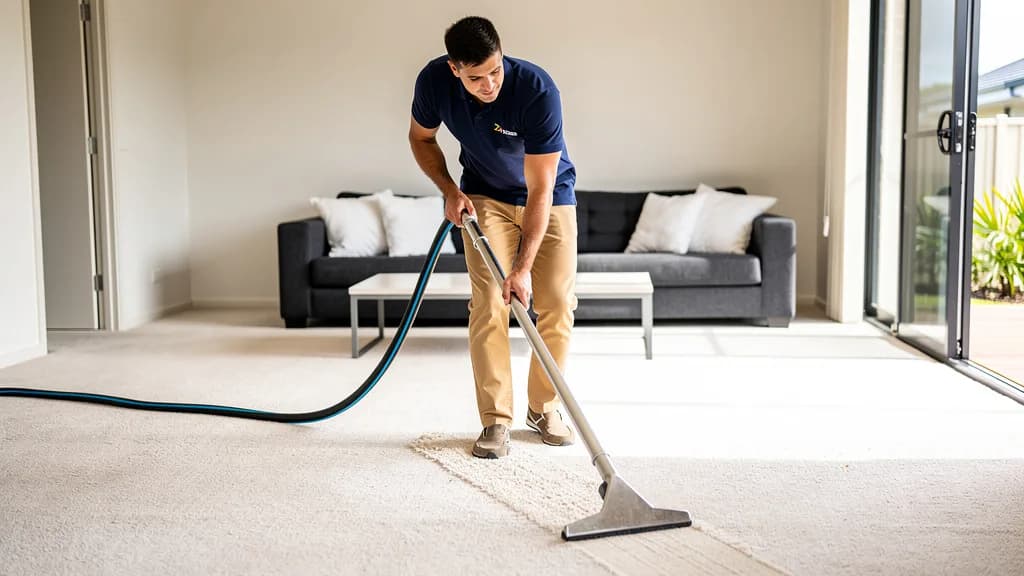
For landlords managing rental properties in Sutherland Shire, carpet cleaning decisions have direct consequences for vacancy periods, bond disputes, and long-term asset value. The questions are rarely about how to clean carpets. They are about when, to what standard, and how to document it properly.
End-of-Tenancy vs Routine Maintenance Cleans
There are two distinct contexts for carpet cleaning in a rental property. End-of-tenancy cleaning is about restoring the property to its leased condition and may involve bond deductions if carpets are not cleaned to the required standard. Routine maintenance cleaning is about preserving carpet life during or between tenancies.
End-of-tenancy cleaning
In NSW the tenant must leave the property reasonably clean, having regard to its condition at the start of the tenancy (check the entry condition report). A lease can only require professional carpet cleaning in limited cases, for example, an additional term where pets were kept. Check the agreement or NSW Fair Trading. A receipt from a professional operator is useful evidence if carpet condition is disputed.
Routine maintenance cleans
Long tenancies (particularly those involving pets, children, or high-traffic use) benefit from a professional carpet clean every 12–18 months. A mid-tenancy clean extends carpet life, reduces odour build-up, and simplifies the end-of-tenancy assessment by establishing a clear baseline.
What the Bond Cleaning Standard Means for Carpet
In NSW the tenant must leave the property reasonably clean, having regard to its condition at the start of the tenancy, fair wear and tear excepted. For carpet, that means:
- Professionally cleaned only where the lease validly requires it, for example, an additional term where pets were kept
- Free from pet hair, odours, and stains that were not present at the start of tenancy
- Not necessarily free of every mark: fair wear and tear applies to minor traffic marks over a normal tenancy
- A professional receipt naming the cleaning method is the cleanest form of evidence
The ingoing report sets the bar
The tenant must leave the property reasonably clean, having regard to its condition at the start of the tenancy, so the entry condition report is the reference point. A lease can only require professional carpet cleaning in limited cases, such as an additional term where pets were kept. Accurate ingoing documentation protects both parties.
Typical Costs for Rental Property Carpet Cleaning in Sutherland Shire
| Property type | Approximate cost (extraction) |
|---|---|
| 1-bedroom unit (1–2 rooms) | $90 – $150 |
| 2-bedroom unit (2–3 rooms) | $130 – $220 |
| 3-bedroom house (3–4 rooms) | $180 – $290 |
| 4-bedroom house (4–5 rooms) | $230 – $380 |
| Stairs (per stair, if not in the room count) | $2 – $4 |
Pet-odour treatment and heavy staining add to the base cost. A property that has had a mid-tenancy clean will generally cost less to clean at end of tenancy than one that has not been professionally cleaned for the full duration of a long tenancy. See the Sutherland Shire cleaning costs guide for all indicative 2026 ranges.
Documentation for Dispute-Free Bond Claims
Bond disputes at the NSW Civil and Administrative Tribunal (NCAT) involving carpet condition are most easily resolved with clear photographic and written evidence. For landlords:
- Photograph carpet in each room during the ingoing inspection, noting any existing marks
- Keep receipts from any professional cleaning done before or between tenancies
- Use the same standard of clean at the outgoing inspection for a like-for-like comparison
- Photograph again at the outgoing inspection, noting any changes from the ingoing condition
- A cleaning receipt alone does not guarantee a bond claim will succeed: photographs showing pre-existing versus new damage are equally important
Pet Damage and Carpet Replacement
Pet urine contamination is one of the most common causes of bond disputes and carpet replacement decisions. Surface cleaning does not remove urine that has penetrated carpet backing or underlay. Professional hot-water extraction with enzyme pre-treatment can be effective on fresh contamination; older or heavy contamination may require carpet replacement.
Under NSW tenancy law, carpet replacement costs may only be charged proportionally, accounting for the carpet's age and expected useful life. Landlords cannot charge the full replacement cost of new carpet if the existing carpet was already several years old.
Carpet depreciation and the ATO
The ATO allows residential carpet to be depreciated over 8–10 years. A 6-year-old carpet that needs replacing due to pet damage would typically attract at most 20–40% of replacement cost from the bond. Document carpet installation dates and cleaning history as part of your property management records.
Managing Carpet Cleaning Across a Portfolio
Landlords managing multiple properties in Sutherland Shire benefit from consistent processes. Working with the same carpet cleaning specialist across properties makes pricing predictable and simplifies documentation. Property managers who understand bond cleaning standards reduce the risk of disputed receipts or agents rejecting the cleaning standard at the outgoing inspection.
Find a local cleaner in the Sutherland Shire
In the Sutherland Shire? We know your time matters. Leave your enquiry with us and we'll make it our priority to get you a quote from a local cleaner.
Get a local quoteThis site matches enquiries with independent local carpet cleaners. We do not employ cleaners directly.
Get a Shire quote
In the Sutherland Shire? We help you get a quote from a local cleaner. They quote you directly.
Frequently asked
Can I deduct carpet cleaning from the bond if the tenant didn't clean the carpets?
Only if the carpet was not left reasonably clean, having regard to its condition at the start of the tenancy (check the entry condition report), or a valid lease term required professional cleaning: a lease can only require it in limited cases, for example an additional term where pets were kept. Fair wear and tear must also be considered. You cannot charge for normal wear over the tenancy period.
Do tenants in NSW have to professionally clean carpets?
Not automatically. In NSW you must leave the property reasonably clean, having regard to its condition at the start of the tenancy (check your entry condition report). A lease can only require professional carpet cleaning in limited cases, for example, an additional term where pets were kept. Check your agreement or NSW Fair Trading.
How often should landlords clean carpets between tenancies?
After every tenancy if the property turns over frequently. For long tenancies (2+ years), consider a professional clean during the tenancy. It extends carpet life and simplifies the end-of-tenancy assessment. Heavily soiled or pet-contaminated carpet should always be professionally cleaned between tenancies.
What is the best carpet type for a rental property in Sutherland Shire?
Nylon or solution-dyed nylon in a darker, multi-toned colour is the most practical for rental properties. It cleans well with hot-water extraction, resists staining better than wool or polypropylene, and does not show marks as readily as light plain colours. Avoid wool or light solid colours in high-traffic rental properties.
Can I claim carpet cleaning as a tax deduction on my rental property?
Yes, professional carpet cleaning on a rental property is generally deductible as a repairs and maintenance expense. The cost of replacing carpet may need to be depreciated rather than immediately deducted, depending on the circumstances. Consult your accountant for advice specific to your situation.