
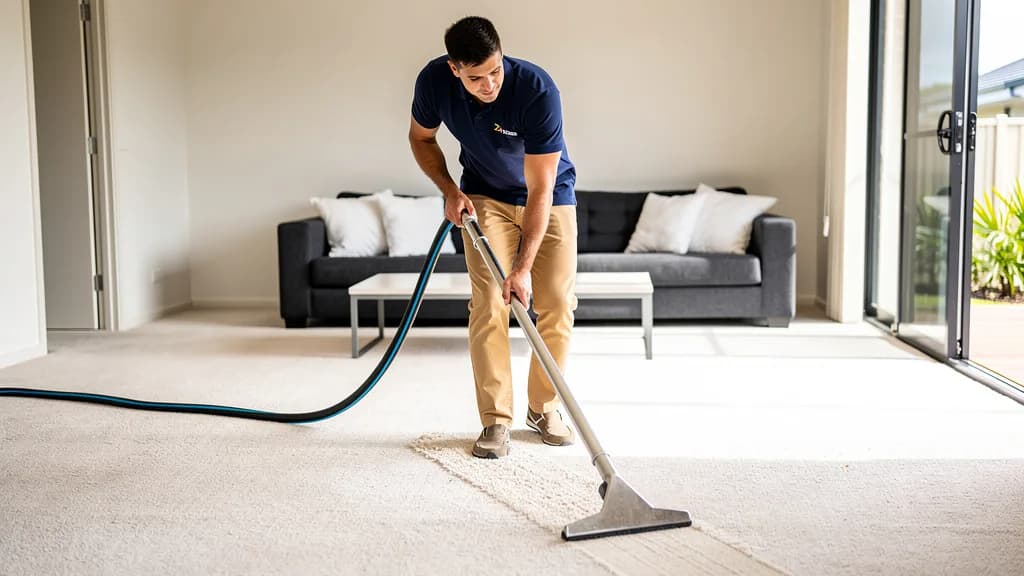
Sutherland Shire has many public and independent schools, from high schools to primary schools throughout the residential suburbs. Carpet in school buildings faces a specific maintenance challenge: extremely high foot traffic during term time, and a reliable maintenance window during school holidays that commercial buildings rarely have.
The School Holiday Advantage
Unlike commercial offices that require after-hours cleaning, schools can arrange carpet cleaning during the day in school holiday periods: the building is empty, there are no student safety concerns around wet floors, and the carpet has hours or days to dry before the next use. This logistical advantage translates to better outcomes: full drying time for hot water extraction, no access pressure, and the ability to move furniture and clean under desks without disrupting classes.
The practical calendar for a Sutherland Shire school's carpet cleaning:
| Holiday Period | Duration | Best for Carpet Cleaning | Notes |
|---|---|---|---|
| Term 1 (Easter holidays) | 2 weeks | Library, administration, staff rooms | Short window: focus on high-priority areas |
| Term 2 (mid-year) | 2 weeks | Classrooms, corridors, library full clean | Best window for comprehensive school-wide clean |
| Term 3 (September) | 2 weeks | Focus areas post-winter soiling | Addresses tracked mud and winter accumulation before year-end |
| Summer (December–January) | 6–7 weeks | Full school deep clean | Longest window: deep extraction, drying, potential carpet replacement |
Area-Specific Carpet Requirements
Different areas of a school building have distinct soiling profiles and different cleaning priorities:
- Classrooms: the primary foot traffic zone during term. Classroom carpet accumulates food crumbs (canteen lunch eaten at desks), tracked playground soil, craft materials (glue, paint, glitter), and in primary school settings, occasional biological contamination. Frequency: every school holiday, prioritising primary school classrooms over secondary.
- Library: lower student traffic but higher-value seating and reading carpet. Libraries often have better-quality carpet that has been in place for many years. Soiling is lighter but the impact of staining on an educational environment is significant. Frequency: twice yearly (mid-year and summer).
- Administration and staff areas: similar to commercial office soiling: coffee, food, general foot traffic from adults. Typically less soiled than classrooms but more frequently occupied by adults who notice and care about the carpet condition. Frequency: annually or bi-annually.
- Corridors and common areas: very high foot traffic, tracked outdoor soil, and the primary area for mud and wet-shoe contamination. Hard floor is increasingly preferred for school corridors but where carpet remains, it needs the most frequent professional cleaning. Frequency: every major holiday.
- Hall and gym areas: typically hard floor, but performance halls and drama spaces sometimes have carpet or rugs. Heavy use during events (assemblies, performances) concentrates contamination. Clean after major events plus annually.
WHS and Safe School Environment Requirements
NSW Department of Education (DoE) schools are subject to WHS Act requirements and the DoE's own facilities management standards. For carpet cleaning in DoE schools, the relevant considerations include:
- Contractor induction: DoE schools require contractor induction before any contractor enters the school. Confirm your carpet cleaning provider is familiar with the DoE contractor requirements for school sites, or can complete the required induction process before the job.
- Product Safety Data Sheets: all cleaning chemistry used must have an accessible SDS. Products used in school environments should be appropriate for spaces occupied by children: low-VOC, low-residue, non-toxic when dry.
- Asbestos register: older school buildings (constructed before 1987) may have an asbestos register that requires review before any works disturb building fabric. Carpet cleaning that does not disturb building fabric is low-risk, but confirm with the school's asbestos management plan if there is any uncertainty.
- Working with Children Check: contractors working on school sites during school hours must hold a current Working with Children Check. For holiday-period cleaning when students are not present, the requirement varies. Confirm with the principal.
Independent schools have their own contractor requirements
Independent and Catholic schools in Sutherland Shire have their own facilities management and contractor induction requirements separate from the DoE. Common requirements include current public liability insurance (check the minimum cover the school requires), contractor safety induction, and sometimes a pre-approval process through the school's business manager. Confirm requirements well in advance of the job.
School-Specific Contamination
Schools have some specific contamination sources not common in other commercial settings:
- Craft materials: PVA glue (water-based, easier to remove when fresh, forms a polymer film when dried), poster paint (water-based pigments, similar to acrylic paint), glitter (embedded in pile, requires high-vacuum extraction to remove). A professional pre-treat for dried craft residues before extraction is more effective than the rental machine kits available to school staff.
- Canteen and lunch zone contamination: food particles, juice and milk spills, sauce and condiment stains in eating areas. Enzyme pre-treatment addresses the protein and fat components.
- Muddy playground season: Sutherland Shire schools see significant mud tracking during and after rain events, particularly in Term 2 (autumn) and the wet weather periods of Term 3. Mud tracked into carpeted classrooms is the single largest soiling driver in most school settings.
- Sick student incidents: vomit in classrooms is an occupational reality. Prompt cleaning and enzyme treatment should follow any incident, but the background contamination in heavily used primary school carpet warrants an enzyme-treated professional clean at least twice yearly.
Budget Planning for School Carpet Cleaning
School carpet cleaning is typically a facilities maintenance budget item for DoE schools and a discretionary maintenance spend for independent schools. Practical budget planning considerations:
- Annual clean vs holiday cycle: a single annual deep clean (summer holidays) is less expensive but allows more contamination accumulation during the year. A twice-yearly or holiday-cycle approach costs more but maintains carpet in better condition, extending its serviceable life and reducing replacement costs.
- Carpet condition assessment: before budgeting for repeated cleaning cycles, have a professional assess the carpet condition across the school. Carpet past its effective life benefits more from replacement budget than from cleaning budget: cleaning heavily worn carpet may not produce a meaningful result.
- Zone-based prioritisation: if budget constrains full school cleaning, prioritise by contamination load: primary school classrooms first, then corridors, then secondary classrooms, then administration and library.
Find a local cleaner in the Sutherland Shire
In the Sutherland Shire? We know your time matters. Leave your enquiry with us and we'll make it our priority to get you a quote from a local cleaner.
Find a Matched Local SpecialistThis site matches enquiries with independent local carpet cleaners. We do not employ cleaners directly.
Get a Shire quote
In the Sutherland Shire? We help you get a quote from a local cleaner. They quote you directly.
Frequently asked
When is the best time to clean carpet in a school?
School holidays: the building is empty, no student safety issues around wet floors, and the carpet has full drying time before next use. The mid-year (Term 2) holidays are the most practical for a comprehensive school-wide clean. The summer holiday period allows the most thorough deep clean and any carpet replacement works. Term 1 (Easter) and Term 3 holidays are useful for priority areas.
How often should classroom carpet be professionally cleaned?
Primary school classrooms: every major school holiday (4 times per year) for best results; twice yearly (mid-year and summer) as a practical minimum. Secondary school classrooms have lighter soiling from older students and less craft activity: twice yearly is typically sufficient. Library, administration, and staff areas: annually or bi-annually.
Do carpet cleaning contractors need Working with Children Checks to work in schools?
For cleaning during school holidays when students are not present, the Working with Children Check requirement varies. Contact the principal to confirm the school's policy. For any works during school hours with students present, all contractors must hold a current NSW Working with Children Check. Confirm your provider holds a current check before arranging any in-term cleaning.
What cleaning products are safe to use in school environments?
Products should be low-VOC (low off-gassing), non-toxic when dry, and carry documented Safety Data Sheets. Products specifically formulated for educational environments are available. Request the SDS for all products your provider uses and retain them for your WHS records.
How do I handle craft material and paint stains on school carpet?
Fresh PVA glue is water-based and responsive to cold water and blotting. Dried PVA forms a polymer film: rubbing alcohol can soften it before mechanical removal. Poster paint is similar to acrylic paint: cold water and dish soap while wet; rubbing alcohol or enzyme cleaner for dried deposits. For school-wide craft contamination across many areas, professional pre-treatment before extraction is the most practical approach rather than spot-treating each incident individually.