
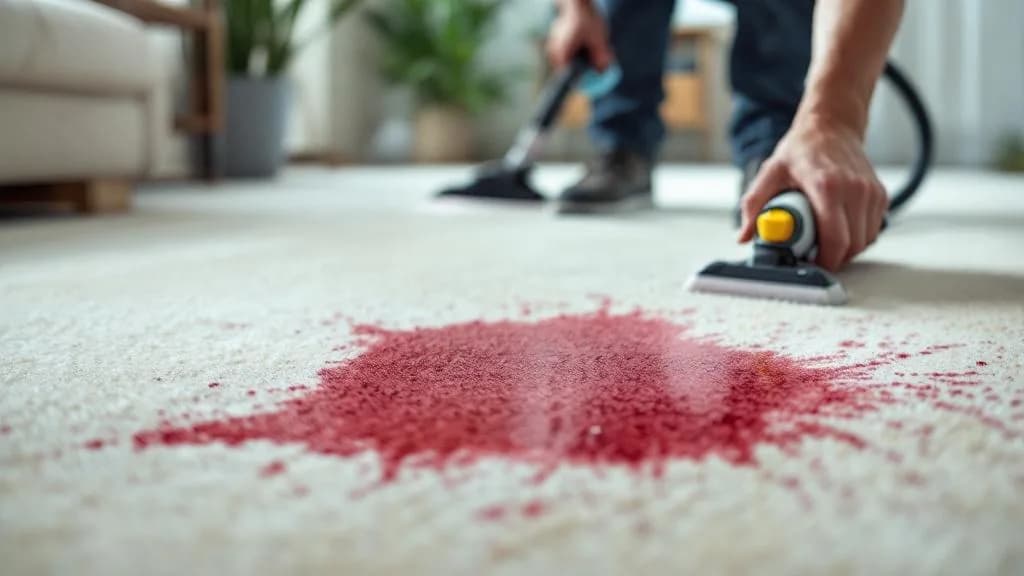
Why Berry and Smoothie Stains Are Hard to Remove
The dark colour in acai, blueberry, mixed berry, and beetroot comes from anthocyanins: a class of flavonoid pigment that acts as a natural fabric dye. Anthocyanins bond readily to protein fibres (wool, silk) and to a lesser degree to synthetic fibres. They are pH-sensitive, changing colour in acidic or alkaline environments, and they set rapidly when exposed to heat. A smoothie spill treated with hot water or a warm cloth within minutes of spilling can become a permanent stain on wool carpet.
Beetroot smoothies add a complication: beetroot contains betacyanin, a distinct pigment class that behaves differently from anthocyanins and is even more difficult to remove once set. If your smoothie contained beetroot and the stain is more than a few hours old, professional treatment is the most realistic option.
Speed is the critical variable
Berry and smoothie stains set within minutes on warm carpet in warm rooms. The faster you treat a fresh spill, the significantly better the result. Every 5-minute delay reduces the likelihood of full removal, especially on wool and light-coloured synthetic carpet.
Immediate Treatment: Fresh Smoothie Spill
- Blot up as much liquid as possible immediately using a clean white cloth or paper towels. Press firmly and lift. Do not rub or smear.
- Apply cold water to the stained area and blot again. The cold water dilutes the pigment before it can bond to the fibre.
- Mix 1 teaspoon of white vinegar with 1 teaspoon of dish soap (clear) in 2 cups of cold water. The slight acidity of vinegar is useful for anthocyanin stains. It shifts the pigment to its red form, which is less stable and easier to lift.
- Apply the solution to the stain using a clean cloth, blotting from the outside in. Do not saturate the carpet.
- Rinse with plain cold water by blotting, then blot dry.
- Repeat until colour is no longer transferring to the blotting cloth.
Dried Smoothie Stains
A dried berry or smoothie stain has partially fixed anthocyanin pigment in the fibre. The vinegar-dish soap method will still help but is less effective. An enzyme cleaner (available from supermarkets and pet supply stores. Look for "enzyme-based stain remover" or "bio-enzyme cleaner") can break down the protein components in dairy smoothies and improve the result on fruit pigments.
- Dampen the dried stain with cold water to rehydrate it. Allow 2–3 minutes for the pigment to soften.
- Apply an enzyme cleaner according to the product instructions, typically covering the stain and leaving for 10–15 minutes.
- Blot up the enzyme cleaner and residue with a clean cloth.
- Follow with the vinegar-dish soap treatment described above.
- Rinse thoroughly with cold water to remove all soap and enzyme residue: leftover soap attracts soil and can leave a tacky patch.
Beetroot in Smoothie: Specific Guidance
Betacyanin (from beetroot) is more water-stable than anthocyanins and less pH-sensitive, making it harder to shift with vinegar. For fresh beetroot smoothie spills, cold water blotting and the dish soap method are still the first steps. For stains older than a few hours, the realistic options are professional hot-water extraction treatment with a commercial pre-treatment agent, or acceptance of a lightened but not fully removed residue.
| Ingredient | Pigment type | Fresh removal | Dried removal | Special note |
|---|---|---|---|---|
| Blueberry | Anthocyanin | Good with cold water + vinegar | Moderate with enzyme cleaner | Most removable common berry |
| Acai | Anthocyanin | Good with cold water + vinegar | Moderate, multiple cycles | Dark: takes many treatment cycles |
| Mixed berry | Anthocyanin blend | Moderate | Difficult | Multiple pigment types |
| Beetroot | Betacyanin | Moderate with cold water | Very difficult | Professional treatment recommended for dried |
| Pomegranate | Anthocyanin + tannin | Moderate | Difficult | High tannin content increases bonding |
| Strawberry / raspberry | Anthocyanin | Good | Moderate | Lighter colour, easier than acai |
Avoid hydrogen peroxide on wool for berry stains
Hydrogen peroxide can bleach wool carpet dye along with the berry pigment, leaving a light patch that may be worse than the stain. Stick to cold water, vinegar-dish soap, and enzyme cleaners on wool. Call a professional for dark berry stains on wool.
Find a local cleaner in the Sutherland Shire
In the Sutherland Shire? We know your time matters. Leave your enquiry with us and we'll make it our priority to get you a quote from a local cleaner.
Get a local quoteThis site matches enquiries with independent local carpet cleaners. We do not employ cleaners directly.
Get a Shire quote
In the Sutherland Shire? We help you get a quote from a local cleaner. They quote you directly.
Frequently asked
What is the most important thing to do immediately after spilling a berry smoothie on carpet?
Blot up as much liquid as possible without rubbing, then apply cold water immediately to dilute the pigment before it bonds to the fibre. Speed matters more with berry stains than with most food stains: every minute of delay before treatment significantly reduces the likelihood of full removal.
Why does vinegar help with berry stains on carpet?
Berry pigments are anthocyanins, which are pH-sensitive. In slightly acidic conditions (vinegar is dilute acetic acid), anthocyanins shift to a red ionic form that is less stable and more water-soluble, making them easier to lift from carpet fibre. This is why the vinegar-dish soap combination is more effective than water alone on fresh berry stains.
I have a dried acai smoothie stain from last week: can it be removed?
Possibly, but complete removal can't be promised. Rehydrate the stain with cold water, apply an enzyme cleaner, then follow with the vinegar-dish soap treatment. Multiple cycles may reduce the stain significantly. Professional hot-water extraction with commercial pre-treatment gives the best chance of near-complete removal. A faint residual tint is possible on light-coloured carpet with old acai stains.
Can I use a steam cleaner on a berry smoothie stain?
No, not on the initial treatment. The heat from a steam cleaner sets anthocyanin pigments into the fibre and can make the stain permanent. Complete the cold-water treatment sequence first and allow the carpet to dry. If you want to steam clean the area afterward for sanitisation purposes once all visible colour is gone, this is fine.