
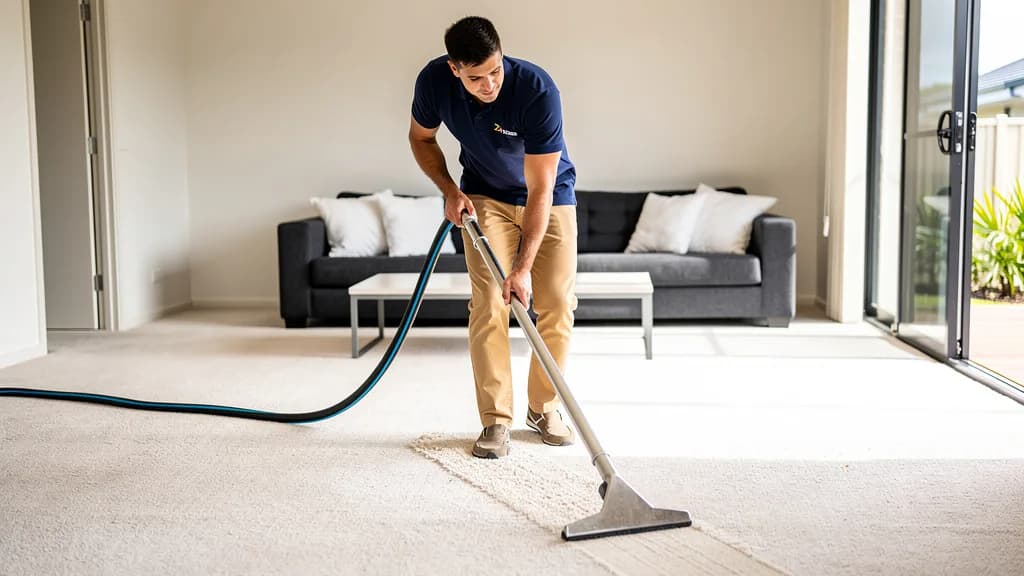
Why Carpet Gets Sticky After Cleaning
Carpet shampoos, dish soap, and household cleaning products contain surfactants: compounds that trap oils and dirt so they can be rinsed away. The problem is that surfactants themselves are sticky at the concentrations typically used in DIY carpet cleaning, and if not fully extracted, they remain in the pile as a residue. This residue has two effects: it feels tacky underfoot, and it actively attracts airborne dust and foot-traffic soil, causing the carpet to re-soil much faster than it did before cleaning.
This is why a carpet cleaned with too much product (or not rinsed enough) can look dirtier within a week than it did before cleaning. The soap is doing its job of binding to particles, but without enough rinse water to carry them away, they accumulate in the pile.
How to check if soap residue is the problem
Dampen a white cloth with plain water and rub it across the affected carpet area. If the cloth lathers or picks up bubbles, soap residue is present. A sticky feel when pressing your hand firmly on the pile and then lifting is another reliable indicator.
Removing Soap Residue: The Rinse Method
The goal is to introduce enough clean water to re-dissolve and dilute the surfactant residue, then extract it. The key mistake to avoid is adding more cleaning product. This makes the problem worse.
- Fill a clean spray bottle with cold water only: no cleaning products.
- Mist the affected area lightly with the cold water spray. Do not saturate: work in small sections.
- Blot firmly with a clean white cloth or towels to absorb the dissolved soap and water. Press down and lift rather than rubbing.
- Repeat (spray and blot) until the white cloth no longer picks up lather when you press and lift.
- If you have a wet-dry vacuum or a carpet cleaning machine with a clean-water rinse function, this is much more effective than manual blotting: the suction extracts the rinse water and dissolved soap far more completely.
- Allow the carpet to dry thoroughly. Use a fan or open windows to speed drying and prevent moisture in the backing.
Adding White Vinegar to the Rinse
A small amount of white vinegar in the rinse water (1 tablespoon per 2 cups of water) can help neutralise alkaline detergent residues and reduce stickiness. Mix into the spray bottle and use instead of plain water. The vinegar smell dissipates as the carpet dries. Do not use vinegar on wool carpet: the acidity can damage wool fibre at higher concentrations.
How to Prevent Soap Residue in Future
- Use significantly less cleaning product than you think you need. A teaspoon of dish soap in two cups of water is enough for most spot treatments.
- Always rinse with at least as much plain water as cleaning solution you applied.
- For machine cleaning, use the minimum recommended product amount and run a plain-water rinse pass at the end.
- Avoid over-wetting the carpet: the more water used, the longer drying time and the more residue risk if rinsing is insufficient.
More product does not mean more clean
The most common DIY carpet cleaning mistake is using too much shampoo or soap. Professional carpet cleaners use very dilute cleaning solutions with powerful extraction. It is the extraction that does the work, not the amount of product. At home, less product and more rinse water always gives a better result.
Find a local cleaner in the Sutherland Shire
In the Sutherland Shire? We know your time matters. Leave your enquiry with us and we'll make it our priority to get you a quote from a local cleaner.
Get a local quoteThis site matches enquiries with independent local carpet cleaners. We do not employ cleaners directly.
Get a Shire quote
In the Sutherland Shire? We help you get a quote from a local cleaner. They quote you directly.
Frequently asked
Why is my carpet stickier after I cleaned it?
Soap or detergent residue in the pile is the most common cause. The surfactants in cleaning products are sticky at the concentrations left behind when cleaning solution is not fully rinsed out. Paradoxically, carpet cleaned with too much product and insufficient rinsing attracts more soil than before cleaning.
How do I remove soap residue from carpet without making it wet again?
There is no dry method: soap residue requires water to dissolve and be removed. The technique is to use minimal water: lightly mist with plain cold water in small sections, blot firmly with clean cloths to absorb the dissolved soap, and repeat until no more lather transfers to the cloth. Allow to dry thoroughly with ventilation.
Can I use baking soda to fix sticky carpet?
Baking soda does not remove soap residue. It can absorb some odour and may mask the stickiness temporarily, but the surfactant remains in the pile. The plain-water rinse-and-blot method is the correct approach. Baking soda left on damp carpet can also make a pasty residue of its own.
My carpet cleaner machine is leaving the carpet sticky: what is wrong?
The most likely cause is too much cleaning solution in the mix, or insufficient extraction passes on the rinse setting. Reduce the cleaning solution concentration (use the machine's minimum recommended amount) and make at least one full pass with plain water in rinse mode. If the machine does not have a rinse mode, a second pass with the clean-water tank full and no added product achieves the same result.