
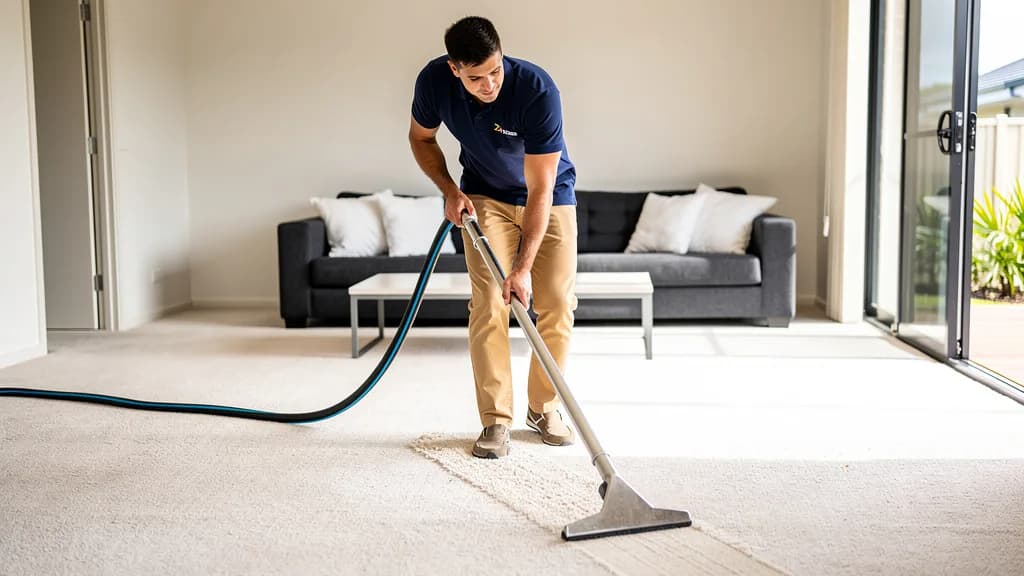
Common area carpet in a strata scheme takes more concentrated traffic than any residential carpet. Every resident in the building passes through corridors and lobbies multiple times daily; function rooms and lifts see the same concentration without any individual resident taking ownership of maintenance. The result is carpet that degrades faster, requires more frequent professional cleaning, and benefits from a clear maintenance plan, rather than reactive spot-cleaning as problems emerge.
Common Areas Typically Carpeted in Shire Strata Schemes
- Lift lobbies and lift car interiors: the highest-traffic single surface in any residential strata building; often overlooked because it is a small area
- Corridors and hallways connecting lots to lifts and stairwells
- Entrance lobbies and foyers: the first impression of the building
- Stairwells and stair landings in mid-rise buildings
- Function rooms, BBQ areas, and common recreational spaces
- Manager's offices and meeting rooms in larger schemes
Who Is Responsible: Body Corporate vs Lot Owners
Under NSW strata legislation, the owners corporation (body corporate) is responsible for maintaining common property (including carpeted common areas) in good repair. Lot owners are responsible for the interior of their lot, including any carpet within it. This division means:
- Corridor, lobby, lift, and stairwell carpet cleaning is funded through strata levies and managed by the body corporate or its strata manager
- Carpet within individual lots (apartments, townhouses) is the lot owner's responsibility: tenants are responsible to their landlord, and landlords are responsible for the lot interior
- If a lot owner causes damage to common area carpet (e.g., moving furniture that tears corridor carpet), they may be liable for repair costs
- Common area carpet maintenance should be documented in the building's maintenance plan and reflected in the administrative fund budget
NSW strata maintenance plans
Under the Strata Schemes Management Act 2015, owners corporations with buildings over 10 years old must have a 10-year maintenance plan. Carpet replacement and professional cleaning timetables should be documented in this plan, including estimated costs and renewal dates, to ensure levy funding is adequate.
Frequency Standards for Common Area Carpet
Residential strata common area carpet requires more frequent professional cleaning than domestic carpet because of the volume of traffic and the lack of any individual resident's maintenance ownership. General frequency guidance:
| Area type | Recommended cleaning frequency | Notes |
|---|---|---|
| Lift car interior | Monthly to quarterly | Smallest area, highest traffic; often overlooked in cleaning contracts |
| Lift lobby (each level) | Quarterly | Concentrated soil from lift entry and exit |
| Main entrance lobby | Quarterly to 6-monthly | Depends on building's street exposure and resident count |
| Corridors | 6-monthly to annual | Lower traffic than lobbies; varies with building size |
| Stairwells | 6-monthly to annual | Less traffic in buildings with functioning lifts |
| Function rooms | After each event plus annual deep clean | Soil level depends on function type and frequency of use |
Cost Structure and Levy Allocation
Common area carpet cleaning is an administrative fund expense in a strata scheme. It is an ongoing operational cost, not a capital works item (unless carpet replacement is involved, which is capital). Professional cleaning of common area carpet in a Sutherland Shire strata building is typically quoted per square metre or as a fixed price for the building. Each independent cleaner sets their own price. Ask for a written quote that states the scope (corridors, lobbies, lift cars, function rooms) and whether spot cleaning between visits is included.
Planning Around Resident Access
Planning common area carpet cleaning in an occupied residential building requires coordination to minimise disruption:
- Notify residents at least 48 hours in advance: wet carpet in corridors creates slip risk and residents need to plan around it
- Plan morning sessions that allow carpet to dry before evening foot traffic: strata carpet typically dries in 3–5 hours in spring or autumn, depending on ventilation and weather
- Lift car cleaning is best planned for off-peak hours (mid-morning weekdays) when lift demand is lowest; have the other lift available if a multi-lift building
- For buildings with elderly or mobility-impaired residents, ensure accessible routes remain dry throughout the cleaning session
- Post wet floor signage during and after cleaning: body corporates have a duty of care for common area safety
Documentation for Strata Records
All professional cleaning should be documented in the strata's maintenance records with the date, scope, operator details, and cost. This documentation serves multiple purposes:
- Evidence of maintenance for insurance purposes: buildings with documented maintenance histories fare better in insurance disputes
- Input for the 10-year maintenance plan: cleaning history informs when carpet replacement will be needed and at what cost
- Transparency for lot owners who receive levy notices: owners can see what administrative fund expenditure covers
- Due diligence record for prospective purchasers reviewing strata records before settlement
Find a local cleaner in the Sutherland Shire
In the Sutherland Shire? We know your time matters. Leave your enquiry with us and we'll make it our priority to get you a quote from a local cleaner.
Get a local quoteThis site matches enquiries with independent local carpet cleaners. We do not employ cleaners directly.
Get a Shire quote
In the Sutherland Shire? We help you get a quote from a local cleaner. They quote you directly.
Frequently asked
How often should common area carpet be professionally cleaned in a strata building?
Quarterly for lift lobbies and lift car interiors, six-monthly to annually for corridors and stairwells, and after each significant event for function rooms. Buildings near the beach or with high resident turnover (short-term rental units) benefit from more frequent cleaning. The strata manager should include cleaning frequency in the building's maintenance plan.
Can a body corporate deduct cleaning costs from a lot owner who damaged the carpet?
If a lot owner or their tenant causes damage to common area carpet (through improper furniture moves, spills during a party, or similar) the body corporate may recover the repair or cleaning cost from that owner. The committee needs to document the incident and the cost, and follow the dispute resolution procedures in the strata scheme's by-laws and the Strata Schemes Management Act 2015.
What type of carpet is best for strata common areas?
Solution-dyed nylon in a patterned or multi-toned colour is the most practical choice for residential strata common areas. It resists staining and crushing, handles high foot traffic well, and the pattern conceals soil between professional cleans. Avoid light solid colours and wool in high-traffic common areas. Carpet tiles are also worth considering for corridors: individual damaged tiles can be replaced without replacing the whole corridor.
Is common area carpet cleaning an administrative or capital works fund expense?
Recurring professional cleaning is an administrative fund expense. It is an ongoing maintenance cost. Carpet replacement is a capital works fund expense. Some owners corporations make the mistake of not budgeting adequately in the administrative fund for regular cleaning, which accelerates deterioration and brings forward the capital works replacement cost.
Can the strata manager arrange carpet cleaning without a committee vote?
For routine maintenance cleaning within the existing budget, most strata managers can arrange this under their management agreement delegation. For new cleaning contracts, scope changes, or significant unbudgeted expenditure, a committee resolution is typically required. Check the strata manager's delegation in the building's management agreement.