
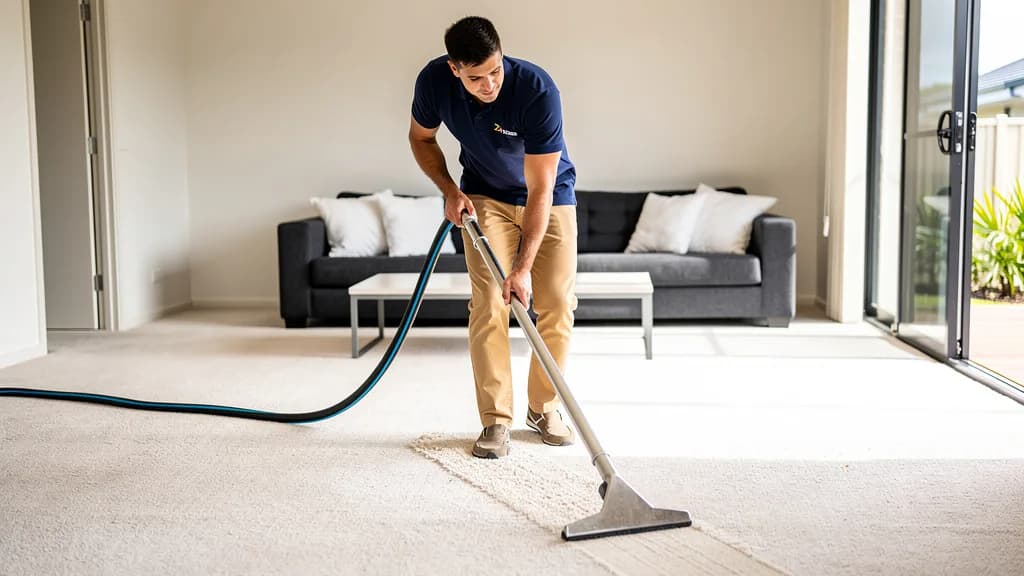
Washing machine leaks are one of the more common sources of household water damage to carpet. The most frequent causes are supply hose failure (the hose connecting the tap to the machine bursting, typically sudden and high-flow), drain hose overflow (the drain hose coming out of the wall or laundry tub during a cycle), door seal failure on front-loading machines, and overloading or soap residue causing suds overflow. The water category matters: supply hose water is clean; drain water during or after a wash cycle contains detergent, lint, and potentially soiled wash water.
Immediate Response
- Turn off the machine at the power point and at the water supply tap immediately.
- Do not enter standing water near the machine until the power is confirmed off.
- Begin removing water as quickly as possible: towels, mops, and a wet/dry vacuum all help. Speed matters more than method at this stage.
- Identify the source: a supply hose burst produces clean water; drain overflow during a wash produces detergent-loaded water that may need different treatment for the carpet.
- Move any furniture, laundry, and stored items off the wet carpet.
- Document the damage with photographs before cleanup begins: relevant for insurance.
Clean Water vs Wash Water: Does It Matter?
Supply hose water (cold clean water from the tap) is the simplest to treat. It is clean water and the response protocol is straightforward extraction and drying. Drain water that escaped during or after a wash cycle contains detergent, lint, and the soiling from the laundry load. Detergent residue left in carpet attracts dirt aggressively: carpet cleaned with soapy water that is not thoroughly rinsed and extracted will become dirty more quickly than surrounding areas. Professional extraction is particularly important for detergent-contaminated carpet because a domestic extraction cannot remove detergent residue as thoroughly.
Supply hose failure: the most severe scenario
A washing machine supply hose connected to a continuously pressurised tap can release a significant volume of water before the failure is discovered. If the hose bursts while you are away from home, the water can run for hours. This scenario typically saturates underlay, reaches the subfloor, and in two-storey homes can damage the ceiling below. Insurance response and professional water damage restoration apply in this situation.
Preventing Future Leaks
Supply hose failure is the most destructive and preventable scenario. Standard rubber supply hoses have a service life of five to eight years before the rubber degrades. Replacing them with braided stainless steel supply hoses (available from plumbing suppliers) significantly reduces burst risk. Turning off the tap when the washing machine is not in use eliminates the pressure from the hose when idle: a common practice in older Australian homes that is less common now but remains sensible. Fitting a washing machine flood stop valve (a sensor that detects leaks and cuts water supply) provides automated protection.
Find a local cleaner in the Sutherland Shire
In the Sutherland Shire? We know your time matters. Leave your enquiry with us and we'll make it our priority to get you a quote from a local cleaner.
Get a MatchThis site matches enquiries with independent local carpet cleaners. We do not employ cleaners directly.
Get a Shire quote
In the Sutherland Shire? We help you get a quote from a local cleaner. They quote you directly.
Frequently asked
Our washing machine overflowed with soapy water. We mopped it up. Do we need to do anything else to the carpet?
Yes. Detergent residue left in carpet pile attracts dirt and can cause the affected area to look and feel dirty again within weeks. Extract the area with a wet/dry vacuum or professional extraction equipment to remove as much detergent residue as possible, then rinse with clean cold water and extract again. If the water reached the underlay, check for saturation and allow adequate drying time. Use fans and ventilation to prevent mould.
The carpet is next to the laundry on the other side of a doorway. The water flowed through. How far does the damage extend?
Water follows the lowest point of the floor and wicks laterally in underlay faster than it appears on the carpet surface. The affected underlay area can be significantly larger than the visible wet patch on the carpet surface. Press firmly on the carpet around the visible perimeter. If water is expelled, the underlay extends beyond what is visible. Professional moisture mapping using a moisture meter gives the most accurate assessment of the full extent.
Can I just let the carpet dry naturally from a small machine overflow?
For a small overflow caught immediately (a few litres that has not reached the underlay) natural drying with ventilation and fans is often adequate. Confirm the underlay is not wet by pressing firmly on the carpet and lifting an edge to check. If the underlay is dry and the carpet surface is only damp, natural drying is reasonable. If any doubt about underlay saturation exists, professional extraction is the safer choice.