
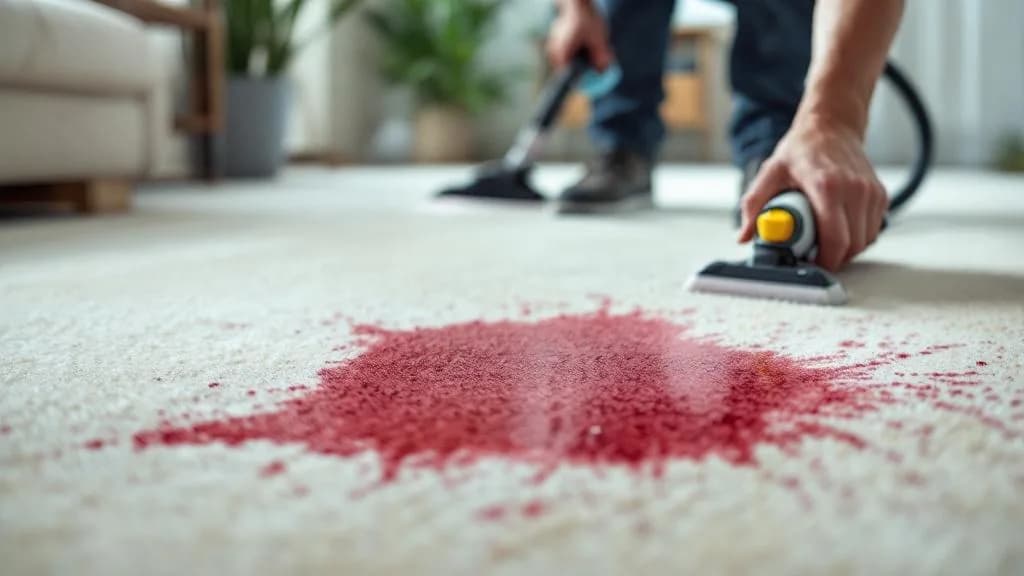
WD-40 is a petroleum-based product: a light mineral oil in a fast-evaporating solvent carrier. When it lands on carpet, the solvent evaporates within minutes and leaves behind a greasy oil film that penetrates between fibres. The common mistake is adding water immediately, which spreads the oil without lifting it. The correct sequence is absorbent material first, then degreaser, then water-based cleaning.
Step 1: Absorb the Oil Immediately
- Pour a generous amount of an absorbent powder over the WD-40 spill: baking soda, cornstarch, or talcum powder all work. The powder draws oil out of the fibres before it sets.
- Leave the absorbent in place for at least 15 minutes. For a larger spill, 30 minutes gives better results.
- Vacuum up the powder thoroughly. You will likely see it has changed colour from absorbing the oil.
- If the spill is fresh and the area still feels wet, repeat the absorption step with fresh powder before proceeding.
Step 2: Degrease the Remaining Film
After absorption, a thin oil film remains in the fibres. Dishwashing liquid is the most effective household degreaser for this. It is specifically formulated to break oil-water bonds, which is exactly what is needed here.
- Apply a small amount of dishwashing liquid directly to the stain. Work it into the fibres gently with a clean damp cloth using a dabbing motion.
- Let it sit for 3–5 minutes.
- Blot with a clean dry cloth. The greasy residue should transfer to the cloth with each pass.
- Repeat the application and blotting until the area no longer feels oily to the touch.
Step 3: Rinse and Dry Thoroughly
Soap residue left in carpet fibres attracts dirt aggressively, creating a dark patch that reappears even after the oil is gone. Rinse the treated area with plain cold water applied with a clean cloth and blot dry. Then place a dry towel over the area weighted down with something heavy for 30 minutes to draw out remaining moisture.
Yellow staining on light carpet
WD-40 and similar lubricants can leave a faint yellow cast on light-coloured carpet even after the grease is removed. A small amount of 3% hydrogen peroxide applied to the yellowed area and blotted after 10 minutes often lifts this. Always test on a hidden area first.
Old or Set-In Lubricant Stains
WD-40 that has sat on carpet for hours or days is harder to remove because the oil carrier has fully penetrated the fibres and some oxidation may have occurred, contributing to yellowing. The same degreasing process applies but may require more passes. Dry-cleaning solvents (available from hardware stores) can help shift stubborn set-in oil staining. Apply with a cloth and blot; do not pour. Follow the manufacturer's instructions for ventilation and fibre compatibility.
When to Call a Professional
A large lubricant spill, or a stain that has yellowed and resisted multiple home treatment attempts, benefits from professional hot-water extraction with degreasing pre-treatment. The hot water and professional-grade surfactants penetrate more effectively than cold-water home methods. A local carpet specialist can assess the extent of oil penetration and select the right pre-treatment chemistry.
Find a local cleaner in the Sutherland Shire
In the Sutherland Shire? We know your time matters. Leave your enquiry with us and we'll make it our priority to get you a quote from a local cleaner.
Find a Matched Local SpecialistThis site matches enquiries with independent local carpet cleaners. We do not employ cleaners directly.
Get a Shire quote
In the Sutherland Shire? We help you get a quote from a local cleaner. They quote you directly.
Frequently asked
I have heard WD-40 can actually remove stains: did it make things worse?
WD-40 is sometimes used as a solvent to loosen other stains (such as chewing gum or tar), but it always leaves its own oil residue behind that then needs to be removed. If WD-40 was applied to treat an existing stain, you now have two problems: the original stain and the oil residue. Treat the WD-40 residue first using the absorption and degreasing steps above, then reassess whether the original stain still needs attention.
Can I use a dry-cleaning solvent on wool carpet for WD-40?
Many dry-cleaning solvents are safe on wool, but product labels vary. Check for wool compatibility before use. Wool is also more sensitive to excessive wetting, so keep applications small and blot rather than rub. If in doubt, a professional cleaner experienced with wool carpets is the safest path.
There is still a dark patch after cleaning: what is causing it?
A persistent dark patch after degreasing is almost always residual soap attracting dirt from foot traffic, rather than the oil itself. Rinse the area again thoroughly with clean cold water and blot very dry. If the patch returns within a few days of foot traffic, the soap residue was not fully removed: a second rinse cycle usually resolves this.