
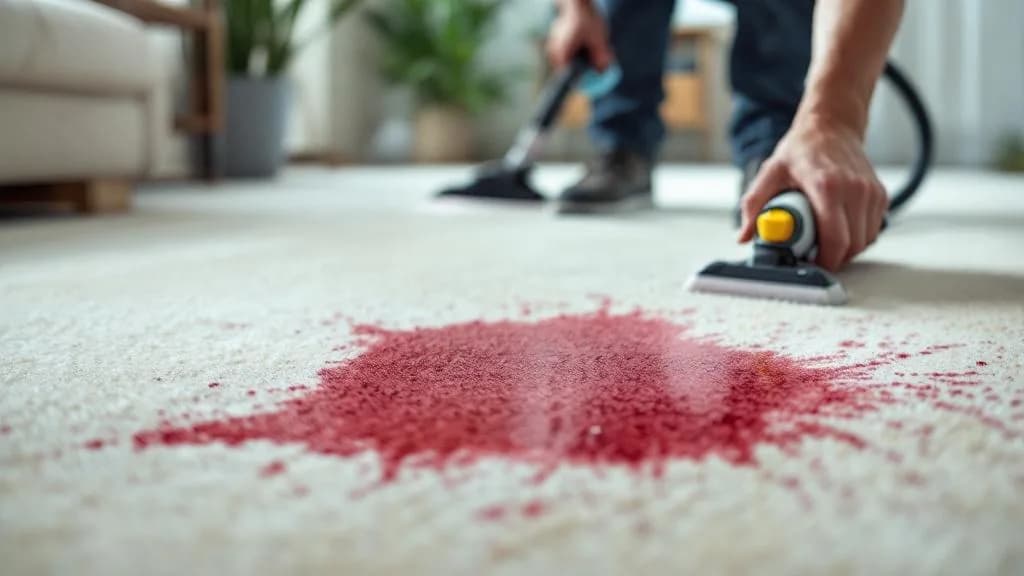
Alcohol spills are among the most common carpet stains at home, and one of the more misunderstood. The popular advice to act fast is correct, but the best treatment varies significantly by drink type. Beer behaves differently from spirits, and coloured cocktails differently from both. Getting the treatment right depends on knowing what you are actually dealing with.
What Is in the Stain: The Chemistry by Drink Type
| Drink | Key Staining Components | Main Challenge |
|---|---|---|
| Beer (lager, pale ale) | Maltose, dextrins, hop compounds, yeast residue, carbonation | Sugar residue attracts soil; leaves a sticky brown mark when dry |
| Dark beer (stout, porter) | High roasted barley pigment + sugars | Dark pigment; more colour staining risk than pale beer |
| Clear spirits (vodka, gin) | Essentially alcohol + water: minimal residue | Easiest to treat; acts quickly, dries nearly clean |
| Whisky, rum, brandy | Colour compounds (caramel, tannins), congeners | Moderate colour staining; acts like a weak dye on some fibres |
| Red wine | Anthocyanin pigments: a separate guide covers this in detail | High colour staining risk; dedicated red wine guide applies |
| Cocktails (coloured mixers) | Soft drink dyes + sugar + alcohol | Dye component can stain; sugar residue; carbonation |
Immediate Action for Any Alcohol Spill
- Blot immediately: do not rub. Use a clean cloth or paper towel and blot from the outside of the spill inward to prevent spreading. Remove as much liquid as possible.
- Apply cold water and blot again: diluting the spill before it dries reduces the sugar and pigment concentration in the pile.
- Continue blotting with fresh cloth sections until colour transfer to the cloth is minimal.
The carbonation trap for beer and sparkling cocktails
Beer and fizzy cocktails can seem to "disappear" quickly because the carbonation carries the liquid into the pile and the surface dries fast. What remains is a concentrated sugar and compound residue below the pile surface. Do not assume the stain has resolved. Treat as described even if the surface looks clean within a few minutes.
Treatment by Drink Type
Beer (Pale, Lager, Ale)
After blotting and cold water: apply a solution of one teaspoon dish soap in 250ml warm water. Work gently into the pile with a soft cloth. Blot dry. The dish soap cuts through the sticky malt sugar residue that beer leaves behind. If a brown mark persists after drying, it is the sugar residue rather than a pigment stain: repeat the dish soap treatment. For dark beers (stout, porter), treat the same way but expect the colour component to take more rounds to clear.
Clear Spirits (Vodka, Gin)
Clear spirits are the easiest alcohol spill to treat. They contain minimal residue and are mostly water and ethanol. Blot up as much as possible, apply cold water, blot again, and allow to dry. In most cases, no further treatment is needed. If a faint mark remains (from mixer or ice water), dish soap solution clears it.
Whisky, Rum, Brandy, and Dark Spirits
Dark spirits contain colour compounds from barrel ageing (lignins, tannins, caramel colouring) that can leave a light brown stain on carpet, particularly on light-coloured pile. After blotting and cold water, apply a solution of one tablespoon white vinegar in one cup water: the acid helps break down tannin compounds. Apply, blot, then follow with dish soap solution and rinse. Treat promptly: tannin stains from spirits behave similarly to tea stains and become harder to remove once fully dry.
Coloured Cocktails and Soft Drink Mixers
The main challenge with coloured cocktails (cordial-based drinks, blue/green/red mixers) is the food dye component. Food dye is a direct-application dye that binds to carpet fibres (particularly synthetic fibres) on contact. Act fast: cold water dilution and blotting within the first minute removes a significant proportion of the unreacted dye. After blotting: dish soap solution, then rinse. For stubborn dye residue, a small amount of rubbing alcohol on a cloth (blot, do not rub) can help dissolve the dye. Do not use on wool.
Dried Beer and Alcohol Stains
A dried beer stain typically presents as a sticky, faintly brown ring: the edge of the spill where the sugar and compound residue concentrated as the liquid evaporated. Rehydrate by applying warm water and allowing it to sit for a few minutes, then treat with dish soap solution as above. The sugar component in beer stains continues to attract soil over time, so a dried and overlooked beer stain will often show as a progressively darker patch as ambient dust sticks to the residue.
Find a local cleaner in the Sutherland Shire
In the Sutherland Shire? We know your time matters. Leave your enquiry with us and we'll make it our priority to get you a quote from a local cleaner.
Find a Matched Local SpecialistThis site matches enquiries with independent local carpet cleaners. We do not employ cleaners directly.
Get a Shire quote
In the Sutherland Shire? We help you get a quote from a local cleaner. They quote you directly.
Frequently asked
Does beer stain carpet permanently?
Pale beer treated promptly rarely leaves a permanent stain: the sugar and malt compounds are water-soluble and respond well to dish soap treatment. Dark beer (stout, porter) has a higher pigment load and more colour staining risk, but treated quickly is usually removable. Dried beer that has attracted soil over time may need professional hot water extraction to fully remove, but is rarely permanently set in the way that oxidative dyes (hair dye) or tannin-based dyes (some red wines) can be.
How do you get beer smell out of carpet?
Beer smell is caused by the yeast and fermentation compounds in the residue: the same components that make the stain sticky. Thorough dish soap treatment followed by cold water rinse removes the residue and with it the smell. If a faint smell persists after drying, apply a baking soda solution (one tablespoon in 250ml water), work into the pile, allow to dry, then vacuum. For a strong or persistent smell suggesting the beer penetrated deeply (into the underlay), professional hot water extraction is the most effective option.
Can vodka remove stains from carpet?
Vodka is sometimes recommended as a DIY stain remover because it contains ethanol: a solvent that can dissolve some surface residues. It works for some light stains on synthetic carpet but is less effective than rubbing alcohol (70% isopropyl), which has a higher solvent concentration. Vodka is not a substitute for purpose-designed carpet cleaning products or a dish soap degreaser for most stain types.
What do I do if coloured cocktail spills on carpet?
Act immediately: the food dye in coloured cocktails and cordials begins to bond to carpet fibres within seconds of contact. Apply cold water and blot from the outside inward as fast as possible. Follow with dish soap solution and blot. For residual colour, apply rubbing alcohol on a cloth and blot (do not pour directly; do not use on wool carpet). The faster you act, the more dye you can remove before it sets.
There is a sticky brown ring where beer spilled weeks ago. How do I treat it?
This is the classic dried beer residue mark: the malt sugar has concentrated at the spill edge and is attracting ambient dust. Rehydrate the area with warm water and allow it to sit for a few minutes to re-dissolve the sugar residue. Then apply dish soap solution, work into the pile gently, and blot dry. Repeat if needed. If the ring has been there for months and has accumulated significant soil, professional hot water extraction with a pre-treatment enzyme solution removes the embedded residue most effectively.