
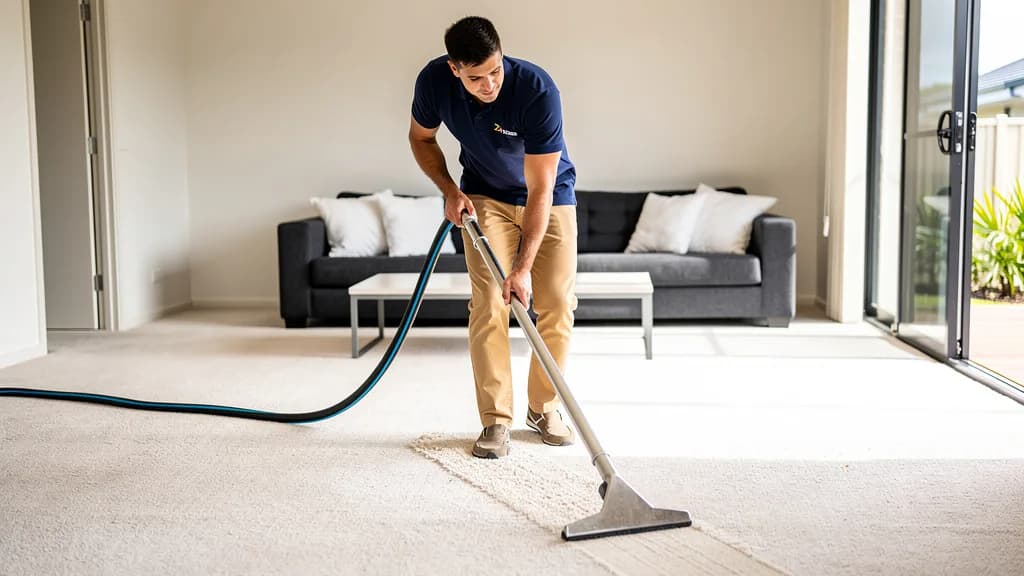
Commercial carpet in Sutherland Shire offices, retail tenancies, and business parks faces a different challenge from residential carpet: significantly higher foot traffic, more consistent soiling patterns (entry zones, high-traffic corridors, workstation areas), and the logistical constraint that cleaning usually cannot happen during business hours.
How Commercial Carpet Cleaning Differs from Residential
The fundamental chemistry and methods are the same (hot water extraction, encapsulation, dry compound) but the operational requirements are distinct. Residential cleaning happens at a mutually convenient time with household members accommodating the work. Commercial cleaning usually must occur outside trading hours, within a defined time window, without disrupting the following morning's business operations (wet carpet delay), and with documentation for facilities management or building management requirements.
| Factor | Residential | Commercial |
|---|---|---|
| Timing | Daytime, mutually convenient | After-hours, weekends, or very early morning |
| Drying constraint | 4–6 hours acceptable | Must be walkable by business opening: 6–8 hours maximum from end of clean |
| Soiling profile | Mixed household use, distributed | High-traffic lanes, entry zones, kitchen/break room concentrated |
| Documentation | Optional | Often required: tax invoice, SDS for products, compliance records for building management |
| Frequency | Typically annual or bi-annual | Quarterly to 6-monthly depending on traffic; spot cleans as needed |
| Area coverage | Whole property in one visit | May be staged by zone across multiple nights |
How Often Commercial Carpet Should Be Cleaned
Commercial carpet frequency is primarily driven by foot traffic volume and the type of business. The following is a general guide for Sutherland Shire commercial settings:
| Business Type | Recommended Frequency | Notes |
|---|---|---|
| Small professional office (under 20 staff) | Every 6–12 months | Low foot traffic; entry mat and regular vacuuming extend intervals |
| Medium office (20–100 staff) | Every 3–6 months | High-traffic corridors and kitchen areas may need more frequent spot attention |
| Large open-plan office (100+ staff) | Every 3–4 months | Consider zone-based cleaning to reduce per-visit disruption |
| Retail tenancy with public access | Every 6–8 weeks for entry zones; quarterly for full area | Public foot traffic and outdoor soiling entry is significantly higher |
| Medical practice or allied health | Every 2–3 months | Hygiene expectations higher; consider products with documented antimicrobial efficacy |
| Restaurant or café with carpeted areas | Every 4–6 weeks | Food, beverage, and grease contamination accumulate rapidly |
| Real estate agency reception | Every 6–8 weeks | High volume of short visits; entry carpet presents first impression |
Hot Water Extraction vs Encapsulation for Commercial Use
Both methods are used in commercial settings, and the choice depends primarily on the drying time constraint and soil load.
Hot water extraction (steam cleaning) injects hot water and detergent under pressure and immediately extracts it: giving a deep clean that removes soil from the fibre base. It typically leaves the carpet slightly damp for 4–8 hours, depending on ventilation and weather. This is the standard for heavily soiled commercial carpet or periodic deep cleans.
Encapsulation cleaning applies a polymer solution that surrounds soil particles and crystallises as it dries. The crystallised soil is then vacuumed away. Encapsulation uses minimal moisture and typically dries in 30–60 minutes, depending on ventilation and weather: making it practical for overnight or early-morning cleans where business must resume quickly. It does not achieve the same depth of extraction as hot water for heavily soiled carpet, but is very effective for regular maintenance cleaning on moderately soiled commercial carpet.
The maintenance + deep clean routine
A common approach is encapsulation for quarterly maintenance cleans (fast drying, minimal disruption) plus an annual or bi-annual hot water extraction deep clean for thorough soil removal. This two-tier approach extends carpet life and maintains appearance between deep cleans.
After-Hours Cleaning: Practical Logistics
After-hours commercial carpet cleaning in Sutherland Shire requires coordination between the cleaning provider and the building. Key points to establish before arranging the clean:
- Access: who provides after-hours key/swipe access, and is building management approval required? Some buildings require advance notice for after-hours contractor access. Check with building management.
- Parking: after-hours parking for equipment vehicles: commercial carpet cleaning machines require van or truck access close to the tenancy.
- Utilities: is power available at the access point? Hot water extraction machines draw significant current. Confirm the circuit is accessible after the building's main breaker is engaged.
- Ventilation: better drying results from fresh airflow. Confirm whether HVAC can be left running or windows opened for the drying period after the clean.
- Drying time buffer: allow at minimum 2 hours after the clean finishes before the first staff arrive. Planning the clean to end by 11pm for a 9am open is a safe margin.
Documentation and Compliance
Commercial tenancies in Sutherland Shire business parks and buildings often have cleaning documentation requirements from building management or head lease. At minimum, retain:
- Tax invoice from the carpet cleaning provider, with the property address, date, areas cleaned, and method used.
- Product Safety Data Sheets (SDS) for all chemicals used: required for workplace health and safety compliance.
- Before-and-after photographs: useful for insurance purposes and for demonstrating compliance with lease conditions requiring carpet maintenance.
- Service record or cleaning log, for businesses with ongoing quarterly or bi-annual routines, a maintained log demonstrates the proactive maintenance required under many commercial leases.
Carpet Protection and Extending Asset Life
Commercial carpet is a significant fit-out cost. Replacing carpet in an office or retail tenancy typically requires a fit-out period: disruption to operations and make-good costs under a commercial lease. Proactive maintenance significantly extends the serviceable life of commercial carpet.
The highest-impact measures: quality entry matting (catching tracked-in soil before it reaches the carpet), regular vacuuming (daily in high-traffic zones), immediate spot treatment of spills, and regular professional cleaning before the carpet reaches the point of visible soil loading. Carpet that appears clean but has accumulated dry soil has microscopic fibre abrasion occurring with every footstep, by the time the soiling is visible, some fibre damage has already occurred.
Find a local cleaner in the Sutherland Shire
In the Sutherland Shire? We know your time matters. Leave your enquiry with us and we'll make it our priority to get you a quote from a local cleaner.
Find a Matched Local SpecialistThis site matches enquiries with independent local carpet cleaners. We do not employ cleaners directly.
Get a Shire quote
In the Sutherland Shire? We help you get a quote from a local cleaner. They quote you directly.
Frequently asked
How often should office carpet be professionally cleaned?
A small professional office with under 20 staff: every 6–12 months. A medium office with 20–100 staff: every 3–6 months. Large open-plan offices and those with public access benefit from quarterly professional cleaning. Entry zones and high-traffic corridors in any size office may need more frequent attention than the main floor area.
Can commercial carpet cleaning happen overnight?
Yes, after-hours commercial carpet cleaning is common. Encapsulation cleaning typically dries in 30–60 minutes, depending on ventilation and weather, and suits very tight overnight windows. Hot water extraction typically takes 4–8 hours to dry fully, depending on ventilation and weather, so plan for adequate drying before staff return. Ask about after-hours access when you enquire.
What is the difference between encapsulation and steam cleaning for offices?
Encapsulation surrounds soil in a polymer that crystallises and is vacuumed away. It typically dries in 30–60 minutes, depending on ventilation and weather, and is ideal for overnight maintenance cleans where the office must be operational by morning. Hot water extraction (steam cleaning) flushes soil from deep in the fibre and extracts it, achieving a deeper clean but typically taking 4–8 hours to dry, depending on ventilation and weather. Commercial carpet programs typically combine both: encapsulation for quarterly maintenance and hot water extraction for annual or bi-annual deep cleans.
Does my commercial lease require professional carpet cleaning?
Many commercial leases include make-good clauses that require the tenant to return the premises including carpet to a specified condition at end of lease. Some leases specify periodic professional cleaning during the tenancy. Review your lease's make-good and maintenance clauses, and retain cleaning records, as these may be required to demonstrate compliance at lease expiry.
What documentation should I get from a commercial carpet cleaner?
At minimum: a tax invoice with the property address, date, areas cleaned, and cleaning method. Request Product Safety Data Sheets (SDS) for all chemicals used: required for WHS compliance in Australian workplaces. For lease or building management compliance, before-and-after photos and a signed service record may also be needed. Confirm documentation requirements with your building manager before arranging the clean.