
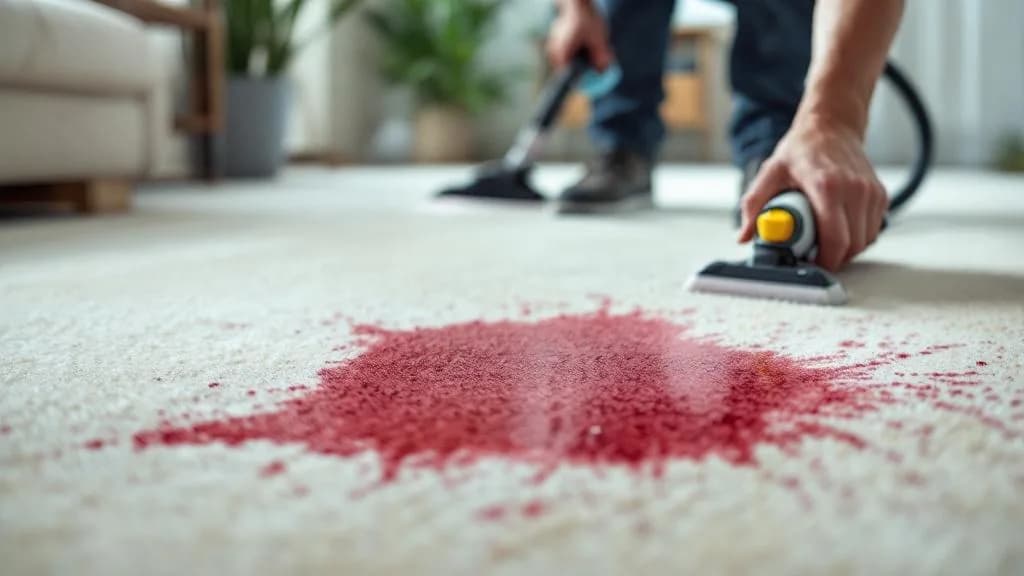
Dishwasher liquid (automatic dishwasher detergent or hand dish soap) spilled on carpet creates a concentrated surfactant problem. Unlike diluted dish soap used deliberately in cleaning, a direct spill is far more concentrated. It generates a large amount of foam when any water is applied, and the surfactant residue left behind after cleaning is sticky, continues to attract dirt, and can discolour the pile over time. The challenge is removing a highly foaming agent from a fibre substrate without making the foam problem worse.
Automatic dishwasher detergent vs hand dish soap
Automatic dishwasher detergents (pods, powder, gel) are low-foam or no-foam formulations because dishwashers cannot tolerate foam. Hand dish soap (Palmolive, Morning Fresh, etc.) is a high-foam formulation. Both are concentrated surfactants and create a sticky residue on carpet if not fully rinsed, but hand dish soap creates much more foam during the rinsing process.
Step-by-step removal method
- Blot up as much of the undiluted dishwasher liquid as possible with clean white cloths or paper towels before adding any water. The less liquid product remaining, the less foam will develop during rinsing.
- Apply a small amount of cold water, not a large pour. Blot firmly to absorb the diluted soap and water. For hand dish soap, expect significant foam; continue blotting until the foam is absorbed.
- Repeat the small-pour-and-blot cycle 5–8 times, using fresh sections of cloth each time. The goal is to progressively dilute and extract the surfactant with minimal standing water.
- Once very little foam is transferring to the cloth, do a final rinse with cold water, blot thoroughly, and place several layers of paper towel weighted with something heavy over the area to draw remaining moisture.
- Allow to air-dry fully with ventilation.
Do not use a carpet shampooer or steam cleaner on a dishwasher liquid spill
Adding heat or agitation to a concentrated dish soap spill produces a foam overflow that is much harder to remove than the original spill. Remove as much undiluted product as possible with cold blotting before any machine treatment is considered.
Dealing with sticky residue after drying
If the carpet feels sticky or attracts visible dirt after drying, surfactant residue remains in the pile. This is very common after dish soap spills because the rinse-and-blot method cannot always extract all the surfactant from deep in the backing. The remedy is another rinsing cycle. Apply cold water in small amounts, blot thoroughly, and repeat until no stickiness remains when you press a dry cloth against the dry carpet. For large spills or severe residue, professional hot-water extraction with a clean-water flush rinse removes what manual rinsing cannot.
Automatic dishwasher detergent (pods, powder, gel)
Automatic dishwasher detergents are low-sudsing but often contain bleaching agents (sodium percarbonate, oxygen bleach, or in older formulas, chlorine). On coloured carpet, these bleaching agents can cause colour loss that becomes visible only as the carpet dries. Rinse immediately and thoroughly with cold water, and note that any colour change from a bleaching agent is permanent. It is not a stain but a loss of dye.
| Product type | Main concern | Key removal step |
|---|---|---|
| Hand dish soap (high-foam) | Sticky surfactant residue, difficult to rinse fully | Cold blot-and-rinse cycle x5–8; check for stickiness after drying |
| Automatic gel/liquid detergent | Bleaching agents in some formulas + residue | Rinse immediately; colour loss from bleach is permanent |
| Dishwasher pods/tablets | Concentrated surfactant + possible bleach + enzyme agents | Remove undissolved solid first, then rinse as above |
| Eco/plant-based variants | Less bleach risk, still sticky if not rinsed | Same blot-and-rinse method, fewer rinse cycles needed |
Find a local cleaner in the Sutherland Shire
In the Sutherland Shire? We know your time matters. Leave your enquiry with us and we'll make it our priority to get you a quote from a local cleaner.
Find a Matched Local SpecialistThis site matches enquiries with independent local carpet cleaners. We do not employ cleaners directly.
Get a Shire quote
In the Sutherland Shire? We help you get a quote from a local cleaner. They quote you directly.
Frequently asked
A full bottle of dish soap emptied onto my carpet: is professional cleaning the only option?
For a large spill, professional hot-water extraction is the most reliable method. Manual rinsing of a very large volume of concentrated surfactant typically leaves enough residue to cause ongoing soil attraction. Blot up as much undiluted product as possible first, then have the area professionally extracted and flush-rinsed.
Can I use a wet-dry vacuum to remove dish soap from carpet?
Yes, a wet-dry vacuum is better than cloths for large spills because it can extract diluted soap and water without the risk of pushing it deeper by pressing. Apply small amounts of cold water, then extract with the vacuum. Repeat multiple times. Avoid vigorous agitation which increases foam.
My carpet looks clean after drying but gets dirty quickly: why?
Surfactant residue remains in the pile and acts as a soil magnet. Foot traffic deposits dust, oil, and particles onto the sticky surfactant film. This is the classic sign of an incompletely rinsed dish soap spill. Repeat the cold water rinse-and-blot cycle until the damp carpet no longer feels slippery between your fingers.
Does vinegar help remove dish soap from carpet?
Vinegar is often suggested as a rinse agent because its acidity can theoretically reduce the pH of surfactant residue. In practice, the primary removal mechanism for surfactant is dilution and extraction with water: vinegar adds an additional ingredient to rinse out and can leave its own odour if not fully removed. Plain cold water repeated multiple times is simpler and just as effective.