
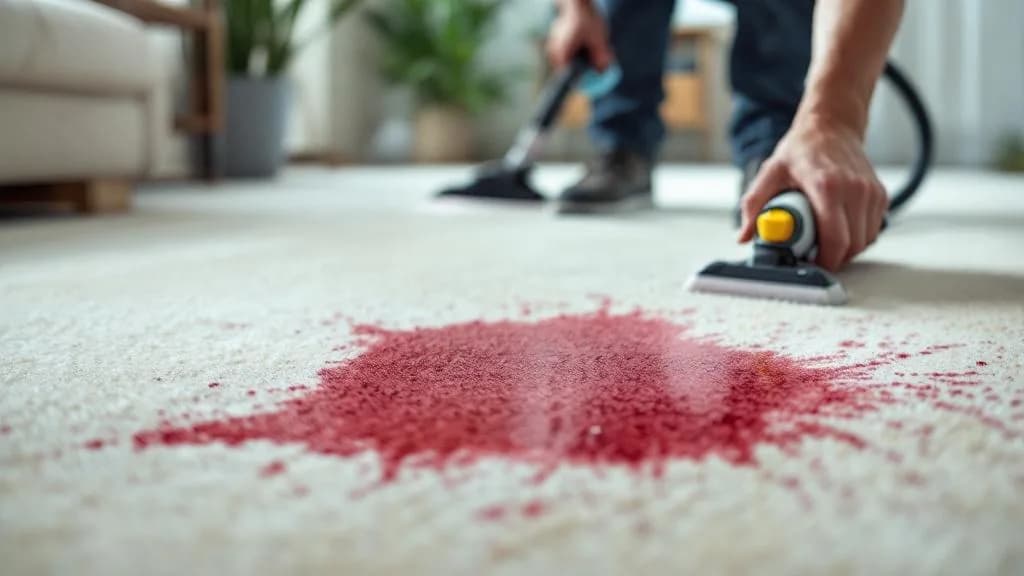
Essential oil blends (whether a roller-bottle blend, a diffuser oil, a massage oil blend, or a relaxation spray) typically combine multiple essential oils in a carrier oil base (sweet almond, jojoba, fractionated coconut oil, or similar). The carrier oil creates the primary staining agent on carpet (a greasy oily residue); the essential oil compounds create the persistent odour and, for some chemically reactive oils, a mild dye-fading risk. The treatment must address both the carrier oil and the volatile terpene components.
Common essential oils in blends and their carpet risk
| Essential oil | Key compound | Dye risk on carpet | Odour persistence | Notes |
|---|---|---|---|---|
| Lavender | Linalool, linalyl acetate | Low | Moderate: dissipates in days | One of the mildest; low solvent activity |
| Eucalyptus | 1,8-cineole (eucalyptol) | Low–moderate | Moderate | Slightly more solvent-active than lavender |
| Tea tree | Terpinen-4-ol | Moderate: especially on wool | High: slow-evaporating terpenes | See dedicated tea tree oil guide |
| Peppermint | Menthol, menthone | Low | High: menthol is slow to evaporate | Cool odour lingers in pile |
| Frankincense/Sandalwood | Sesquiterpenes | Low | Very high: heavy sesquiterpenes | Long-chain compounds penetrate deeply; slowest to clear |
| Orange/Lemon (citrus) | D-limonene | Moderate: limonene is a mild solvent | Low: evaporates quickly | Limonene can affect some surface-dyed carpets |
Removal method
- Blot up as much liquid as possible immediately: the carrier oil is the primary staining agent and should be removed before it saturates the pile
- Apply baking soda or cornstarch generously and leave for 20 minutes: essential oils absorb into powder effectively, particularly the heavier sesquiterpene compounds
- Vacuum up the powder thoroughly
- Apply dish soap diluted in warm water and blot: removes carrier oil residue from the fibre
- Rinse with warm water through multiple clean-cloth passes
- Allow the area to dry with ventilation: the volatile essential oil components evaporate on drying, reducing odour significantly
- For persistent odour after drying: apply dry baking soda over the area, leave overnight, then vacuum; activated charcoal placed near the area also helps
Identify which oils are in the blend before treating
If the blend contains tea tree oil at more than about 5% concentration, check for colour fading immediately after blotting: tea tree carries a higher dye-interaction risk than most other common essential oils. If any colour change is visible within a few minutes of the spill, treat as a potential dye-loss situation and contact a carpet specialist rather than attempting home treatment.
Diffuser water spills vs neat oil spills
An ultrasonic diffuser reservoir spill (water with a few drops of essential oil) is much easier to treat than a neat oil bottle spill. The essential oil concentration is typically 1–3% in the diffuser water: the dye risk is minimal and the odour component is much lower. Blot up the liquid, allow to air dry, and the small amount of essential oil will evaporate without leaving a significant residue. A neat essential oil bottle (20–100% essential oil content) is far more concentrated and requires the full treatment sequence above.
Find a local cleaner in the Sutherland Shire
In the Sutherland Shire? We know your time matters. Leave your enquiry with us and we'll make it our priority to get you a quote from a local cleaner.
Find a Matched Local SpecialistThis site matches enquiries with independent local carpet cleaners. We do not employ cleaners directly.
Get a Shire quote
In the Sutherland Shire? We help you get a quote from a local cleaner. They quote you directly.
Frequently asked
Why does the carpet still smell like lavender weeks after I cleaned it up?
Linalool (the primary lavender compound) has relatively low volatility compared to water. It evaporates slowly from textile surfaces. If the carrier oil residue was not fully removed, linalool dissolved in it will persist even longer. Repeat the dish soap and rinse cycle to address any remaining carrier oil, then apply baking soda and vacuum. Most lavender odour clears within one to two weeks of treatment with adequate ventilation.
Will the essential oil stain carpet permanently?
Most essential oils in a carrier oil base do not create permanent colour staining. They are not pigments. The main risk is: (1) a greasy residue that attracts dirt if the carrier oil is not fully removed, and (2) dye fading from solvent-active oils like tea tree, citrus, or some resinous oils. Promptly and fully treated, most essential oil blends leave no permanent mark on synthetic carpet.
Can I use an essential oil diffuser near carpet?
Ultrasonic diffusers produce a very fine water mist with trace essential oil: the droplets that land on nearby carpet are typically dilute enough not to cause staining or odour problems. Oil-evaporation diffusers (reed diffusers, candle diffusers) can drip concentrated oil if knocked over: a drip of neat diffuser oil onto carpet should be treated as a neat oil spill. Keep reed diffuser bases away from carpet edges.