
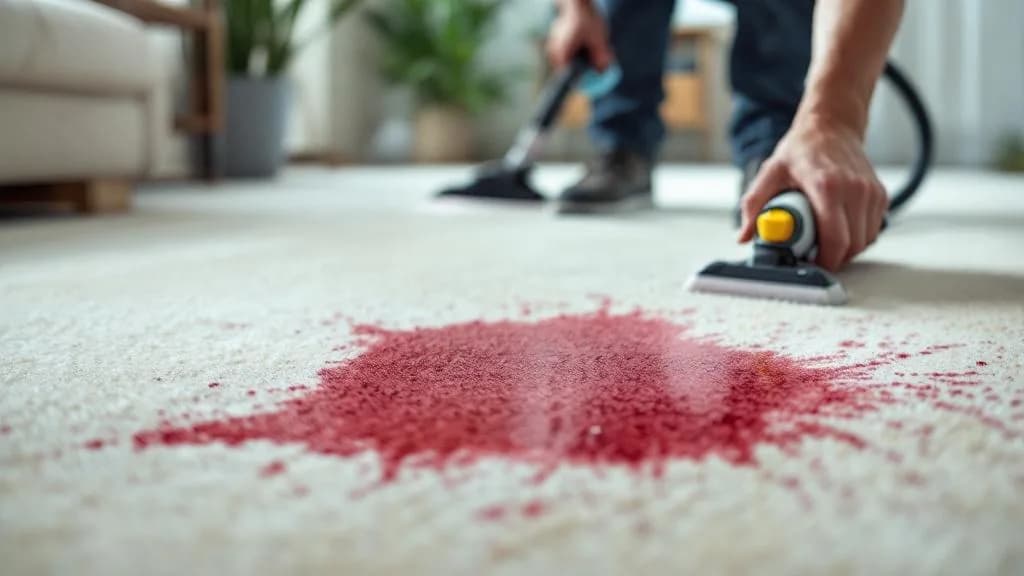
Olive oil spills on carpet are common in open-plan kitchens and dining areas. Unlike water-based spills, olive oil does not evaporate. It bonds with carpet fibres, attracts dust and foot traffic soil, and will leave a permanent grey-brown shadow if not properly degreased. The most common mistake is using hot water or steam on a fresh spill, which drives the oil deeper into the pile and backing.
Act fast: but cold
Speed matters with olive oil, but temperature matters just as much. Use cold or room-temperature water throughout. Heat (including a clothes iron, steam cleaner, or hot-water extraction set to high temperature) will set an oil stain by partially polymerising the oil into the fibre.
Step-by-step removal method
- Blot up as much liquid oil as possible with a clean white cloth or paper towels. Do not rub: press and lift.
- Apply a generous layer of an absorbent dry powder: cornflour, baking soda, or talcum powder. Leave for at least 20 minutes (longer for large spills). The powder draws oil out of the fibres.
- Vacuum up the powder thoroughly.
- Apply a small amount of clear, grease-fighting dish soap (such as Morning Fresh or Palmolive) directly to the stain. Work it gently into the pile with a soft brush or cloth, moving from the outside edge inward.
- Blot up the dish soap with a damp (cold water) cloth, rinsing repeatedly until no soap residue remains. Soap left in carpet fibres will attract soil and leave a sticky patch.
- Place several layers of white paper towel over the damp area, weight with something heavy, and leave for an hour. This draws residual moisture and oil to the surface.
- Allow to air-dry completely. Do not walk on the area until fully dry.
Do not use WD-40 or cooking spray
Some online guides suggest applying WD-40 or cooking spray to olive oil stains on the basis that "like dissolves like." This substitutes one grease stain for another, adds propellant residues, and makes the stain harder to treat. Use a proper degreaser or dish soap instead.
When dish soap is not enough: dry-cleaning solvent
If the stain is old, large, or has been through a steam clean or hot wash, dish soap alone may not fully lift it. Dry-cleaning solvent (available at supermarkets and hardware stores under names such as Carbona or Woolite Dry Cleaner Secret) is a stronger option. Apply a small amount to a clean cloth (not directly to the carpet) and blot the stain from the outside in. Follow the product instructions for ventilation and drying.
Old or set olive oil stains
Olive oil that has been in carpet for days or weeks will have partially oxidised and bonded more strongly with fibres. The powder-and-dish-soap method will reduce the stain but may not fully remove it. A citrus-based degreaser (d-limonene) applied carefully and then fully rinsed can lift oxidised oil residues that dish soap cannot. For large or very old stains on quality carpet, a professional hot-water extraction clean using a commercial degreasing pre-spray is the most reliable path.
| Stage | Best product | Avoid |
|---|---|---|
| Fresh spill (0–1 hour) | Cornflour or baking soda + dish soap | Hot water, steam, rubbing |
| Recent stain (1–24 hours) | Dish soap + cold rinse, repeat twice | Vinegar (no degreasing effect on oil) |
| Old stain (1+ days) | Dry-cleaning solvent or citrus degreaser | Acetone or nail polish remover (damages fibres) |
| Large area or wool carpet | Professional pre-spray and extraction | DIY solvent on wool: risk of fibre damage |
Residual grey patch after cleaning?
A faint grey or dark shadow after treatment usually means oil residue has attracted soil from foot traffic. A second dish-soap treatment or a professional clean with a degreasing pre-spray should resolve it. Walking on a damp, incompletely rinsed carpet speeds up this soiling cycle.
Find a local cleaner in the Sutherland Shire
In the Sutherland Shire? We know your time matters. Leave your enquiry with us and we'll make it our priority to get you a quote from a local cleaner.
Find a Matched Local SpecialistThis site matches enquiries with independent local carpet cleaners. We do not employ cleaners directly.
Get a Shire quote
In the Sutherland Shire? We help you get a quote from a local cleaner. They quote you directly.
Frequently asked
Can I use vinegar to remove olive oil from carpet?
Vinegar is an acid and works well on alkaline stains such as mineral deposits and some food stains. Olive oil is a fat. It is not water-soluble and is not affected by acidity. Vinegar will not degrease olive oil. Use dish soap or a dry-cleaning solvent instead.
Does baking soda remove olive oil from carpet?
Baking soda absorbs oil from the surface and upper fibres when applied as a dry powder, but it does not chemically break down or dissolve grease. Use it as the first absorption step, then follow with dish soap or a solvent to degrease the remaining oil.
Will olive oil on carpet go rancid and smell?
Yes. Olive oil that has not been fully removed will oxidise over weeks to months and develop a rancid, off-putting smell as the fatty acids break down. Remove it as thoroughly as possible. If rancid odour is already present, a full professional extraction clean with a degreasing pre-spray is the most reliable fix.
Can I use a hair dryer to speed up drying after treating an olive oil stain?
Avoid using heat during or immediately after treatment. Once you are satisfied the oil has been fully removed and the carpet has been rinsed of cleaning product, a cool-air fan setting on a hair dryer can help speed drying without risk. Avoid the hot setting.