
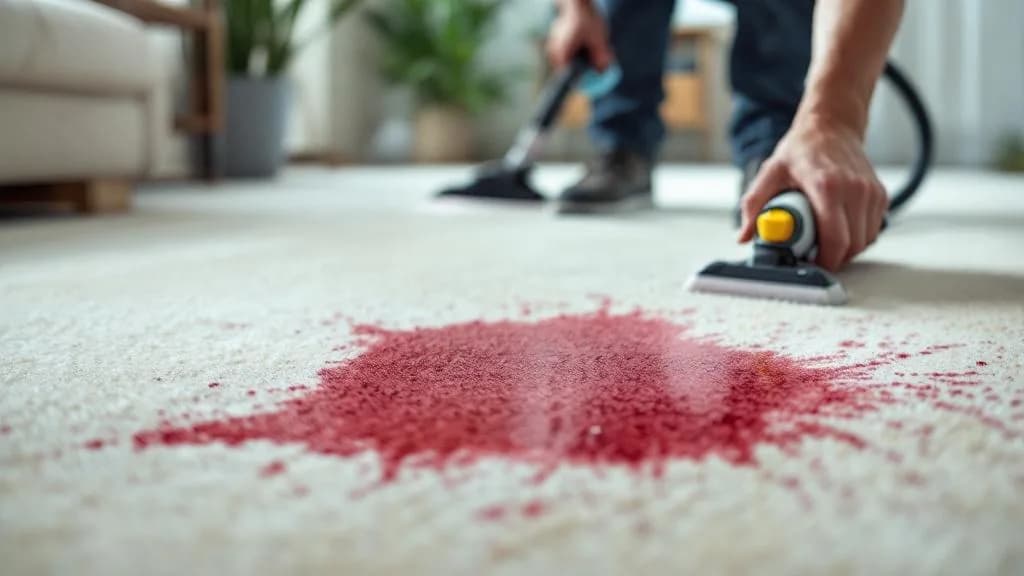
Shoe polish lands on carpet more often than it should: polishing shoes on the floor, a tin tipping over, or a freshly polished shoe contacting the carpet. The composition of shoe polish (wax or cream base, synthetic or natural dye pigments, petroleum-derived solvents) means a multi-step treatment is needed. Treating only the colour while leaving the wax base untouched produces poor results.
Types of Shoe Polish and Their Stain Profiles
| Type | Composition | Stain Challenge |
|---|---|---|
| Wax polish (tin) | Carnauba/beeswax + pigment + petroleum solvent | Waxy residue + deep pigment dye: most common type |
| Cream polish (tube) | Water/oil emulsion + pigment + conditioners | Less waxy but still pigment-heavy; easier to remove when fresh |
| Liquid polish (bottle) | Acrylic polymer + pigment + water | Acts like an acrylic paint stain; see latex paint removal approach |
| Neutral/clear polish | Wax + solvent, no pigment | Waxy residue only: no dye challenge |
Step 1: Remove Excess Polish
For fresh or soft wax polish, blot excess from the surface with a paper towel. Do not rub. For dried and hardened polish, use a blunt knife to gently scrape off the surface layer, working from the edge of the deposit inward. Vacuum to remove loose particles after scraping. The goal is to remove as much bulk material as possible before introducing any solvent.
Step 2: Address the Wax Component
Wax polish requires a solvent or a heat method to soften and lift the wax from carpet fibres. Dry-cleaning solvent (from hardware or laundry stores) is the most effective product for wax shoe polish. Apply a small amount to a white cloth and blot the stain: the solvent dissolves the wax binder, allowing it to transfer to the cloth. Isopropyl alcohol is a reasonable substitute where dry-cleaning solvent is not available. Work from the outside of the stain inward and use fresh cloth sections as they pick up material.
Alternative: the iron method for wax
Place a clean white paper towel over the polish stain and press a warm (not hot) iron on the towel for 5–10 seconds. The heat melts the wax, which transfers into the paper towel. Lift the towel: you should see the wax transfer. Repeat with fresh paper towel sections until no more wax transfers. Follow with solvent or dish soap treatment for the remaining pigment.
Step 3: Address the Pigment
After the wax is removed, a dye stain from the polish pigment typically remains. For black or dark brown polish this is the main challenge. Dish soap in cold water applied with a white cloth and blotted repeatedly will lift some of the pigment. If a significant colour remains, isopropyl alcohol as a follow-up can dissolve more of the remaining dye. On light carpet where black polish pigment has been absorbed, a small amount of ammonia solution (one tablespoon ammonia in 250 ml cold water) can help break down the dye. Test in a hidden area first, and do not use on wool.
Black Polish on Light Carpet: Realistic Expectations
Black shoe polish on light-coloured carpet is one of the genuinely difficult stains: the intense black pigment binds quickly to carpet fibres, and the wax base helps it penetrate. Full removal with DIY methods is possible if the stain is treated immediately while still wet. Dried and set black polish on light carpet often leaves a permanent grey shadow even after thorough treatment. Professional carpet cleaning with a stronger commercial dye remover may achieve further improvement, but expectations should be realistic for old set black polish stains.
Cream Polish: Easier to Treat
Cream polish in a tube has a water-and-oil emulsion base rather than a solid wax base. It is typically easier to remove when fresh. Blot with a paper towel, then dish soap and cold water to emulsify the oil component and lift the pigment. The same sequence as wax polish applies, but the wax removal step is less critical.
Find a local cleaner in the Sutherland Shire
In the Sutherland Shire? We know your time matters. Leave your enquiry with us and we'll make it our priority to get you a quote from a local cleaner.
Find a local carpet cleanerThis site matches enquiries with independent local carpet cleaners. We do not employ cleaners directly.
Get a Shire quote
In the Sutherland Shire? We help you get a quote from a local cleaner. They quote you directly.
Frequently asked
What removes black shoe polish from carpet?
A two-step approach works best: first remove the wax with dry-cleaning solvent or an iron-and-paper-towel heat transfer method, then address the black pigment with dish soap, isopropyl alcohol, or (on non-wool carpet) a dilute ammonia solution. Immediate treatment gives the best outcome: dried black polish is significantly harder to remove.
Can I use WD-40 to remove shoe polish from carpet?
WD-40 can soften the wax component of shoe polish, but it leaves a significant petroleum oily residue that itself needs degreasing and will attract soil. Dry-cleaning solvent or isopropyl alcohol are cleaner options. They dissolve the wax without adding a new residue layer.
I used too much solvent and the area is now over-wet. What do I do?
Place a clean dry towel over the area and press firmly to absorb the excess solvent. Weight the towel down and leave for 15 minutes. Then blot the area with a dry cloth and allow to air dry fully. Excessive solvent in carpet backing can loosen adhesive in some carpet constructions: blotting it up promptly reduces this risk.
The polish dried before I noticed it: is it still treatable?
Yes, though harder. Scrape off as much of the hardened surface layer as possible first, then proceed with the solvent step. For very hard dried wax, the iron-and-paper-towel method helps soften and transfer material before solvent treatment. Multiple treatment rounds on consecutive days are often needed for fully set wax polish.
Is shoe polish a permanent carpet stain?
Black shoe polish on light carpet treated immediately is usually not permanent: most or all of the stain can be removed with the right approach. Dried and set black polish on light carpet treated days or weeks later may leave a permanent grey shadow. Brown or tan polish on medium-toned carpet has a much better prognosis. The fibre type also matters: synthetic fibres are more forgiving than wool for dye stains.