
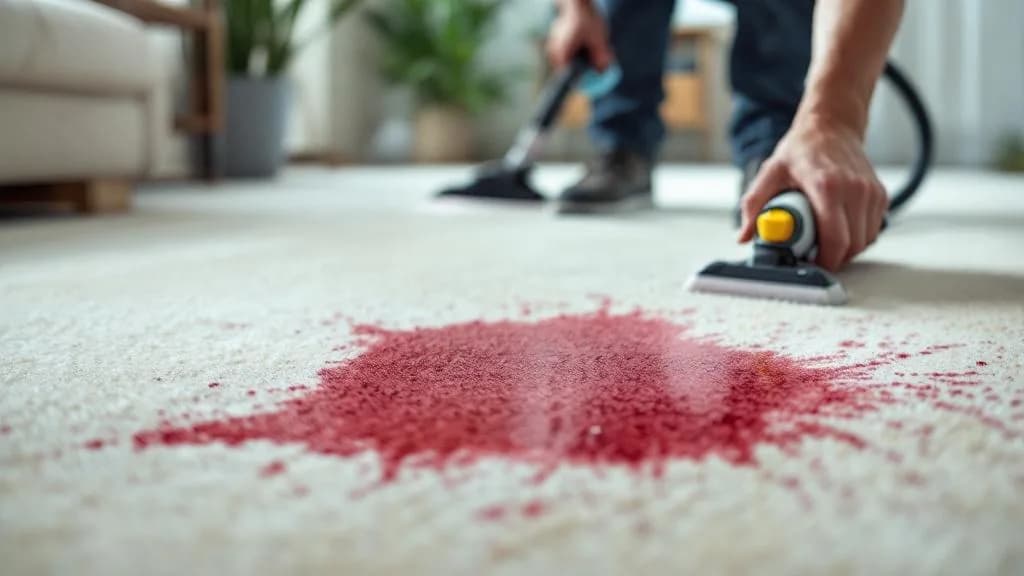
Coconut cream is the thick, rich emulsion extracted from grated coconut flesh: approximately 24–26% fat, with some protein and water. It is used in curries, desserts, and cocktails, and spills from tins, cartons, or cooking pots. Coconut cream is different from coconut oil (pure fat, no water) and coconut milk (thinner, lower fat). Its high fat content means the oil component wicks into carpet fibres quickly, but the presence of water and protein makes it more emulsifiable than pure coconut oil and easier to lift with dish soap.
Cleaning steps
- Scrape up the thicker coconut cream with a blunt spoon, working from the outside inward.
- Sprinkle cornflour over the residue and allow 15 minutes to absorb the fat component. Vacuum the cornflour once it has absorbed the oil.
- Apply cold water and blot to dilute the remaining residue.
- Apply dish soap solution (1 teaspoon per cup of cold water) and blot. Dish soap emulsifies the coconut fat effectively. Coconut cream may require two dish soap rounds for a larger spill.
- Apply enzyme cleaner and allow 10–15 minutes dwell time to address the coconut protein component.
- Rinse with cold water blotting and allow to air-dry.
- If a sweet coconut smell remains after drying: sprinkle baking soda, allow 30 minutes, and vacuum.
Coconut fat solidifies at cool temperatures
Coconut fat (lauric acid) solidifies at approximately 24°C. In an air-conditioned room or in cooler weather, spilled coconut cream can partially solidify in the carpet pile. If the spill has solidified, scrape up the solid material first (it lifts cleanly as a solid) before applying any liquid. For partially solidified residue left in the pile, apply warm water to liquefy the coconut fat before beginning the dish soap step.
Coconut cream in curry or cooking context
Coconut cream used in cooking is rarely spilled in its plain form. It typically appears as part of a curry, laksa, or coconut-based sauce that also contains spices, proteins, and colour compounds. Curry spills with a coconut cream base add turmeric (yellow pigment responding to hydrogen peroxide), meat or seafood protein (requiring enzyme cleaner), and chilli compounds (fat-soluble, lifted by dish soap). The treatment sequence covers all these components: cornflour for fat, dish soap for oil and fat emulsification, enzyme cleaner for protein, and hydrogen peroxide for any yellow turmeric colour remaining on light carpet.
Find a local cleaner in the Sutherland Shire
In the Sutherland Shire? We know your time matters. Leave your enquiry with us and we'll make it our priority to get you a quote from a local cleaner.
Find a Matched Local SpecialistThis site matches enquiries with independent local carpet cleaners. We do not employ cleaners directly.
Get a Shire quote
In the Sutherland Shire? We help you get a quote from a local cleaner. They quote you directly.
Frequently asked
I was making a Thai green curry and a full can of coconut cream tipped into the pot and then overflowed out onto the carpet. The spill has curry paste, lemongrass, galangal, and kaffir lime in it as well as the coconut cream. How do I treat this compound spill?
A Thai green curry coconut cream spill combines coconut fat (high volume), green curry paste components (chilli, lemongrass, galangal, kaffir lime, garlic, shrimp paste: oil-soluble aromatics and protein), and possibly meat if the curry was partially cooked. The cornflour step is essential first. Apply generously to absorb the coconut fat from the high-volume spill. Vacuum. Then apply dish soap to emulsify the oil and curry paste fat-soluble components. Apply enzyme cleaner for the coconut protein and any shrimp paste or meat protein: shrimp paste in particular produces a strong smell in carpet and the enzyme cleaner step is very important. Rinse. Apply hydrogen peroxide if the green curry paste has left a green-yellow tinge on light carpet (from turmeric or green herb chlorophyll). Baking soda overnight for any residual aromatic smell from the lemongrass, galangal, and kaffir lime compounds.
I used coconut cream in a dessert (coconut panna cotta) and the panna cotta unmoulded and fell on the carpet in a wobbly solid form. It is now a collapsed solid on the carpet pile. How do I handle the solid form?
A collapsed panna cotta is primarily a solid. Pick up the solid pieces by hand immediately, as the gelatin or agar structure holds it together. Once the solid pieces are removed, the remaining contact stain is the coconut cream and sugar that was on the surface. Apply cornflour to absorb residual fat from the carpet surface, vacuum, then apply dish soap and cold water to clean the remaining contact area. Panna cotta includes gelatin (animal protein if using gelatin, or carrageenan/agar if using the plant-based version). Apply enzyme cleaner if gelatin was used, to address the collagen protein that is now in the carpet fibres. Sugar from the dessert makes the area sticky: thorough dish soap and rinsing removes the sugar residue.
Coconut cream from a cocktail (piña colada) spilled on a light carpet. The drink also contained pineapple juice and rum. How does the cocktail format change the treatment?
A piña colada spill adds pineapple juice (acidic, pale yellow, contains bromelain enzyme: a natural protease) and rum (alcohol, evaporates quickly) to the coconut cream base. The alcohol from the rum evaporates rapidly and does not contribute to the stain. The pineapple juice adds mild acidity and bromelain: bromelain is a natural enzyme that can actually assist in breaking down protein in the carpet fibres alongside a commercial enzyme cleaner. The pale yellow of the pineapple juice is very dilute and unlikely to cause visible staining on most carpet colours. Treat the spill as a coconut cream spill (cornflour, dish soap, enzyme cleaner) with the addition that the dish soap step may be slightly more effective than usual due to the natural bromelain in the pineapple. For any pale yellow residue on a white carpet, a single hydrogen peroxide application removes it easily.