
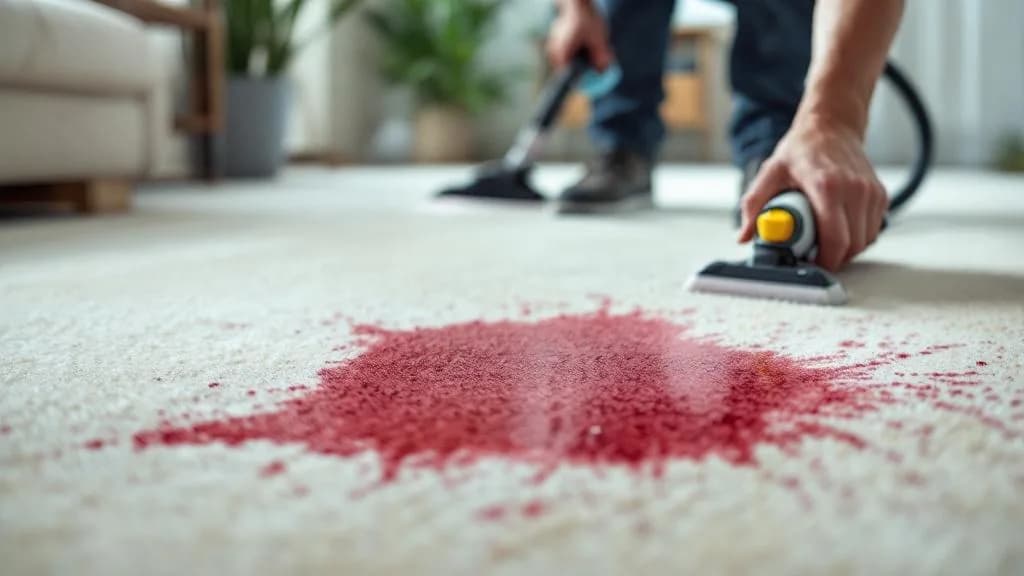
Tahini is ground sesame seed paste: approximately 50% sesame oil by weight, with the remainder sesame protein solids and trace carbohydrates. When a tahini jar tips or is knocked over, the paste is thick enough that it does not immediately spread across the carpet surface, but its high oil content means that as it sits in the pile, the sesame oil component wicks outward into a wider area than the visible paste footprint. Scraping up the bulk of the paste before applying any liquid is essential: wetting the paste before removal creates a fluid that penetrates more deeply and spreads further.
Cleaning steps
- Scrape up the tahini paste with a blunt spoon or knife, working from the outside of the spill inward. Remove as much solid paste as possible before applying any liquid.
- Sprinkle cornflour generously over the remaining residue and press lightly into the pile. Allow 15 minutes for the cornflour to absorb the sesame oil that has wicked into the surrounding fibres.
- Vacuum the cornflour thoroughly.
- Apply dish soap solution (1 teaspoon per cup of cold water) and blot. Dish soap emulsifies the sesame oil from the paste. Multiple rounds may be needed for a large spill: tahini has one of the highest oil contents of any food likely to spill on carpet.
- Apply enzyme cleaner and allow 15 minutes dwell time to break down the sesame protein solids.
- Rinse with cold water blotting until soap is fully removed.
- Allow to air-dry. If a toasted sesame smell remains after drying, apply baking soda, allow 30 minutes, and vacuum.
Check beyond the visible paste footprint
The sesame oil in tahini wicks outward into carpet fibres beyond the visible paste deposit. After cleaning the obvious stain, run your hand across the surrounding carpet in a 20–30 cm radius. A slightly greasy feel in this outer zone indicates oil has wicked outward. Apply a cornflour absorption step followed by dish soap across the full greasy radius, not just the area with visible paste.
Tahini that has dried in the carpet
Dried tahini forms a hard, pale crust in the carpet pile. The sesame oil component oxidises as it dries and produces a rancid sesame smell if left untreated. Re-hydrate dried tahini with a small amount of warm water and allow 5 minutes for the paste to soften before scraping. Warm water is more effective than cold for softening the dried sesame protein solids. Once softened, proceed with the cornflour, dish soap, and enzyme cleaner steps. Rancid sesame oil smell in carpet (from tahini or sesame oil left untreated for several days) requires multiple enzyme cleaner rounds and baking soda treatment to fully address.
Tahini mixed with lemon juice or garlic
Tahini sauce (as opposed to the plain jar paste) is typically thinned with lemon juice and water and mixed with garlic. The lemon juice component is acidic but does not add significant staining. The garlic component adds allicin sulphur compounds that contribute to the overall smell: the enzyme cleaner and baking soda steps are even more important when the spill is prepared tahini sauce rather than raw paste. The treatment steps remain the same; the smell treatment (enzyme cleaner + baking soda) should cover both the sesame oil oxidation smell and the garlic allicin compounds.
Find a local cleaner in the Sutherland Shire
In the Sutherland Shire? We know your time matters. Leave your enquiry with us and we'll make it our priority to get you a quote from a local cleaner.
Find a Matched Local SpecialistThis site matches enquiries with independent local carpet cleaners. We do not employ cleaners directly.
Get a Shire quote
In the Sutherland Shire? We help you get a quote from a local cleaner. They quote you directly.
Frequently asked
The tahini jar was full and a whole jar's worth tipped over. The tahini is now a thick layer across about half a square metre. How do I handle such a large volume?
A full tahini jar is a significant oil spill: the sesame oil will have already begun wicking outward from the main paste deposit. Prioritise physical removal first: use a blunt knife or flat spatula to lift and collect the bulk of the paste into a container. Do not rush this step: the more paste removed physically, the less oil remains to require chemical treatment. After maximum paste removal, apply cornflour very generously across the entire affected area (use multiple boxes if needed) and allow 30 minutes. Vacuum, then assess: a second cornflour round on the oiliest sections before dish soap will significantly improve results. Apply dish soap in sections and blot each section before moving to the next. For a large-area tahini spill, professional hot water extraction after the initial dish soap treatment provides the most effective deep oil removal.
I spilled tahini on a dark charcoal carpet. The paste itself is pale cream and I can see the residue clearly. After cleaning, will the pale sesame residue leave a lighter patch on the dark carpet?
If the tahini is fully removed with the dish soap and cornflour steps, no pale residue should remain: the pale colour of tahini is from the sesame paste solids that are physically removed by scraping and chemically emulsified by the dish soap. Any pale appearance remaining on a dark carpet after cleaning is from dried dish soap residue or cornflour that was not fully vacuumed. Ensure the rinsing step is thorough. Blot with cold water multiple times to ensure no soap or powder remains in the pile. If a pale patch is still visible after thorough rinsing and drying, it is most likely a soap residue issue: apply another round of cold water blotting to the pale area and allow to dry again.
My child dropped a tahini-covered crispbread face-down onto the carpet. The tahini spread into the carpet pile and crispbread crumbles are mixed in. What should I do first?
Remove the crispbread crumbles first. Pick up the pieces and vacuum the fragments. The crispbread introduces wheat starch into the spill (which adds to the tahini sesame paste) and the sharp cracker fragments can make vigorous blotting uncomfortable. Once the crumbles are removed, scrape the tahini paste, apply cornflour, and proceed with the standard steps. The wheat starch from the crispbread is water-soluble and lifts in the cold water rinse step alongside the sesame components. The combined spill is handled effectively by the same sequence (scrape → cornflour → dish soap → enzyme cleaner): no additional steps are needed for the crispbread component.