
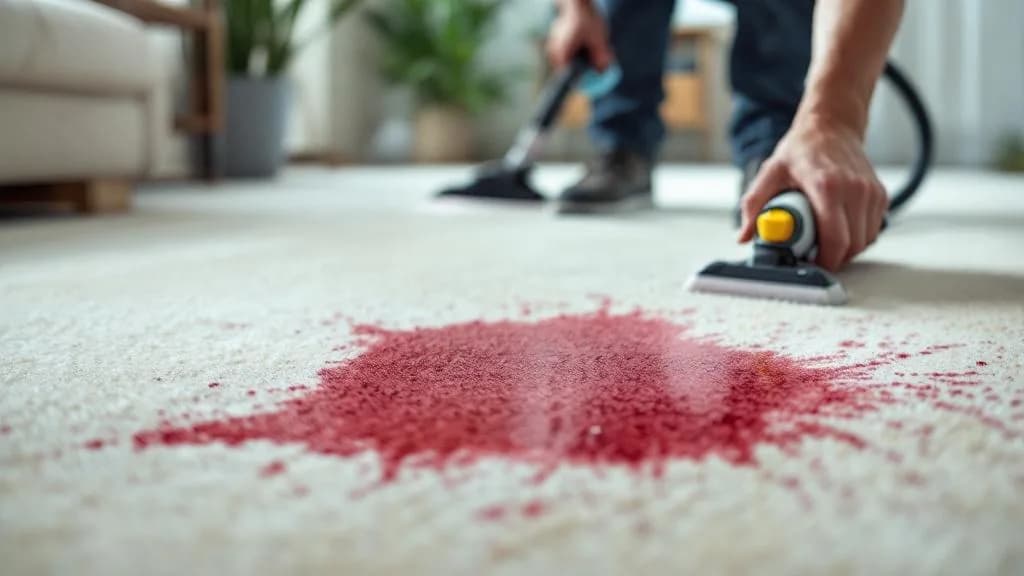
Ice cream is made from cream (fat), milk (protein), sugar, stabilisers (guar gum, carrageenan), emulsifiers, and flavourings, including synthetic dyes in many commercially produced flavours. When it melts and contacts carpet, it deposits all of these components simultaneously. The fat requires a degreaser; the sugar needs to be fully rinsed (or it attracts re-soiling); the milk protein benefits from enzymatic treatment if the stain is left for any time; and the colouring in flavoured varieties needs its own treatment if it has pigmented the fibre.
Ice cream stain components and their treatment
| Component | Carpet problem | Treatment agent |
|---|---|---|
| Cream/fat | Greasy residue, re-soiling | Dish soap degreaser |
| Sugar | Sticky residue, attracts dirt, feels tacky when dry | Cold water rinse (multiple passes) |
| Milk protein (casein) | Sour odour if left, protein bonding to fibre | Enzymatic cleaner (protease) |
| Chocolate (cocoa, dark) | Brown tannin staining | Cold water + dish soap; H₂O₂ for residual |
| Berry/fruit flavours | Anthocyanin or synthetic dye staining | Cold water + white vinegar or H₂O₂ |
| Stabiliser gums | Sticky, slightly viscous residue | Cold water rinse |
Removal method (vanilla / plain ice cream)
- Scoop up as much melted ice cream as possible with a spoon: the sooner the better before it absorbs further
- Blot remaining liquid with a clean cloth
- Apply cold water and blot: dilutes the sugar and begins lifting the dairy components; cold only, never hot
- Apply dish soap diluted in cold water and blot: the degreaser lifts the fat component from fibre
- Rinse with cold water through at least four to five changes of cloth: sugar residue is the primary re-soiling cause and requires thorough rinsing
- Blot dry and check: if the area feels sticky when dry, insufficient rinsing; rewet and rinse again
- If a sour smell develops over the following day: apply enzymatic cleaner and allow full dwell time, then rinse and dry
Hot water sets the protein and the colour: cold only
Hot water coagulates milk protein (the same way heating milk forms a skin) and can fix synthetic food dye more firmly to carpet fibre. Use cold water throughout for ice cream stains. The same rule applies to any dairy-based spill.
Chocolate and berry ice cream: additional colour treatment
Chocolate ice cream adds cocoa tannins and dark pigment; berry flavours add anthocyanins (natural) or synthetic food dye (commercial products). After the fat, sugar, and protein steps above, if a colour stain remains, treat it specifically. For chocolate-brown residue: apply 3% hydrogen peroxide to a cloth and blot. It oxidises cocoa tannins. For berry/pink staining: diluted white vinegar (1 tablespoon to 500 mL water) blotted onto the stain, followed by hydrogen peroxide if needed. For bright synthetic dye (vivid blue, green, red ice cream): hydrogen peroxide is the primary agent; multiple passes are usually needed.
Find a local cleaner in the Sutherland Shire
In the Sutherland Shire? We know your time matters. Leave your enquiry with us and we'll make it our priority to get you a quote from a local cleaner.
Find a Matched Local SpecialistThis site matches enquiries with independent local carpet cleaners. We do not employ cleaners directly.
Get a Shire quote
In the Sutherland Shire? We help you get a quote from a local cleaner. They quote you directly.
Frequently asked
Why does my carpet feel sticky after I cleaned up the ice cream?
Residual sugar. Ice cream contains a high concentration of sucrose and other sugars that leave a sticky residue on carpet fibre if not fully rinsed. Apply cold water and blot repeatedly (a minimum of five to six passes) until no stickiness remains when the cloth contacts the area. The stickiness will return when the carpet dries if the rinse was insufficient.
Is gelato the same as ice cream for carpet treatment purposes?
Gelato has less fat and more sugar than standard ice cream, and uses milk rather than cream as the base. This means less fat to degrease and more sugar to rinse. The treatment is the same (cold water, dish soap, thorough rinse) but the rinse step is even more important for gelato because the sugar concentration is higher. Sorbet (no dairy) is simpler, just sugar and fruit pigment, no fat or protein component.
My child dropped a Paddle Pop on the carpet: is the food dye hard to remove?
Paddle Pop uses synthetic food dyes (typically tartrazine for yellow, carmoisine or Allura Red for red/orange, Brilliant Blue for blue varieties). These water-soluble synthetic dyes respond to cold water and dish soap treatment if addressed fresh. Residual dye after the main clean responds to 3% hydrogen peroxide blotted on the stain. Darker dyes (blue, red) may require two to three hydrogen peroxide passes.
Can I use a steam cleaner on an ice cream stain?
No, not for the initial treatment. Steam cleaners use hot water/steam that coagulates milk protein and can set synthetic food dye. Complete the cold-water cleaning sequence first and allow the area to dry fully. If you want to follow up with a steam clean afterward to sanitise the area (protein stains attract bacteria), this is fine once all colour and odour are gone.