
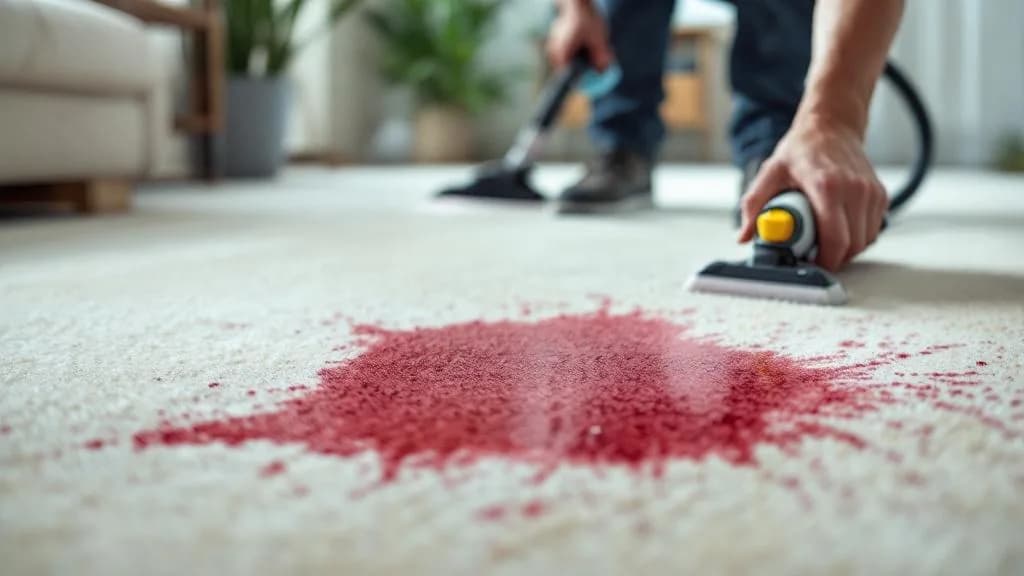
Sunscreen on carpet is a common summer problem in coastal Australian homes, and one of the most frequently mishandled. The stain looks minor at first, but sunscreen contains oil, wax, and UV-filter compounds that bond to synthetic carpet fibres and act as a persistent soil magnet long after the original spill is no longer visible. Getting the treatment sequence right matters.
Why Sunscreen Is Harder Than It Looks
Most sunscreens (particularly cream and lotion SPFs) are emulsions: an oil phase and a water phase held together by emulsifiers. When applied to carpet, the water evaporates quickly and leaves behind a concentrated residue of the oily, waxy, and filter compounds. This residue is hydrophobic: it repels water, which is why water alone (and soap-in-water solutions) tend to bead off or spread the stain rather than lift it.
Zinc-oxide based sunscreens (mineral SPF) leave an additional white, chalky residue from the insoluble zinc particles. This can appear as a white haze in carpet fibres that persists even after the oily component has been treated. Water-resistant sport sunscreens have a more aggressive wax and polymer film-forming chemistry, making them harder to remove than everyday SPFs.
Do not apply water first
For fresh sunscreen, applying water before any degreasing agent will partially emulsify the residue and spread it deeper into the carpet pile, making the stain larger and harder to treat. Degrease first, then rinse.
Treatment Sequence
- Scrape up any surface residue with a blunt edge (spoon, card). Remove as much physical product as possible before treating.
- Apply a dry-cleaning solvent or rubbing alcohol (isopropyl, 70%+) to a clean cloth and blot the stain. This dissolves the oily carrier without water. Work from outside inward. Repeat with a fresh cloth section as the solvent lifts residue.
- Apply a small amount of dishwashing liquid (concentrate, not diluted) directly to the stain. Dish soap is formulated as a kitchen degreaser and cuts through fatty and oily residue effectively. Work gently into the pile with a soft brush.
- Blot with a clean damp cloth to lift the dish soap and emulsified residue. Repeat the dish soap and blotting step if residue remains.
- Rinse with cold water and blot dry. Check under natural light for any remaining residue or white haze (zinc-based SPF).
- For white haze from zinc sunscreen: a dilute white vinegar solution (1:3 vinegar to water) can help dissolve the zinc carbonate residue. Apply, blot, and rinse.
Body Lotion and Moisturiser: Similar Treatment
Body lotion and moisturiser are oil-in-water emulsions with a similar residue profile to sunscreen: oily carriers, waxes, and humectants that bond to carpet fibres. The treatment sequence is identical: solvent or alcohol first, then dish soap degreaser, rinse and blot. Scented lotions and cosmetic creams may also leave a fragrance compound residue that can persist in the pile: professional hot water extraction is the most effective way to remove this fully.
| Product Type | Key Challenge | Treatment Emphasis |
|---|---|---|
| SPF 50+ cream (everyday) | Oily carrier + UV filter residue | Solvent first, then dish soap degreaser |
| Mineral SPF (zinc oxide) | White chalky zinc particle residue | Solvent + dish soap; vinegar for zinc haze |
| Sport/water-resistant SPF | Polymer film former: strong fibre adhesion | May need professional solvent treatment |
| Body lotion / moisturiser | Oily carriers + fragrance compounds | Solvent first, then dish soap; HWE for fragrance |
| Fake tan (self-tanner) | Dihydroxyacetone (DHA) reacts with keratin; colour staining | Act fast: once DHA reacts, stain is very difficult; similar treatment sequence but may need professional |
The Hidden Long-Term Problem: Residue as Soil Magnet
Even after a sunscreen spill looks clean, incompletely removed oily residue in the carpet pile continues to attract airborne dust, skin cells, and foot-traffic soil. Over weeks and months, an area with residual sunscreen contamination will show as a visible grey-brown patch: the residue has acted as a persistent soil magnet. This is a common pattern in holiday homes, beach houses, and living areas near main entry points from the beach.
If the stain was mishandled (water applied first, left untreated, or cleaned superficially), the residue is likely embedded in the lower pile or backing. Professional hot water extraction with a pre-treatment degreaser is the most effective way to remove the embedded residue and break the soil-attraction cycle.
Find a local cleaner in the Sutherland Shire
In the Sutherland Shire? We know your time matters. Leave your enquiry with us and we'll make it our priority to get you a quote from a local cleaner.
Find a Matched Local SpecialistThis site matches enquiries with independent local carpet cleaners. We do not employ cleaners directly.
Get a Shire quote
In the Sutherland Shire? We help you get a quote from a local cleaner. They quote you directly.
Frequently asked
How do you remove sunscreen from carpet?
Scrape up surface residue first with a blunt edge. Then apply rubbing alcohol or a dry-cleaning solvent to dissolve the oily carrier. Blot, do not rub. Follow with a small amount of dish soap worked gently into the pile, then blot with a damp cloth. Rinse and blot dry. Do not apply water first. It spreads the oily residue deeper into the pile.
Why does sunscreen leave a white mark on carpet?
White marks from sunscreen are typically from mineral (zinc oxide or titanium dioxide) SPF products. Zinc and titanium particles are insoluble in water and leave a chalky residue in the carpet fibres. A dilute white vinegar solution (1:3 vinegar to water) can help dissolve the zinc carbonate component after the oily carrier has been treated with solvent and dish soap.
Can sunscreen stains be removed from carpet after drying?
Yes, though dried sunscreen residue requires more work. The oily and waxy components have had time to bond more firmly to the fibre surface. Start with rubbing alcohol or a dry-cleaning solvent, then use dish soap as a degreaser. If the stain was previously treated with water (which spreads the residue), or if it has attracted significant soil over time, professional hot water extraction with a degreaser pre-treatment is the most effective option.
My carpet near the door has a dirty patch where sunscreen keeps tracking in. What should I do?
This is a soil-magnet pattern: the oily sunscreen residue in the carpet pile is attracting and holding ambient dust, soil, and foot-traffic particulates. Regular vacuuming moves surface soil but does not address the underlying oily residue. Professional hot water extraction with a degreaser pre-treatment is the correct treatment: it removes the embedded residue and breaks the soil-attraction cycle. Place a quality entrance mat with a non-slip backing to reduce future tracking.
Does fake tan come out of carpet?
Fake tan (self-tanner) contains dihydroxyacetone (DHA), which reacts with the amino acids in carpet fibres (particularly protein fibres like wool) to produce a brown colour stain: the same mechanism that tans skin. On synthetic carpet, it behaves more like a surface dye than a reactive stain. Act immediately: scrape off surface product, apply rubbing alcohol, blot, then dish soap treatment. Once DHA has fully reacted into the fibre (usually within an hour), removal is very difficult. On wool or natural fibre carpet, professional assessment is recommended for any fake tan stain.